

THIS PAGE WILL BE UPDATED WITH THE LATEST NEWS
UPDATE: 06:00 PM CEST
“Iran May No Longer Be Able to ‘Drink the Poisoned Chalice’'”

This phrase dates back to the decision by the then–Supreme Leader, Ruhollah Khomeini, to accept a ceasefire in the Iran–Iraq War—a decision he himself described as “drinking the poisoned chalice.” Having previously vowed to fight “until the last house in Tehran,” he was ultimately forced into this strategic retreat under the weight of military exhaustion, economic collapse, and international isolation. The growing threat posed by the National Liberation Army of the People’s Mojahedin Organization of Iran (PMOI), positioned along the country’s borders, also played a role in this decision.
Today, as nuclear negotiations stall and proposals such as “zero enrichment” or the transfer of approximately 400 kilograms of enriched uranium remain on the table, a crucial question arises: is Iran’s current leadership capable of a similar retreat?
UPDATE: 12:00 PM CEST
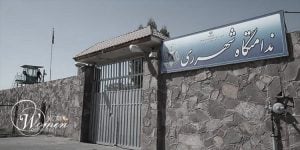
The Regime in Iran Executes Two Men in Urmia
The criminal judiciary system in Iran announced Saturday, May 2, 2026, that it has executed two men, Yaghoub Karimpour and Nasser Bakrzadeh, after they were convicted of espionage for Israel.
The hangings took place in Urmia Central Prison in northwestern Iran. The death sentences of Karimpour, a disabled law graduate from Miandoab, and Bakrzadeh, a 26-year-old Kurdish political prisoner, issued by the so-called “Revolutionary Court” in Urmia, were upheld by the regime’s Supreme Court.
Human rights organizations and Iranian opposition groups have strongly disputed the charges, describing both men as political prisoners who were tortured into confessions and denied access to lawyers or fair trials.
The Iranian Resistance has called for an independent international investigation into the executions, labeling them as state-sponsored killings amid a broader surge in political hangings.
The criminal judiciary system in Iran executed Yaqub Karimpour and Nasser Bakrzadeh in Urmia this morning (May 2, 2026) on fabricated charges of "spying for Israel."
The so-called "Revolutionary Court" issued the death sentences with zero due process—no lawyer, no fair trial.… pic.twitter.com/PKsuTXAaIC— NCRI-FAC (@iran_policy) May 2, 2026
UPDATE: 07:30 AM CEST
PMOI Resistance Units Mark International Workers’ Day Amidst Iran’s Post-War Economic Ruin
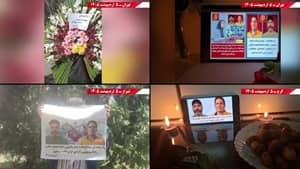
On May 1, 2026, as International Workers’ Day arrives, the Iranian working class finds itself enduring unprecedented economic devastation under the shadow of a fragile post-war ceasefire. Instead of succumbing to the clerical regime’s intensified repression, PMOI Resistance Units have launched a nationwide campaign to echo the true voice of Iranian workers. On April 30, these units marked the occasion by reiterating the Iranian Resistance’s long-standing tradition of fighting for the rights of all hard-working people in Iran.
Across major cities, including Tehran, Karaj, Rasht, Sari, Kermanshah, Bandar Abbas, Khorramabad, Borujerd, Tabas, and Dorud, activists held placards with bold messages of resistance. A core theme of the campaign was the historical continuity of workers’ oppression and the rejection of all dictatorships. In Tehran, Rasht, and Borujerd, placards read, “Every worker’s cry is ‘down with the oppressor, be it the Shah or the Supreme Leader,’” and “Workers are awakened and reject both the Shah and the mullahs.”
Recognizing that the regime will never grant them their rights, Resistance Units in Karaj, Sari, and Khorramabad urged the working class to take matters into their own hands, displaying signs that read, “To defend workers’ rights and secure peace and freedom, you must take up arms.” They reiterated their solidarity with the toilers, with banners in Tehran declaring: “Workers and toilers, hand in hand with the great Liberation Army, will bring down religious tyranny.”
Iran’s Desperate Regime Takes PMOI Families Hostage to Survive
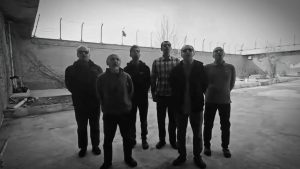
In tandem with its horrific execution spree, Iran’s regime is waging a silent, cruel war against the most vulnerable segment of society: the grieving families of political prisoners. Recently, the regime has escalated its systemic persecution by targeting the relatives of martyrs affiliated with the People’s Mojahedin Organization of Iran (PMOI/MEK). These arrests are not isolated events but form a calculated campaign of terror. Unable to break the resistance of the prisoners themselves, the desperately weakened regime is taking families hostage to exact collective punishment. Driven by a profound fear of PMOI Resistance Units, the regime is committing ongoing crimes against humanity to prevent its inevitable overthrow.
On April 18, 2026, authorities arrested Akram and Azam Daneshvarkar, the sisters of martyred PMOI member Akbar Daneshvarkar, a civil engineer who was severely tortured in Evin Prison’s Ward 209 before being executed on March 30.
ISJ Urges Decisive Global Action as Executions Surge in Iran
Brussels, 1 May 2026 – In a letter addressed to the leaders of the United States, United Kingdom, France, Germany, Italy, Canada, and the European Union, the International Committee in Search of Justice (ISJ), supported by more than 4,000 cross-party lawmakers across Europe and North America, called for urgent and decisive action in response to a sharp escalation of executions in Iran.
The letter warned that in recent weeks alone, the Iranian regime has executed at least 18 dissidents, including 10 young protesters and eight members of the Mujahedin-e Khalq (MEK). A further 11 MEK members remain on death row, facing imminent execution.
These targeted executions are part of a far broader pattern. According to the letter, no fewer than 670 prisoners have been executed in recent months, placing the regime on a trajectory to surpass the already alarming figures recorded in 2025, when as many as 2,028 executions were documented by opposition monitoring sources.
Women Bear the Brunt as 1.2M Iranian Workers Lose Jobs to War

On International Workers’ Day, alarming reports reveal that women and their families are bearing the heaviest burden of a worsening economic crisis, as war and recession have left 1.2 million construction workers jobless.
This mass unemployment has plunged households into a cycle of poverty and homelessness, while simultaneous internet shutdowns have further crippled the livelihoods of people with disabilities, including women, who relied on digital employment to survive.
One million and 200,000 construction workers, who are deprived of unemployment insurance, have lost their jobs in the wake of war and economic recession, leaving their wives and children living in extreme poverty and hardship. The families of these workers, most of whom live in rented homes, are now facing homelessness and find themselves under the mounting pressure of eviction notices after nearly two months without any income.
Iran Regime Arrests Sisters of Executed Political Prisoner
Akram Daneshvarkar and Azam Daneshvarkar, sisters of Akbar Daneshvarkar, who was executed on March 30, 2026, were arrested after repeatedly attempting to recover their brother’s body.
The arrests took place on April 18, 2026, following days of inquiries at Ghezel Hesar Prison, the forensic medicine organization, and judicial offices. Security forces reportedly took the two sisters into custody during one of these visits.
According to available information, Iran’s judiciary has opened a case against the sisters, charging them with “assembly and collusion against national security” and “disrupting public order.” They have since been transferred to Qarchak Prison in Varamin. Their primary demand had been to obtain information about the location of their brother’s body and burial site.
Akram Daneshvarkar, 54, had been actively involved in the campaign known as “No to Execution Tuesdays” prior to her arrest. She, along with her parents, had advocated for the suspension of her brother’s death sentence. Their detention comes amid increasing reports of pressure and intimidation targeting families seeking justice for executed or disappeared relatives.
End Appeasement, Not Through War: What Iran’s People Expect from the World

What constitutes the most urgent and defining issue for the Iranian people in the realm of international relations? What do they expect from the global community—particularly from Europe and the United States, actors with decisive influence over international policy?
At the core of Iran’s national interest lies a fundamental question: what strategy should these powers adopt toward a ruling establishment imposed on the Iranian people? Should the path forward be war, or a decisive end to appeasement?
To frame the issue plainly, consider the wave of executions carried out in Iran between March 30 and April 25, 2026. What responsibility did European countries and the United States bear in responding to these events? Notably, these governments largely refrained from issuing strong condemnations. This silence demands scrutiny. Does it reflect calculated diplomacy, or does it reveal a troubling prioritization of short-term strategic interests over fundamental human rights?
Iran’s Power Grid in Ruins: The Hidden Costs of a 40-Day War

In recent days, Iran’s state-run newspapers have published staggering statistics on the destruction caused by the 40-day war. Yet these reports remain narrowly focused on the scale of financial losses, avoiding a critical examination of the political decisions that led to the conflict and imposed such a heavy burden on the Iranian people.
As the country’s already fragile power grid buckles under both pre-existing imbalances and wartime damage, a fundamental question remains unanswered: why did this confrontation occur in the first place?
The recent war has inflicted approximately 60 trillion tomans in damage to Iran’s energy infrastructure. This comes on top of a system that was already struggling with chronic supply-demand imbalances.
Compounding the crisis, meteorological forecasts warn of the arrival of the El Niño phenomenon, bringing an unusually hot summer. These conditions are expected to sharply increase electricity demand, raising the likelihood of prolonged blackouts.
Reza Pahlavi and the Rise of a New Semi-Fascist Narrative
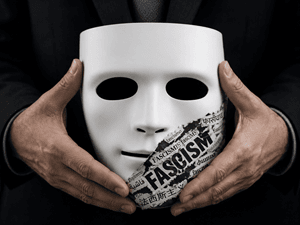
In today’s Iran, amid deep economic strain, political disillusionment, and a profound crisis of trust, a particular political current has been steadily reframing itself as a “solution”: the movement centered around Reza Pahlavi. What makes this trend significant is not its strength, but the specific pattern it follows—one that bears the surface features of authoritarian and semi-fascist politics, without possessing their structural depth or historical coherence.
This current does not present a detailed political program, nor does it emerge from sustained engagement with the realities inside Iran. Instead, it relies on a familiar triad: fear of the future, humiliation rooted in past failures, and a polished nostalgia for a reconstructed past. These elements are not accidental—they are the core psychological drivers through which simplified political narratives gain traction in societies under pressure.
At the center of this narrative lies a subtle but critical transformation of the concept of “homeland.” In this framework, the homeland is no longer understood as a living society composed of citizens with rights, agency, and diversity. It is reduced instead to territory—land, borders, and a space to be reclaimed and controlled. This shift is not merely rhetorical; it signals a regression from modern citizenship to a hierarchical, quasi-feudal imagination of power, where authority flows from the top and the population becomes subordinate to it.
International Workers’ Day in Iran: A Day of Protest, Not Celebration

Is International Workers’ Day a moment of dignity and recognition for workers in Iran? Do Iranian workers celebrate this global occasion with a sense of unity and national pride?
The evidence—particularly over the past four decades—points to a starkly different reality. For Iranian workers, International Workers’ Day has become a rare opportunity to express accumulated anger over systemic exploitation, protest the rising cost of living, and demand their most basic labor rights.
Rather than a celebration, this day serves as a reminder of one of the deepest class divides in Iran’s modern history. Under a system where economic resources—from industrial capital to natural wealth—are effectively monopolized by ruling religious authorities, workers and large segments of society remain excluded from meaningful access to national wealth.
Iran: A Dangerous Country for Journalists

According to Reporters Without Borders (RSF), the state of press freedom worldwide has fallen to its lowest level in the past quarter century. Meanwhile, conditions for journalists in Iran have deteriorated alarmingly, with the country now ranked 177th in the global index. After dropping one place, Iran remains among the most dangerous environments for media activity. This structural decline reflects relentless pressure on those responsible for informing the public. International reports emphasize that only Eritrea, North Korea, and China rank worse than Iran in terms of press freedom conditions.
According to the report published by Reporters Without Borders on April 30, the global average score for press freedom has reached its lowest point in the past 25 years. The index, published annually by RSF, evaluates countries in five key areas. These areas include economic, legal, security, political, and social criteria that determine journalists’ professional safety. The findings show that the legal indicator experienced the steepest decline during the past year. This reflects the increasing criminalization of media activities worldwide, particularly in Iran. At present, more than half of the countries in the world fall into the categories of “difficult” and “very serious.”
The Executioner Unmasked: Nooses as a Tool for Survival

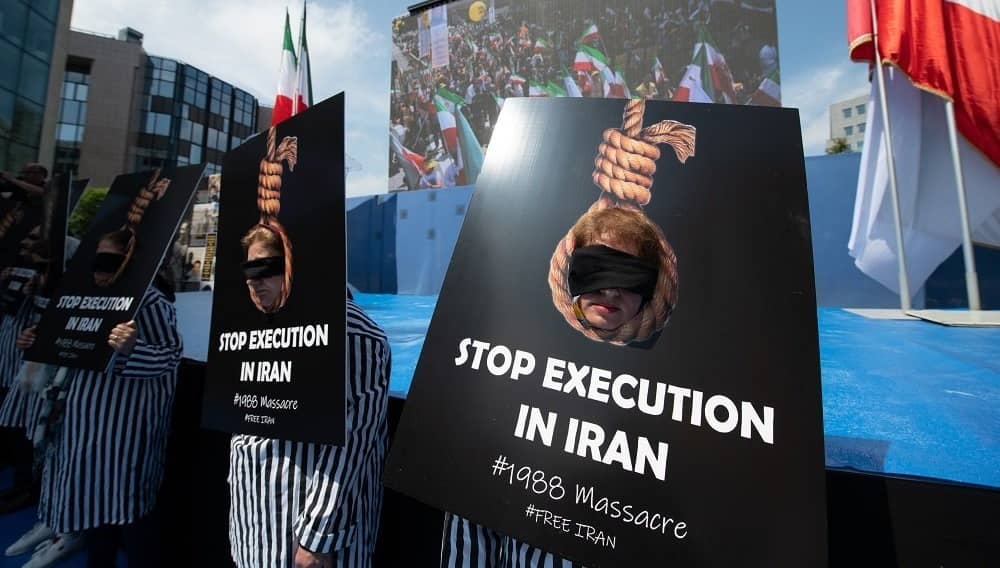
Following the execution of at least 19 political prisoners within 54 days, which has triggered a wave of global condemnation and stirred world public opinion against these killings by the Islamic Republic, the Chief Justice of the Islamic Republic has pulled back the curtain on the true nature of this regime—namely, its total lack of regard for international human rights. According to a report by Rokna News Agency dated April 30, 2026, he stated before a gathering of judicial officials and heads of justice departments: “The political and propaganda apparatus of the invading enemy, composed of vile and wicked elements, says ‘so-and-so criminal should not face the consequences of his actions and be executed’; who do you think you are to engage in such rhetoric?! We will certainly not falter or show leniency in the trial and legal punishment of that criminal whose hands are stained with the blood of our people, and we pay no heed to the rhetoric of the arrogant and their propaganda loudspeakers.”
Iran Speeds Up Protester Executions Despite Rising Global Pressure

Tehran signals no retreat as officials push for faster death sentences tied to unrest.
Iran is accelerating the pace of protester executions despite intensifying global pressure.
Senior judicial officials say verdicts should be issued and carried out more quickly. The stance is deepening tensions with human rights groups. Iran’s judiciary is doubling down on a hardline approach to protest-related cases, emphasizing speed in both trials and punishment. Gholamhossein Mohseni Ejei has called for rulings to be finalized and enforced without delay, insisting authorities should not be swayed by foreign criticism.
State-affiliated outlets have echoed that message, framing detained protesters as “enemy collaborators” or criminals whose cases demand urgent resolution. The narrative portrays swift justice as a public demand rather than a political choice.