

THIS PAGE WILL BE UPDATED WITH THE LATEST NEWS
UPDATE: 04:00 PM CEST
Iran Building Roadblocks At Nuclear Site To Prevent Ground Attack

Iran is building roadblocks at a key nuclear complex amid threats of a US or Israeli ground operation to seize its stockpile of highly enriched uranium. According to satellite imagery, the regime has blocked Isfahan’s three tunnel entrances with earthen berms, fences and piles of rubble.
Construction of the defensive measures began on or after March 18, the Washington-based Institute for Science and International Security (ISIS) reported. They would delay any raid and expose troops to Iranian missile fire, analysts told The Telegraph.
At least half of Tehran’s stockpile of 400kg of highly enriched uranium (HEU) – the key ingredient for a nuclear weapon – is thought to be held at Isfahan, one of three main complexes alongside Fordow and Natanz.
Around 200kg would provide enough to build five nuclear weapons.
My Brother Dreamt of Iran’s Liberation. The Regime Hanged Him in Jail

Hamed Baniamerian wishes he had spoken to his younger brother one last time. Now it is too late. Vahid, a 33-year-old electrical engineer, was marched out of his cell and hanged a week ago ago in the Ghezel Hesar prison near Tehran.
“I would have told him I love him, that I will miss him, that I didn’t want him to go,” said Hamed, 37, his voice breaking over the phone. “I always felt a sense of responsibility for my little brother. This is devastating for me.”
Their parents live in western Iran. They have still not been able to retrieve their son’s body for a funeral. They were denied a final visit to see him in jail, and learnt of his execution only when it was announced on state media. Vahid was accused, along with five others executed in recent days, of membership in a militant opposition movement, the People’s Mojahedin Organization of Iran (MEK), long outlawed by the authorities.
It would have been agonising for his family under any circumstances. But in the context of the war with Israel and the United States, and with the threat of airstrikes, the loss was compounded by fear and confusion.
UPDATE: 09:00 AM CEST
New Details Emerge of the Final Hours of Six Executed PMOI Members
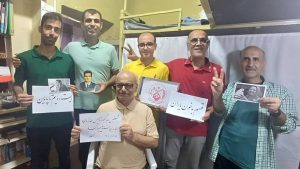
Following the massive nationwide uprisings in December 2025 and January 2026 that brought the clerical regime to its knees, the ruling establishment has rapidly accelerated its campaign of state-sanctioned terror against dissidents.
Driven by profound weakness and desperate to maintain its hold on power following the death of Ali Khamenei and the installation of his son Mojtaba on March 9, 2026, the regime has increasingly used the gallows to physically eliminate its organized opposition.
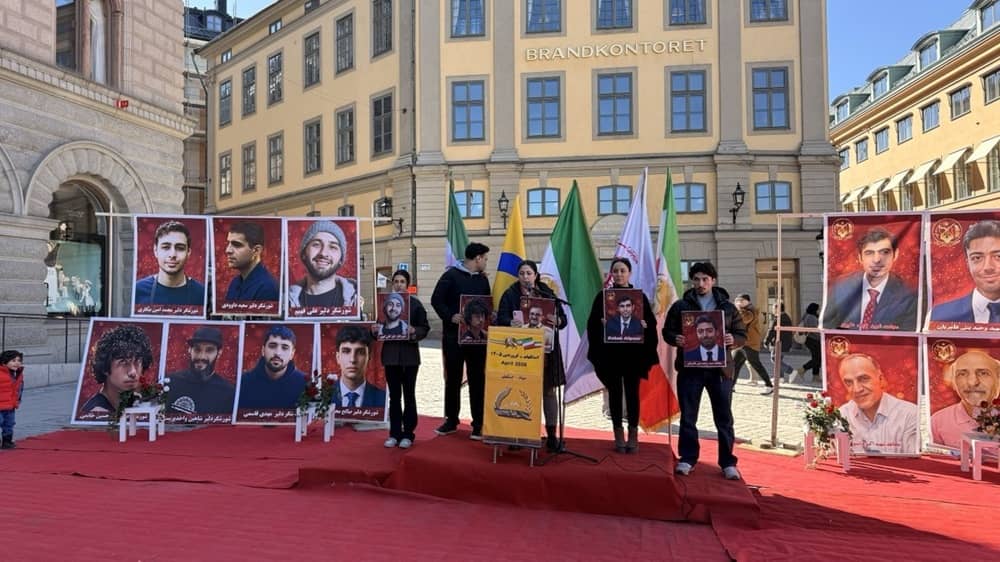
In a heinous act of state murder between March 30 and April 4, 2026, authorities hanged six political prisoners and members of the People’s Mojahedin Organization of Iran (PMOI/MEK). While the regime attempted to quietly execute these dissidents, shocking newly obtained information from inside Ghezel Hesar Prison reveals the brutal deceit of the midnight raid that led to their deaths, as well as the extraordinary defiance of the martyrs in their final moments.
Be Wary of Iran’s Propaganda Machine

The dust of conflict has settled. The fever of the moment has yielded to the cooler discipline of strategic reflection. It is time to ask, with unflinching clarity, what the United States and its partners should do with the Islamic Republic of Iran. Tehran’s propaganda organs were quick to claim victory. That claim, however theatrical, must be taken seriously — not because it reflects battlefield reality, but because it reveals an uncomfortable truth: the regime cannot, or will not, abandon the terrorist and extremist doctrines that have defined it for more than four decades. No amount of quiet concessions extracted in back-channel talks can alter the fact that its public posture remains implacable. Neither the nations of the region nor the broader international community can any longer pretend that peaceful coexistence with this regime is possible.
PMOI Resistance Units Welcome Ceasefire, Honor Martyrs, And Demand a Democratic Republic
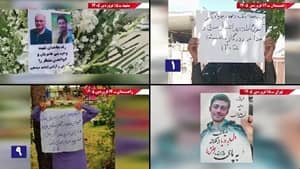
On April 10, 2026, PMOI Resistance Units resumed their bold anti-regime activities in Zahedan, southeast Iran, holding up placards and messages in public locations. Despite the regime’s unbridled bloodshed and a massive wave of recent political executions, these activists remain highly active on the ground, proving that the regime’s heavy-handed crackdown has failed to silence the opposition. The Resistance Units in Zahedan displayed banners welcoming the recent 15-day ceasefire, expressing hope that it will end the war and pave the way for true peace and freedom. This grassroots message echoes the official stance of Maryam Rajavi, the President-elect of the National Council of Resistance of Iran (NCRI). She welcomed the halt to attacks on civilian infrastructure as the “most appropriate decision” by the United States, reaffirming that the slogan of the Iranian Resistance and the provisional government has always been “peace and freedom.”
Iran NTV Exclusive: Vahid Baniamerian’s Final Defense Against the Regime
Simay Azadi (Iran NTV) – A smuggled video from Iran’s notorious Evin Prison has captured the final, unyielding defiance of Vahid Baniamerian, a 32-year-old member of the People’s Mojahedin Organization of Iran (PMOI/MEK) known within his unit as Commander Vahid, who was executed on April 4, 2026. Five other PMOI members from the same group on identical charges of supporting the opposition were also execution from March 29 to April 4.

In the recording, Baniamerian rejected the legitimacy of the “tribunal that bore no resemblance to a court” that had sentenced him to death, dismissed the regime’s offer of repentance as meaningless, and delivered a stinging indictment of its long history of suppression—reaffirming instead his commitment to a democratic Iran and the 10-point plan of Maryam Rajavi. His words, now a posthumous testament, underscored the resolve of a generation that has come to see personal survival as secondary to the struggle for the nation’s freedom.
War Beyond the Battlefield: How Strikes on Iran Are Reshaping Its Education System
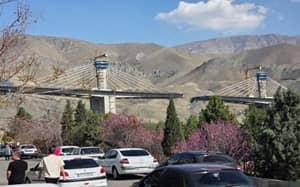
The recent U.S. and Israeli strikes on multiple regions across Iran have left visible scars far beyond military or strategic targets. Among the most consequential—and least discussed—casualties is the country’s education system, now grappling with both physical destruction and systemic disruption.
According to official figures released by Iran’s School Renovation, Development, and Equipment Organization, more than 640 educational and administrative facilities across 17 provinces have been damaged. Of these, approximately 250 require major repairs, while at least 15 schools must be completely demolished and rebuilt. These are not isolated incidents—they represent a nationwide blow to already strained infrastructure.
Authorities have responded with familiar promises. Reconstruction projects are reportedly underway, including the planned “Shajareh Tayyebeh” educational complex, intended as a memorial to students killed during the attacks. The project is set to include two 12-classroom schools. Yet such symbolic gestures, while politically resonant, do little to address the scale or urgency of the crisis.
Amnesty International: Internet Access Is a Fundamental Human Right and Must Be Restored Immediately

As Iran continues to experience one of its longest internet disruptions, Amnesty International on Friday, April 10, pointed to the regime’s repeated history of restricting internet access in the country and called for an immediate end to the situation.
In a statement, the organization said that as the internet shutdown approaches nearly 1,000 hours, officials of Iran’s regime must “immediately restore internet access.” The message emphasized that Iranian citizens have been living in digital darkness during this period and reminded that internet access is a fundamental human right and critically important in times of crisis.
According to data published by NetBlocks, the internet disruption in Iran has entered its 42nd day and has exceeded 984 hours; a figure that places this event among the longest internet shutdowns in the world and once again highlights Iran’s position among countries with severe internet restrictions.
Hold the Perpetrators of Political Executions in Iran Accountable: International Debt to Human Rights
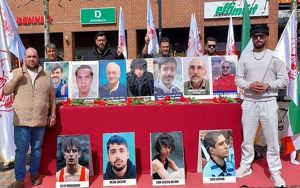
Between March 30 and April 9, 2026 (10-20 Farvardin 1405), ten political prisoners were executed in Qezel Hesar Prison. These individuals included political prisoners Vahid Bani-Amerian, Mohammad Taghavi, Babak Alipour, Pouya Ghobadi, Abolhassan Montazer, and Akbar Daneshvarkar, along with four detainees from the nationwide uprising of January 2026: Amirhossein Hatami, Mohammad-Amin Biglari, Shahin Vahedparast, and Ali Fahim.
These executions were accompanied by a violent raid on the political ward. Reports received by Iran Human Rights Monitor (Iran HRM) indicate that this process was coordinated and conducted under the direct supervision of prison officials, including Allah-Karam Azizi (Governor) and his deputy, Hassan Ghobadi (Azizi’s deputy), with Ghasem Sahraee serving as the officer on duty.
Iranian Resistance Supporters in Melbourne, Australia Condemn Executions of Political Prisoners

Melbourne, Australia – April 10, 2026: Supporters of the Iranian Resistance held a book stall and photo exhibition in Melbourne to protest the executions of six political prisoners — Mohammad Taghavi, Akbar Daneshvar Kar, Babak Alipour, Pouya Ghobadi, Vahid Bani-Amerian, and Abolhassan Montazer. The victims were affiliated with the People’s Mojahedin Organization of Iran (PMOI/MEK).