

Three-minute read
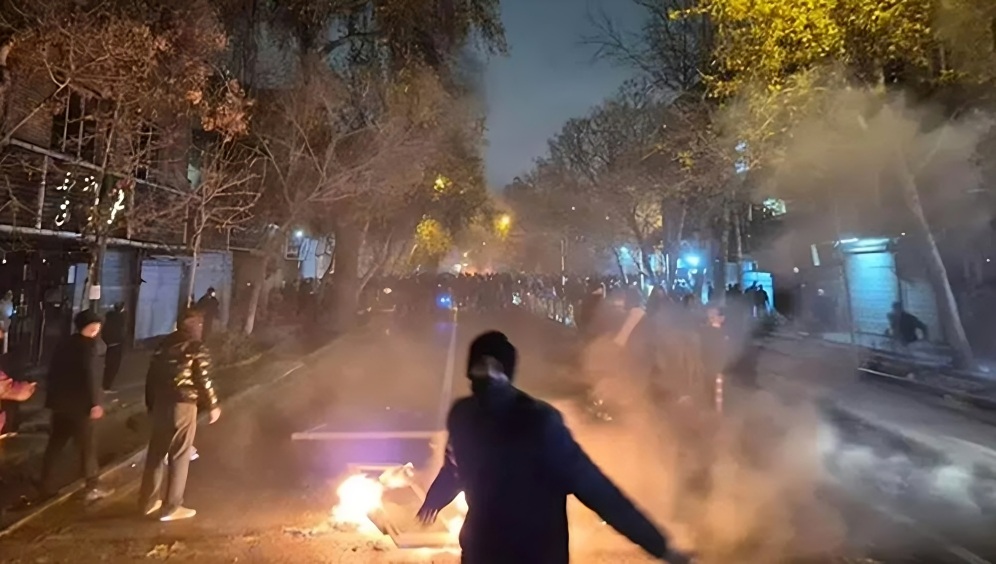
Iran has entered one of the most consequential periods in its modern history. The January 2026 uprising, the killing of thousands of protesters by the Islamic Revolutionary Guard Corps, the death of the regime’s supreme leader, Ali Khamenei, and two devastating wars have brought the country to a decisive crossroads. These events have not merely shaken the regime; they have stripped away long-sustained illusions about its nature, its methods, and the forces that may ultimately shape Iran’s future.
Among the clearest lessons of this period is the catastrophic cost of appeasement. For years, many outside Iran argued that concessions, dialogue, and accommodation could moderate the clerical establishment. Yet the record described by these events points in the opposite direction. Far from reforming, the regime has continued to rely on the same three pillars that have defined its survival: domestic repression, nuclear ambition, and regional belligerence.
NCRI Editorial: Appeasement with #Iranian Regime Cannot Change its Fate, Only Extend the Sufferinghttps://t.co/LkEJxCXVBN
— NCRI-FAC (@iran_policy) October 1, 2025
Recent developments have also underscored another reality: foreign bombing and external war do not, by themselves, bring down this regime. Military confrontation has inflicted damage, but it has not changed the regime’s essential behavior. It has not persuaded the authorities to abandon nuclear weapons ambitions, to give up proxy warfare, or to stop suppressing their own people. The system remains committed to coercion because coercion is not incidental to its rule; it is central to it.
If these events have discredited old assumptions, they have also thrown a new reality into sharper relief: the decisive role of the Iranian people and the organized resistance. No outside power can substitute for the social and political force capable of carrying Iran from religious dictatorship to a democratic and pluralist republic. In the unfolding equation of Iran’s future, that force appears increasingly central.
The past year marked a period of significant growth for the Resistance. During the January uprising, MEK-affiliated Resistance Units played an important role, carrying out hundreds of operations that helped create a protective shield for protesters and demonstrated an ability to organize youth under conditions of extreme repression. Their importance lies not only in confrontation, but in structure: a movement that recruits in workplaces and neighborhoods, rooted in ordinary social life, can be far more difficult for the security apparatus to isolate and destroy.

This is precisely why the regime appears deeply alarmed by the attraction of a new generation to the MEK and their networks. These are young people portrayed as eager to organize, willing to sacrifice, and capable of remarkable courage under the harshest conditions. Even when arrested, condemned, and threatened with execution, they have shown a resilience that speaks to something larger than individual dissent. It suggests the emergence of a political generation that no longer seeks accommodation with the existing order, but its overthrow.
The execution of political prisoners during the war, including members of the MEK and others arrested during the uprising, is therefore seen not simply as repression, but as an expression of fear. The regime understands that the danger it faces is not sporadic unrest alone, but the advance of a strategy that links protest, organization, sacrifice, and continuity. It is this strategic dimension—rather than isolated moments of anger—that makes the current challenge different.

What became visible during the uprising is that this movement may now extend beyond the boundaries of a single organization. Its line of struggle has become a broader social phenomenon. When a movement’s ideas, symbols, and methods are taken up by growing layers of society, it ceases to be only a group; it becomes a current. And currents, not isolated factions, are what uproot entrenched systems.
At the same time, the regime itself appears increasingly fragile. Its weakness now looks structural, not temporary. Khamenei’s son may seek to imitate his father’s style and posture, but imitation cannot restore the authority that decades of crisis have eroded. A system battered by war, economic exhaustion, leadership crisis, and popular rebellion is not confronting a passing disturbance. It is confronting accumulated decline.
NCRI Editorial: The Inescapable Core of #Tehran’s Nuclear Obsessionhttps://t.co/Hjho3uewG4
— NCRI-FAC (@iran_policy) May 30, 2025
The regional dimension matters as well. Neighboring states, after years of trying to manage relations with Tehran through compromise and concession, have now experienced the bitter consequences of that approach. The belief that coexistence with the regime could guarantee stability has been badly shaken by war and destruction. The Iranian Resistance has long argued that peace in the region depends on ending this regime through the Iranian people and their organized struggle. In light of recent events, that argument now carries new weight.
As ceasefire efforts continue, Iran may be entering a new phase. A retreat by the regime from its nuclear weapons program would be significant, especially given the long history of opposition exposure of its nuclear sites and projects. But even that would not necessarily signal moderation. For a regime whose survival depends on repression, proxies, and nuclear leverage, such a retreat could instead mark the beginning of a steeper descent.
Iran’s future now turns on one question: who will shape the post-crisis order? The answer emerging from these events is that neither appeasement nor foreign war offers a solution. The determining force lies within Iran itself—in a people who have paid dearly, and in a resistance that seeks to transform sacrifice into political change.