

THIS PAGE WILL BE UPDATED WITH THE LATEST NEWS
UPDATE: 04:00 PM CEST
Iranian Protesters Bravely Sing Together in Prison Before They Are Hanged by Regime Executioners

Heartbreaking footage shows six Iranian dissidents singing a song of resistance before their execution by the regime.
The smuggled video, obtained by The Sunday Times, captures the men in the courtyard of the notorious Ghezel Hesar prison, making a final stand against the Islamic Republic.
‘Your rival stands before you now, hardened in the flame — I am the faith, I am revolt, with belief I take my stand — I’ve sworn an oath upon my blood, the tyrant’s throne shall shatter,’ they are heard singing in Farsi in the footage from February.
The men have been identified as Vahid Baniamerian, Babak Alipour, Abolhassan Montazer, Pouya Ghobadi, Ali Akbar Daneshvarkar and Mohammad Taghavi.
Pouya Ghobadi, 33, an electrical engineer from Sonqor in the west of Iran, was tortured before the Iranian regime hanged him on March 31, according to Amnesty International.
He was accused of armed rebellion against the state and membership in an outlawed organisation, as was Vahid Baniamerian, who was executed on April 4.
Baniamerian appeared in another smuggled video, speaking directly to then-Ayatollah Ali Khamenei.
UPDATE: 12:00 PM CEST
Iran’s Unused Oil Storage Shrinks to 22 Days or Less, Kpler Says

Iran is rapidly running out of places to store crude oil, threatening to accelerate production cuts in what was once OPEC’s second-largest source, according to research firm Kpler.
The Islamic Republic has enough unused storage capacity to last another 12 to 22 days, Kpler analysts wrote in a report Monday. That is raising the prospect that Iran may be forced to cut daily oil output by another 1.5 million barrels by mid-May, they added.
Iran already has curtailed as much as 2.5 million barrels of daily crude production, Goldman Sachs Group Inc. said last week. Neighboring producers such as Saudi Arabia, Iraq, Kuwait and the UAE are also among nations that have had to reduce output since the conflict erupted on Feb. 28.
UPDATE: 08:30 AM CEST
Unbroken Resolve: How Executions of PMOI Martyrs Sparked a New Wave of Defiance Across Iran
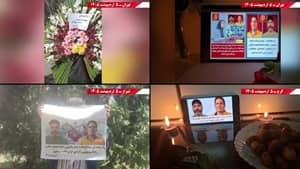
The Iranian regime’s relentless campaign of executions has failed to intimidate the nation’s youth. On April 20, the religious dictatorship hanged two members of the People’s Mojahedin Organization of Iran (PMOI/MEK), Commander Hamed Validi and Mohammad (Nima) Massoum-Shahi. With this atrocious crime, the number of PMOI members executed in just the past three weeks has risen to eight. In addition, eight other young protesters have been executed during this period, including one detainee from the recent uprisings who was killed under torture.
The mullahs are actively exploiting wartime conditions to resort to relentless executions. The regime’s objective in carrying out these killings is clear: to spread fear and terror among Iran’s youth and prevent them from joining the ranks of the Resistance Units. However, the immediate and defiant public response from the Resistance Units proves that the regime’s efforts are entirely futile.
Executing the Future: How the Iran Regime Uses War as a Pretext for Repression

Look closely at the pattern. This is not an isolated sequence of judicial acts—it is a coordinated policy.
Within days: Amer Ramesh executed on April 26. Erfan Kiani on April 25. Hamed Validi and Mohammad Masoum-Shahi—identified as members of resistance units—on April 20. Before them, at least sixteen more young individuals and alleged dissidents executed in mid-April. This is not a list. It is a roadmap. What emerges is the operational logic of the Iran regime under pressure: a system that, confronted with the specter of internal uprising, has turned to executions as an instrument of anticipatory repression. Under the shadow of war, the regime is not merely reacting—it is preempting.
The case of Amer Ramesh is illustrative. Born in 2004, he was arrested three years ago on charges of bomb placement and ambush against security forces. His execution now, in the midst of heightened military tensions, is not incidental timing. It reflects a deliberate convergence of wartime conditions and domestic control strategy. Similarly, Erfan Kiani was executed on charges the regime frames as “leading uprisings”—a label that effectively criminalizes dissent itself.
Iran Steel Industry Reeling After War Damage and Structural Pressures
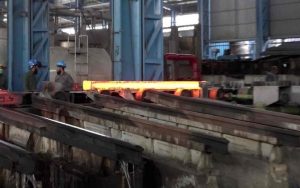
In the aftermath of the 40-day war involving the United States, Israel, and the Iranian regime, emerging reports indicate that key segments of Iran’s steel industry have sustained extensive damage. Major complexes, including Khuzestan Steel Company and Mobarakeh Steel Company in Isfahan, are said to require substantial reconstruction and infrastructure modernization.
The Iran regime’s Minister of Economic Affairs and Finance has stated that rebuilding damaged industries—particularly steel—will be guided by criteria such as water consumption. For many analysts, this signals a reduced likelihood that major facilities like Mobarakeh Steel will be reconstructed in their current locations in Iran’s central plateau, a region long plagued by severe water shortages.
Experts in energy and environmental policy have repeatedly warned that, given land-use constraints and the water-intensive nature of steel production, maintaining such industries in central Iran is no longer viable. Instead, they argue for a gradual relocation of steel production to coastal regions along the Persian Gulf and the Sea of Oman. Supporting this view, Iran’s Planning and Budget Organization has indicated that future development of steel industries must align with regional climatic conditions and available water resources.
Iran’s Medicine Crisis Deepens in the Aftermath of War and Economic Strain
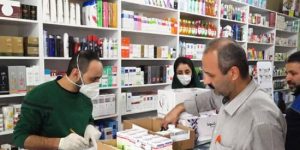
Several weeks after the war involving the United States, Israel, and Iran—and despite a fragile ceasefire—the shortage and rising cost of medicine in Iran is no longer an isolated concern. It is rapidly evolving into a widespread humanitarian and public health crisis. The Iran medicine crisis is the result of multiple converging pressures: disruption in supply chains following the conflict, shifts in currency policy, and mounting financial strain on both insurers and ordinary citizens. Yet beyond macroeconomic indicators and policy analysis, the crisis is most acutely reflected in the daily struggles of patients trying to access life-saving treatments.
The war in the Persian Gulf severely disrupted two critical arteries of Iran’s pharmaceutical supply chain: the Strait of Hormuz and regional air transport routes. According to analysis published by the Think Global Health website, trade volume through the Strait of Hormuz dropped by nearly 90 percent in the early days of the conflict, while air freight capacity across the Gulf also declined sharply. These disruptions have delayed and increased the cost of transporting not only oil and industrial goods but also medicines and pharmaceutical raw materials.
The Illusion of Alternatives and the Reality of Revolution in Iran
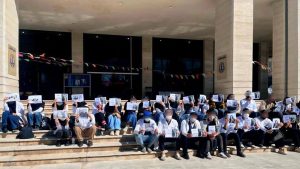
When global powers observed that the current Iran regime had entered a phase of weakness, the engine of “alternative-building” was set into motion at full speed. It is a large engine—but an outdated and worn one.
At its head stands Reza Pahlavi, son of the deposed Shah. He called on people in the streets not to organize or resist, but to stand behind their windows and wait for the fall of “liberating bombs.” At the same time, he repeatedly urged global powers to go to war with Iran—without ever assuming responsibility for the consequences of such calls.
The presence of the people in the January 2026 uprising, amid fire and blood, was repackaged through slogan amplification in his favor. This self-proclaimed “future king,” riding on the pain and aspirations of the people, saw narratives multiplied across social media and mass communication channels—repeated, amplified, and embedded into the minds of those yearning for change.
Iran’s Nurses Reject the Regime’s ‘Pro Internet’ Plan

At a time when public access to the internet in Iran is facing widespread restrictions, the issue of “Pro Internet” has become a major topic of debate. This type of special access, designed for certain groups and institutions, has sparked various reactions. In this context, the Nursing Organization (a professional body representing nurses in Iran) has taken a different stance and rejected the use of this privilege.
According to a report published on April 26, the Nursing Organization, which has around 300,000 members, has officially opposed Pro Internet. Ahmad Nejatian, the head of the organization, stated that nurses do not consider themselves separate from the public and do not seek special privileges.
Pro Internet has been introduced as a new model of access to the global network. Rather than focusing primarily on speed, it emphasizes connection stability and less restricted access to certain international services. Access to Pro Internet is mainly designed for groups such as businesses, technology companies, and certain professional institutions.
Iranian Political Prisoner Naser Bakrzadeh’s at Risk of Execution
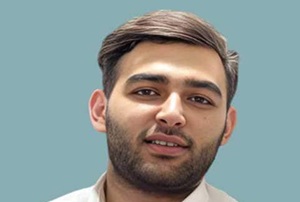
Following the confirmation of Naser Bakrzadeh’s death sentence by Iran’s Supreme Court, the risk of his imminent execution has significantly increased. Bakrzadeh, a political prisoner who had previously been sentenced to death twice in the same case, is now facing a death sentence for the third time. This comes amid reports from legal sources and those close to him indicating torture, forced confessions, and repeated violations of fair trial principles in his case.
According to published reports, on Saturday, April 25, Naser Bakrzadeh was summoned to the sentence enforcement office of Urmia Central Prison, where the confirmation of his death sentence by the Supreme Court was officially communicated to him.
The ruling was communicated to him at a time when the implementation of death sentences in political and security-related cases across the country has intensified, raising concerns about the rapid and unannounced execution of such sentences.
A New Wave of Mass Arrests in Iran

Following the wave of repression after the nationwide protests of January 2026, the Iranian regime’s security and judicial institutions have in recent days launched a new round of widespread arrests across the country. The detention of hundreds of citizens in various provinces, issuance of disciplinary rulings against students, confiscation of critics’ property, and attribution of charges such as espionage and collaboration with the enemy to detainees indicate an intensification of the regime’s security policies to control society and prevent the emergence of any new protests.
Published reports indicate that in recent days, hundreds of citizens have been arrested in various parts of the country on security-related charges. In western Iran alone, at least 239 citizens have been detained in the provinces of Kurdistan and Kermanshah under allegations of affiliation with opposition groups.
At the same time, the Ministry of Intelligence and the Islamic Revolutionary Guard Corps (IRGC) have reported the arrest of dozens more individuals in the provinces of Ilam, Sistan and Baluchestan, Gilan, Lorestan, West Azerbaijan, Mazandaran, Tehran, and East Azerbaijan. In most cases, broad and security-related accusations such as collaboration with the enemy, espionage, links to hostile groups, or media activities against the regime have been raised, without any independent evidence being published to support these claims.
Iran’s Housing Market Under the Rubble of War
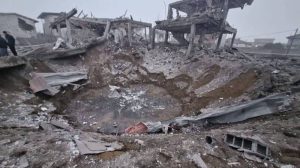
The 40-day war involving Iran’s regime, the United States, and Israel led to a phenomenon analysts describe as “wartime freeze.” Between February 28 and mid-April, property transactions nearly dropped to zero. Field reports indicate that the average price per square meter in Tehran now fluctuates between 1.25 billion and 1.33 billion rials (approximately 800 to 850 dollars). After a 15.6% surge in January–February, prices stagnated due to the shadow of war. Sellers, facing uncertainty about the future of peace, have increased asking prices by up to 10%. However, buyers have withdrawn from the market and shifted their capital into gold. In areas such as District 1 of Tehran, record prices of 5.8 billion rials (approximately 3,718 dollars) have been reported for select properties.
Experts believe the housing market is currently in a state of waiting for lasting political stability. The fluctuation of the dollar around 1.6 million rials has completely disrupted developers’ calculations for new projects. Year-on-year inflation in March and April reached 50.6%, a serious warning sign. This inflationary pressure has turned housing from a consumer good into a safe haven for preserving value. Without a non-aggression agreement, a short-term recovery in property transactions appears unlikely.
Iran Sentences Three Women to Death Over January 2026 Protests—What Comes Next

Three women are now on death row in Iran over their alleged roles in the January 2026 protests—a shift that signals a sharper turn in the country’s crackdown. Rights groups warn the cases could set a precedent, with executions increasingly used to deter dissent.
According to multiple human rights organizations and reports published by Hengaw, at least three women have been sentenced to death in connection with the January 2026 nationwide protests.
Among them is Ameneh Soleimani, a doctor accused of treating injured protesters. Rights groups say she was charged with security-related offenses, despite her actions being described as medical assistance. Her case has drawn particular attention as an example of how even indirect support for protesters is being criminalized.
Another confirmed case is Maryam Hodavand, who has been sentenced to death over allegations tied to participation in protests and links to opposition activity. Human rights sources stress that her sentence has already been issued, not merely under consideration, though details of her trial remain limited and not independently verified.
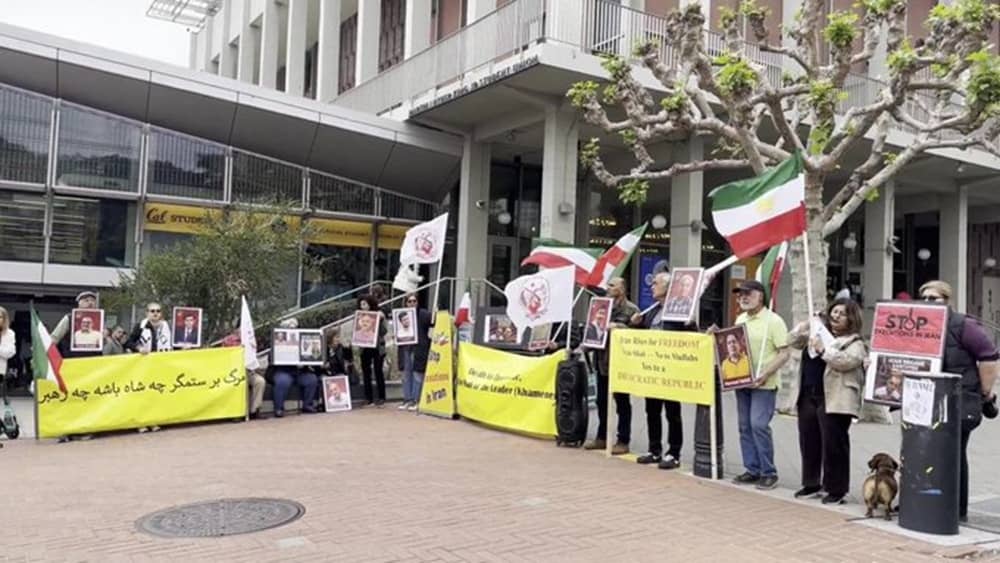
Berkeley Rally Exposes Iran’s Execution Surge, Rejects Shah and Mullahs, and Backs NCRI Alternative
Berkeley, California — April 25, 2026: The Iranian-American Community of Northern California gathered to highlight Iran’s alarming surge in executions, especially of PMOI members, along with protesters arrested during the January 2026 uprising. The regime shows what it fears most: the MEK Resistance Units inside Iran resisting clerical fascism. Protesters rejected both the Shah and the mullahs and expressed full support for the NCRI Alternative as the democratic path for Iran’s future.
Video
Berkeley Rally Exposes Iran’s Execution Surge, Rejects Shah and Mullahs, and Backs NCRI Alternative#StopExecutionsInIran #No2ShahNo2Mullahs #NCRIAlternativepic.twitter.com/fXAoViDJwg— Iran Freedom (@4FreedominIran) April 27, 2026
Supporters of the People’s Mojahedin Organization of Iran (PMOI/MEK) in Berkeley drew attention to what participants called a rapidly intensifying campaign of state violence. Demonstrators warned that the regime is increasingly resorting to executions to conceal its internal weaknesses and suppress rising unrest across the country.
Vancouver Rally Condemns Execution of Political Prisoners, Urges Firm Action Against Iran Regime

Vancouver, Canada – April 25, 2026: Supporters of the People’s Mojahedin Organization of Iran (PMOI/MEK) gathered to condemn the executions of PMOI political prisoners and protesters of the January 2026 uprising carried out by the Iranian regime, and to honor their memory.
Iranian Resistance Supporters and Kurdish Compatriots Rally in Copenhagen Against Executions and IRGC Attacks
