

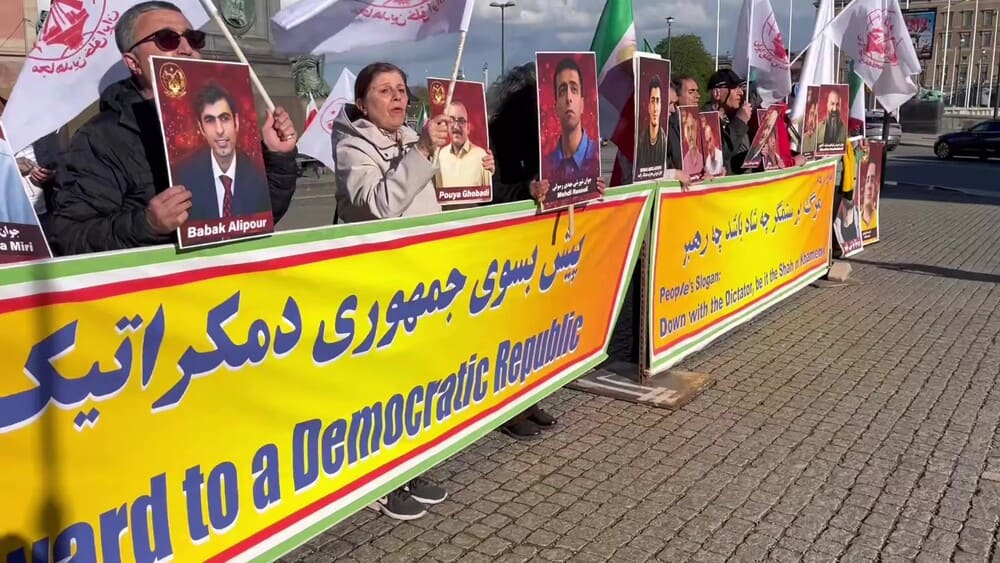
THIS PAGE WILL BE UPDATED WITH THE LATEST NEWS
UPDATE: 01:30 PM CEST
Will Europe Stand with the Oppressor or the People of Iran?

On 22 April 2026, I had the honor of being present at the conference held at the European parliament in Brussels under the title Iran: Take Action to Stop Executions — Where Does the EU Stand?
At that conference, the president-elect of the National Council of Resistance of Iran (NCRI) Mrs. Maryam Rajavi, members of the European parliament, former Belgian prime minister Guy Verhofstadt and many international figures made one point unmistakably clear: executions in Iran are not judicial punishments: they are political weapons.
One of the most powerful examples of courage inside Iran is the “No to Executions Tuesdays” campaign. For more than 118 consecutive weeks, prisoners across 56 prisons have carried out coordinated hunger strikes to protest against executions, torture and political repression. These prisoners have made clear that executions are not isolated legal punishments, but instruments of dictatorship. They describe a regime on a “war footing” against its own society. They speak of sham trials, enforced disappearances, denial of legal rights, and even the refusal to return the bodies of executed prisoners to their families.
UPDATE: 08:00 AM CEST
Iran Regime Adds Six Months to Prison Sentences of Two Women in Evin Prison
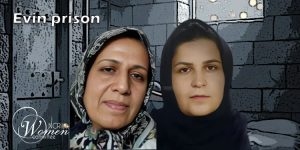
Amid an ongoing escalation of judicial pressure against female political prisoners in Iran, authorities have imposed an additional six-month prison sentence on two inmates held in Evin Prison, Shiva Esmaeili and Elaheh Fouladi. The new ruling follows the initiation of a legal case against the two women, which was opened last year in response to their protest to the death of fellow detainee Somayeh Rashidi. The charge brought against them has been described as “insulting the leadership.” This latest verdict directly extends the sentences of Esmaeili and Fouladi and is widely viewed as a continuation of repressive policies targeting female political prisoners in Evin Prison. Somayeh Rashidi, a 42-year-old political prisoner held in Qarchak Prison in Varamin, died on September 25, 2025, after spending ten days in a coma at Mofatteh Hospital in Varamin.
An Eyewitness Account of the Final Hours of Six Political Prisoners in Qezel Hesar
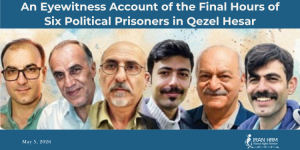
Some narratives set words on fire. What you are about to read is the jarring report of an eyewitness from the night of March 29, 2026, in Qezel Hesar Prison; a night in which the darkness of the agents’ masks paled in the face of the white light of faith and the smiles of six political prisoners. This report is not the story of an end, but an account of the “uprising” of human beings who mocked the fear of death to carve the meaning of freedom into history with their own flesh and blood. How magnificent is the stature of those human beings who have ground the snout of death into the dirt! And how magnificent is the stature of those human beings who have brought even death to its knees! The legions of Ibn Muljam2 and Harmalah3, masked in black and shouting, stormed into the “ward” late at night to slaughter the finest children of Iran—as if by wearing masks to prevent us from recognizing them, they would also remain safe from being recognized by history, the people, and God.
How Inflation and War Are Erasing Women from Iran’s Workforce
A deepening economic crisis is quietly reshaping Iran’s labor market, with women bearing the heaviest burden. Women in Iran’s workforce are increasingly being pushed to the margins as the country grapples with one of the most complex economic crises in its recent history. In the spring of 2026, beneath the surface of headline figures, a clearer pattern is emerging: women are not only among the first to absorb the shocks of inflation and conflict, but are steadily disappearing from the employment landscape altogether. This is not a temporary fluctuation—it signals a deeper structural shift driven by runaway inflation, ongoing military tensions, and a labor market that still leans heavily against women.
Repression and Human Rights Violations in Iran – April 2026
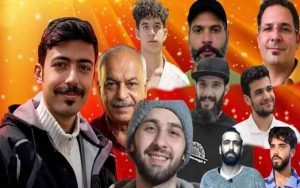
What distinguishes the pages of Iran’s history at the beginning of 2026 more than ever is the emergence of the January uprising, which reflects public anger toward a tyrannical and anti-human rights ruling establishment. Images of the piled-up bodies of those killed in the uprising in warehouses and morgues overflowing with human remains have recorded a bitter yet telling image in Iran’s history. Now the same perpetrators who gunned down youths during the uprising are trying to prevent another movement through the daily executions of uprising participants and rebellious youths. During this month, at least 25 people were executed in various prisons. Among those executed were one Baluch prisoner and four Kurdish prisoners.
War as Strategy, Execution as Message: Tehran’s Playbook for Survival
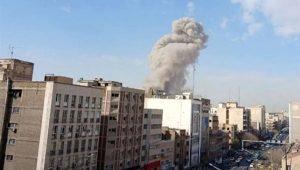
The execution of three prisoners—Mehdi Rasouli, Mohammadreza Miri, and Ebrahim Dowlatabadi—on Monday, May 4, in Mashhad is not an isolated judicial act. It is a calibrated political signal. Accused of involvement in the killing of Basij members during unrest, their hangings serve a broader purpose: reinforcing a climate of fear at a moment when the ruling establishment feels increasingly vulnerable. For months, evidence has pointed to a pattern. Under the cover of external tensions and wartime conditions, the Iranian regime authorities have accelerated the use of capital punishment. The objective is not merely punitive; it is preventative—deterring the resurgence of organized dissent and containing what officials describe as “rebellious networks.”