

THIS PAGE WILL BE UPDATED WITH THE LATEST NEWS
UPDATE: 09:00 PM CEST
Economic Fury Targets Iraqi Oil Official, Iran-Backed Terrorist Militias in Iraq
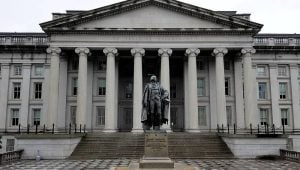
WASHINGTON—Today, the U.S. Department of the Treasury’s Office of Foreign Assets Control (OFAC) increased economic pressure on Iran and its proxy militias in Iraq by designating individuals and businesses exploiting Iraq’s oil sector and undermining the country’s security. This action includes Ali Maarij Al-Bahadly,Iraq’s Deputy Minister of Oil, who abuses his position to facilitate the diversion of oil to be sold for the benefit of the Iranian regime and its proxy militias in Iraq. OFAC is also designating three senior leaders of Iran-aligned terrorist militias Kata’ib Sayyid Al-Shuhada and Asa’ib Ahl Al-Haq. The United States will continue to hold these groups and other Iran-aligned terrorist militias in Iraq, such as Kata’ib Hizballah, accountable for their attacks against U.S. personnel and civilians, diplomatic facilities, and businesses across Iraq, which the groups conduct without regard for Iraq’s sovereignty or democratic process.
UPDATE: 08:00 PM CEST
The State-Sponsored Shadow Behind Chaos Ransomware

In early 2026, a sophisticated intrusion initially appearing to be a standard Chaos ransomware attack was assessed to be consistent with a targeted state-sponsored operation. While the threat actor operated under the banner of the Chaos ransomware-as-a-service (RaaS) group, forensic analysis revealed the incident was a “false flag” masquerade. Technical artifacts, including a specific code-signing certificate and Command-and-Control (C2) infrastructure, suggest with moderate confidence that this activity is linked to MuddyWater (Seedworm), an Iranian Advanced Persistent Threat (APT) affiliated with the Ministry of Intelligence and Security (MOIS).
The campaign was characterized by a high-touch social engineering phase conducted via Microsoft Teams, where the attackers utilized interactive screen-sharing to harvest credentials and manipulate Multi-Factor Authentication (MFA). Once inside, the group bypassed traditional ransomware workflows, forgoing file encryption in favor of data exfiltration and long-term persistence via remote management tools like DWAgent. This report deconstructs the infection chain and analyzes the custom “Game.exe” Remote Access Trojan (RAT).
World’s Second-Largest Brewer Heineken Sought to Enter Iran – With the Help of Ali Larijani’s Nephew

His career was just reaching its peak when the life of Ali Larijani came to an end on March 17, 2026. He was killed in U.S. and Israeli bombardments. Shortly before that, in late February, the Americans and Israelis had killed Iran’s Supreme Leader, Ali Khamenei—and in the final days of his life, Larijani had risen to become the most powerful politician in the embattled country.
Larijani had long served as speaker of the Iranian parliament and had been closely tied to the regime for decades. Until his death, he was under U.S. sanctions because of his role in suppressing the popular uprising in Iran the previous January.
The Larijanis—considered conservative pragmatists and descending from a dynasty of Shiite clerics—are among Iran’s most influential families. Ali’s brother, Sadeq Larijani, who was also under sanctions, served as head of Iran’s judiciary. Another brother, Mohammad Javad Larijani, was deputy foreign minister.
UPDATE: 07:00 AM CEST
The Force They Cannot Hang: How Six PMOI Martyrs Conquered Death At Ghezel Hesar
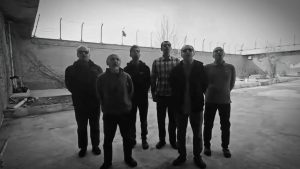
The Iranian regime relies on the gallows to project power and instill terror among the public. However, a newly obtained eyewitness report from Ghezel Hesar Prison reveals the exact opposite: the clerical dictatorship is profoundly terrified, while its political prisoners have entirely conquered the fear of death.
Following the massive nationwide uprisings of December 2025 and January 2026, the regime accelerated its campaign of state-sanctioned terror. Between March 30 and April 4, 2026, authorities in Ghezel Hesar prison hanged six political prisoners and members of the People’s Mojahedin Organization of Iran (PMOI/MEK).
Branded as “terrorists” by the ruling establishment, these highly educated professionals and veteran political prisoners did not go to the gallows as victims. As the newly smuggled testimony proves, they went as victors, showcasing a fearless spirit that renders the regime’s ultimate weapon completely useless.
PMOI Resistance Units Launch Daring Operations in Defiance of Protester’s Execution
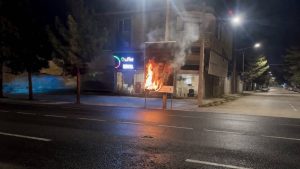
Across Iran, PMOI/MEK Resistance Units have launched a swift and daring wave of operations targeting the clerical regime’s symbols and centers of repression. These activities, carried out on May 3, sent a clear message that the regime’s reliance on the gallows will be met with unyielding defiance. The widespread operations were launched in direct retaliation for the recent execution of Sasan Azadvar, a courageous youth arrested during Iran’s massive January uprisings.
At dawn on April 30, 2026, the Iranian regime executed Sasan Azadvar, a 21-year-old karate champion and rebellious youth from Isfahan. Arrested during the massive December 2025–January 2026 nationwide uprising that brought the clerical establishment to its knees, Azadvar was severely tortured before his death. The criminal death sentence was issued by Branch 1 of Isfahan’s sham Revolutionary Court, presided over by the notorious executioner Judge Morteza Barati, and was quickly upheld by the regime’s Supreme Court.
Iran: Pressure Intensifies on Women Political Prisoners Mainly Those Linked to PMOI
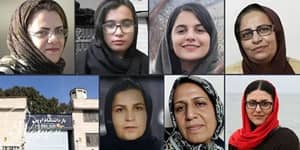
Iranian authorities have intensified pressure and punitive measures against women political prisoners, mainly those supporting the People’s Mojahedin Organization of Iran (PMOI/MEK), amid a broader escalation in repression and executions across the country. In recent weeks, several female prisoners have reportedly faced new legal cases, additional prison sentences, denial of medical treatment, and restrictions on family visits.
According to reports from Evin Prison, Shiva Esmaili and Elaheh Fooladi, two prisoners arrested for supporting the PMOI, were sentenced to an additional six months in prison on charges of “insulting the leadership” after protesting the death of fellow prisoner Somayeh Rashidi.
Rashidi, 42, died on September 25, 2025, in Qarchak Prison, south of Tehran. Opposition sources described her death as occurring under torture and abusive prison conditions.
Iran: Female Prisoners Held in Inhumane Conditions at Vakilabad Prison

The “Aramesh” ward at Vakilabad Prison in Mashhad houses a number of female prisoners. At present, at least 23 women are being held in this ward, some of whom were arrested during the January 2026 protests, as well as others detained amid the onset of military tensions and the intensified security climate that followed. In addition, at least seven other female prisoners are being held in the prison’s quarantine ward. Accordingly, the total number of women held in the Aramesh and quarantine wards at Vakilabad Prison is estimated to be at least 30.
These wards suffer from a lack of basic facilities, including proper ventilation, adequate sanitation and bathing infrastructure, sufficient bedding, and appropriate access to medical care.
The detention process for these individuals typically begins with their transfer to Ward 6, where female detainees are held incommunicado and denied visitation rights throughout the interrogation phase. After interrogations conclude, prisoners over the age of 18 are transferred to either the Aramesh ward or the quarantine ward.
War as Policy, Poverty as Outcome: How the Iran Regime Sacrifices Livelihoods for Survival

In the governing logic of the Iran regime, “preservation of the system” is not merely a priority—it is an absolute imperative that consumes and justifies everything else. Within this framework, even war can be reframed as a “blessing,” provided it reinforces the durability of the power structure. What disappears from this calculus, however, is the lived reality of millions of Iranians whose daily survival is sacrificed to sustain that very system. A stark illustration of this doctrine is the regime’s sweeping internet shutdown and its cascading consequences. Officially justified by wartime conditions, the policy has had immediate and devastating effects on the livelihoods of millions. In practice, cutting internet access has meant cutting off income. Millions of individuals whose economic survival depends on digital platforms and social networks have been abruptly excluded from the cycle of earning. This was not an unintended side effect—it was a deliberate extension of a policy that places regime preservation above all else.
An article published on May 4, 2026, in the state-affiliated Jahan-e Sanat newspaper provides a revealing account of the scale of this crisis. It notes that pre-existing economic hardships—already severe before March 2026—have been sharply intensified “by the bitter addition of war.” Yet what pushed the situation into unprecedented territory, the paper acknowledges, was the internet blockade itself. Imposed swiftly after the outbreak of conflict, it erected what the article describes as “a massive barrier to livelihoods.”
Iran’s Economic Breakdown: War Damage, Internet Blackouts, and a Collapsing Labor Market
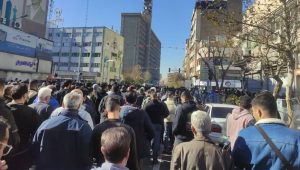
Iran’s economy is no longer experiencing isolated shocks—it is undergoing a systemic breakdown. The combined effects of military conflict, prolonged internet shutdowns, currency devaluation, and structural mismanagement are dismantling both production and livelihoods at an accelerating pace.
At the industrial level, recent military strikes have damaged key infrastructure, disrupting production and employment. Major manufacturing facilities have been partially disabled, forcing companies to scale back operations or halt them entirely. In some instances, workers have reportedly been told they must participate in debris removal efforts before receiving delayed wages—an indication of severe liquidity constraints and deteriorating labor conditions.
At the same time, the prolonged shutdown of international internet access—now exceeding two months—has effectively paralyzed Iran’s digital economy. This sector had become a critical source of employment, particularly for young people, women, and skilled professionals engaged in freelancing, e-commerce, digital services, and financial trading.
Childhood Weaponized: How the Iran Regime Turns Children into Instruments of War

For the Iran regime, war is not merely a contingency—it is a strategic instrument. Its importance is so central that even children are drawn into its orbit, transformed into tools serving broader political and ideological objectives. This is not a recent development but part of a continuous cycle that began during the Iran-Iraq War in the 1980s and persists today in more sophisticated forms. From the era of child soldiers to modern propaganda campaigns, the regime has consistently used adolescents to legitimize a militarized social order. Even children killed in conflict are not spared; their deaths are repurposed into narratives that reinforce the regime’s ideology. In this system, the child is not only a victim of war but also an instrument within it.
During the 1980s, one of the most notorious practices was the distribution of plastic “keys to paradise” to child soldiers—symbols promising spiritual reward in exchange for sacrifice. Many of these children were sent into minefields with minimal training, effectively used to clear paths for advancing forces. Today, although the methods have changed, the underlying logic remains the same. Teenagers are now encouraged to participate in urban security roles, including street checkpoints, keeping them embedded within the regime’s security structure.
The Voice They Could Not Silence: Vahid Bani Amerian’s Final Testament
The executions carried out in Ghezel Hesar Prison between March 30 and April 4, 2026, marked another chapter in the Iranian regime’s long confrontation with organized political opposition. Among those executed were six imprisoned members of the People’s Mojahedin Organization of Iran (PMOI/MEK): Vahid Bani Amerian, Mohammad Taghavi, Babak Alipour, Pouya Ghabadi, Akbar Daneshvarkar, and Abolhassan Montazer.

The six men were members of the PMOI Resistance Units, networks that Iranian authorities have repeatedly targeted in recent years. Their executions followed legal proceedings that the prisoners themselves described as predetermined and rooted in coercion.
Cracks Inside the IRGC: Why Iranian Officers Are Fleeing the Country

Reports from defectors and independent sources point to growing distrust, fear, and internal fractures inside Iran’s Revolutionary Guard Corps.
For years, Iran’s leadership has portrayed the Islamic Revolutionary Guard Corps (IRGC) as an unshakable force built on ideological loyalty and absolute discipline. But behind that carefully maintained image, a different reality appears to be unfolding. Since the beginning of 2026, a growing number of mid-ranking IRGC officers and specialized personnel have reportedly fled Iran through neighboring countries such as Turkey and Azerbaijan. Testimonies from defectors, regional media investigations, and independent human rights sources describe an organization increasingly strained by internal distrust, economic pressure, and fear of purges within its own ranks.
One of the most recurring themes in accounts from former IRGC personnel is the widening gap between senior commanders and ordinary officers.
Geography of Discrimination Against Ethnic and Religious Minorities in Iran – Part 1
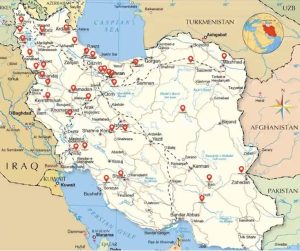
An analysis of the legal, security, and judicial framework used to repress ethnic and religious minorities in Iran; from the securitization of border regions to arbitrary arrests, forced confessions, and denial of fair trial rights.
Discrimination against ethnic and religious minorities in Iran has moved beyond isolated incidents or scattered administrative restrictions. Documented cases and data collected in recent years indicate that this discrimination operates through an interconnected system linking law, security institutions, the judiciary, geographic deprivation, and the death penalty. Within this framework, ethnic or religious identity can become grounds for security suspicion, social exclusion, arbitrary detention, denial of due process, and, in numerous cases, execution.
This report demonstrates that the repression of minorities in Iran, particularly in Kurdish regions and Sistan and Baluchestan Province, forms part of a broader structural pattern. In this pattern, legal and judicial mechanisms, combined with the securitization of geography and social control, are used to restrict identity, religion, language, civil activity, and even livelihoods.
Wuppertal Protest Condemns Iran Executions, Urges Action Against Regime, Calls for June 20 Paris Rally
Wuppertal, Germany – May 5, 2026: Supporters of the People’s Mojahedin Organization of Iran (PMOI/MEK) held a photo exhibition to honor executed political prisoners and protesters of the January 2026 uprising, renewing calls for freedom and justice in Iran.

Demonstrators highlighted the ongoing struggle of the Iranian people against the ruling regime. They called on the German government to take immediate action to halt executions in Iran and strongly condemned the mullahs’ regime, describing the executions as a blatant violation of human rights.
Oslo Rally Condemns Executions, Urges Norway to Take Decisive Action Against the Iranian Regime
Oslo, Norway – May 5, 2026: Supporters of the Iranian Resistance rallied outside the Iranian regime’s embassy in Oslo to protest the execution of political prisoners in Iran, following reports that the Iranian regime has reportedly executed three protesters in Mashhad—Mehdi Rasouli, Mohammad Reza Miri, and Ebrahim Dolatabadi—along with PMOI members and protesters arrested during the January 2026 uprising.

Demonstrators highlighted the ongoing struggle of the Iranian people against the ruling regime. They called on the Norwegian government to take immediate action to halt executions in Iran and strongly condemned the mullahs’ regime, describing the executions as a blatant violation of human rights.
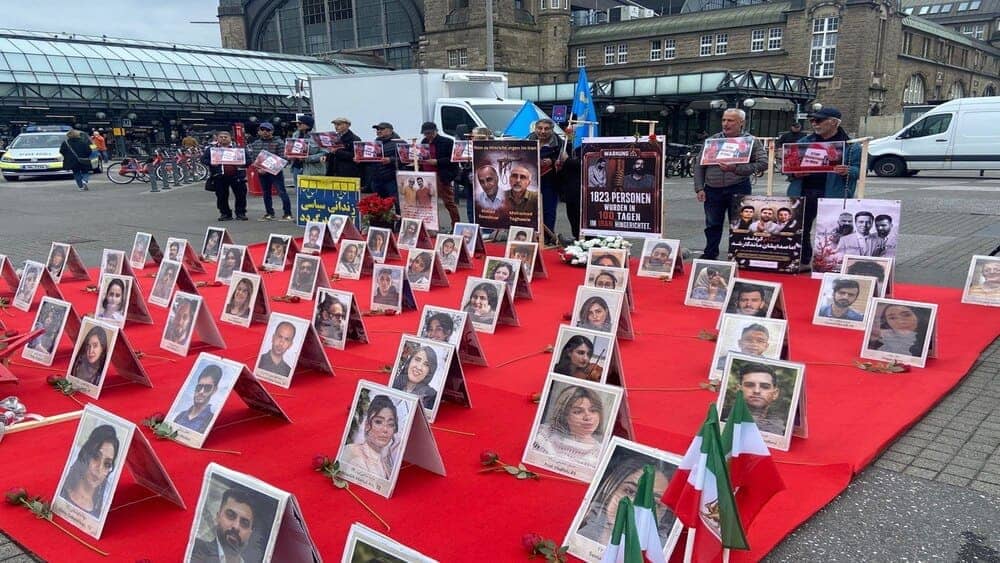
Hamburg Rally Condemns Executions, Urges Germany to Take Action Against the Iranian Regime
Hamburg, Germany – May 5, 2026: Supporters of the People’s Mojahedin Organization of Iran (PMOI/MEK) held a rally and photo exhibition to protest the execution of political prisoners in Iran, following reports that the Iranian regime has reportedly executed three protesters in Mashhad—Mehdi Rasouli, Mohammad Reza Miri, and Ebrahim Dolatabadi—along with PMOI members and protesters arrested during the January 2026 uprising.

Demonstrators highlighted the ongoing struggle of the Iranian people against the ruling regime. They called on the German government to take immediate action to halt executions in Iran and strongly condemned the mullahs’ regime, describing the executions as a blatant violation of human rights.