

THIS PAGE WILL BE UPDATED WITH THE LATEST NEWS
UPDATE: 07:30 PM CEST
US Targets Iraq Oil Official and Militias with Sanctions for Aiding Iran
WASHINGTON, May 7 (Reuters) – The U.S. imposed sanctions on Thursday on Iraq’s deputy oil minister and militias over support for Iran, the Treasury Department said.
The Treasury Department accused Iraq’s deputy minister Ali Maarij Al-Bahadly of abusing “his position to facilitate the diversion of oil to be sold for the benefit of the Iranian regime and its proxy militias in Iraq.”
It said Maarij enabled an Iran-affiliated oil smuggler to mix Iranian oil with Iraqi oil before being shipped to global markets and falsified documents that helped Iranian-affiliated networks to sell the mix disguised as purely Iraqi oil. It said Maarij authorized trucking several million dollars’ worth of oil per day from Iraq’s Qayyarah oil field for export, helping Iranian networks.
UPDATE: 07:00 AM CEST
PMOI Resistance Units Rally Across Iran for a Democratic Republic
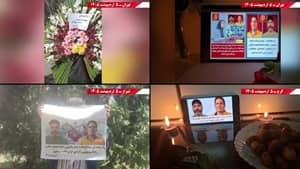
In a desperate bid to maintain power and instill fear following the nationwide January uprisings, the religious dictatorship in Iran has resorted to brutal repression. Under leadership of Ali Khamenei’s son, the regime has so far hanged eight members of the People’s Mojahedin Organization of Iran (PMOI/MEK).
Furthermore, at least a dozen protesters from the December-January uprising have been executed, and another detained protester from the uprising was killed under torture. However, these executions have completely backfired. Instead of retreating, PMOI Resistance Units across Iran have intensified their campaigns, openly honoring the martyrs and reiterating their commitment to overthrowing the regime.
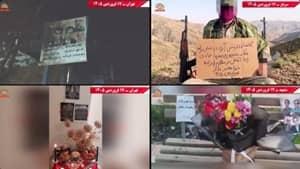
On May 5, Resistance Units took to the streets across multiple cities to pay direct homage to the recently executed PMOI members, proving that the spirit of resistance cannot be extinguished. In Iranshahr and Karaj, members bravely held placards reading, “We swear on the blood of the martyrs that we will stand till the end.” In Mashhad, a Resistance Unit member held a sign that read, “Salute to these steadfast Mojahedin and the proud examples of sincerity and sacrifice.” Meanwhile, in Zahedan, activists painted graffiti directly targeting the regime’s leadership with the message, “Down with Khamenei the murderer.”
How Iran’s Paralyzed Regime Is Waging War on Female Political Prisoners and Grieving Families

The Iranian regime is quietly moving to eliminate its adversaries under the shadow of war and a protracted internet blackout. Unable to break the resistance of dissidents and reeling from the massive nationwide uprisings of December 2025 to January 2026, the desperately weakened state is waging a cruel, two-front war against dissidents.
Inside prisons, authorities have intensified a systematic crackdown on female political prisoners. And outside prisons, the state is taking the grieving families of executed political prisoners hostage, inflicting collective punishment to prevent its inevitable overthrow.
At the center of this repression are female political prisoners, particularly supporters of the People’s Mojahedin Organization of Iran (PMOI/MEK). In Evin Prison, authorities recently fabricated a new case against PMOI supporters Shiva Esmaeili and Elaheh Fouladi, sentencing them to an additional six months behind bars for “insulting the Supreme Leader.” Their actual “crime” was protesting the death of 42-year-old Somayeh Rashidi, who was martyred under torture in Varamin’s Qarchak center on September 25, 2025.
Brutal Murder of Young Woman in Shahrekord Sparks Public Anger Over Women in Iran

Simay Azadi – Iranian state-linked media reported another shocking case of violence against women after a young woman identified as Maryam Agha Babai was allegedly abducted by an internet taxi driver in Shahrekord and later found murdered.
According to reports published by state media outlets including Rokna and Mehr on May 6, Maryam’s burned body was discovered in a mountainous area near Aqbolagh after she had reportedly been killed in the desert areas surrounding Kakolak village.
The killing triggered widespread anger, with reports indicating that residents gathered in protest outside the governor’s office in Shahrekord following the incident.
The case has once again drawn attention to growing concerns over violence against women in Iran, amid increasing criticism from activists over legal discrimination, weak protections for women, and broader social repression.
Defense Counsel Silenced: Two Human Rights Attorneys Arrested
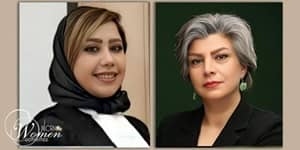
In a blatant attempt to stifle the voices of legal advocates, two defense counsels, Elham Zera’atpisheh and Asetareh Ansari, were arrested by the regime’s security forces in Shiraz. To date, no information has been disclosed regarding their whereabouts or the specific grounds for their detention. On May 4, 2026, security forces intercepted and arrested Elham Zera’atpisheh, a female attorney, in front of the Shiraz Implementation of Verdicts’ Courthouse. She was subsequently transported to an undisclosed location.
This attorney had previously been targeted and detained by security forces during the 2022 nationwide protests.
On Sunday, May 3, 2026, security forces raided the home of attorney Asetareh Ansari, taking her into custody and transferring her to an unknown facility. Since her arrest, no information has been released regarding the charges leveled against this Shiraz-based lawyer.
Systematic Denial of Care Risks Life of Female Political Prisoner in Iran
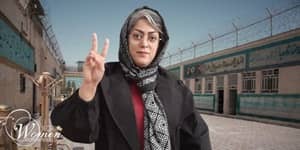
Female political prisoner in Iran, Parisa Kamali, is facing a life-threatening health crisis as Yazd Prison authorities weaponize medical neglect against political prisoners.
Under the hollow pretext of “war conditions,” Yazd Prison authorities are systematically withholding vital medications from Ms. Kamali and blocking her urgent transfer to outside medical facilities, despite her rapidly deteriorating condition.
Ms. Kamali, 40, is currently serving a sentence in Yazd Central Prison on charges of supporting the People’s Mojahedin Organization of Iran (PMOI/MEK). This deliberate denial of essential treatment has not only endangered her life but is being used as a tool of physical and psychological pressure.
The World Cannot Ignore Iran’s Internal Resistance Any Longer
For decades, international policy toward Iran has oscillated between two failed approaches: appeasement of the ruling religious dictatorship and the threat or reality of foreign military confrontation. Neither strategy has produced democracy, stability, or lasting security for the Iranian people. Instead, both have contributed to the survival of a political system that has repeatedly demonstrated its hostility toward political freedom, pluralism, and human rights. The central political reality often ignored in discussions about Iran is that the country’s crisis cannot be resolved externally alone, nor managed indefinitely through diplomatic accommodation. The decisive factor remains the Iranian people themselves and their capacity for organized resistance against authoritarian rule.
From the earliest days following the Iranian Revolution, large segments of Iranian society demanded political participation, civil liberties, equality before the law, and democratic governance. Yet the regime consolidated power through ideological control, repression, and elimination of political rivals. Over time, international actors frequently prioritized geopolitical calculations and regional stability over the democratic aspirations of ordinary Iranians.
When Defiance Becomes Political Power in Iran
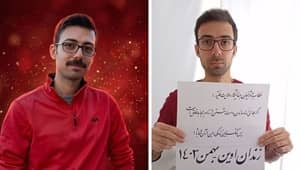 The final statements and courtroom defense attributed to Vahid Baniamerian should not be interpreted merely as emotional testimony from a prisoner facing execution. They represent something far more politically significant: a direct challenge to the legitimacy of authoritarian power in Iran and a broader articulation of resistance as a political identity rather than a personal act of sacrifice. What emerged from his statements was not the language of pleading, repentance, or negotiation. Instead, it was the language of refusal — refusal to recognize the moral authority of institutions designed not to deliver justice, but to enforce obedience through fear.
At the center of Baniamerian’s position lies a critical political question that has shaped modern authoritarian systems for decades: can a state maintain legitimacy when its judicial structure functions primarily as an instrument of intimidation?
His rejection of what he described as “formalistic courts” strikes at the heart of that contradiction. In authoritarian systems, courts often retain the outward appearance of legality while operating within a framework where verdicts are politically predetermined. In such conditions, legality and justice become separated. Procedure survives, but legitimacy erodes.
Political Thuggery Behind the Monarchy Brand
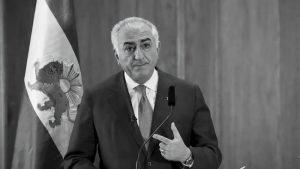
For years, segments of Iran’s monarchists have attempted to market themselves internationally as the polished face of a modern, democratic alternative to the ruling clerical establishment. Wrapped in the language of “civilization,” “national revival,” and “development,” they present an image of moderation and political maturity. Yet beneath this carefully managed façade, a far more troubling reality has emerged — one increasingly defined by intimidation, online mobs, vulgar attacks, and organized political thuggery.
The contradiction is difficult to ignore. A movement that claims to champion democracy and pluralism has, in practice, fostered an atmosphere where critics are routinely harassed, smeared, and silenced. Across social media platforms and even within Iranian diaspora communities in Europe, critics of the monarchist current tied to the son of the former Shah have reported waves of coordinated abuse, personal attacks, and threats designed not to debate ideas, but to destroy reputations and drive dissenting voices out of public discussion.
This phenomenon is not new in political history. Political theorist Hannah Arendt examined similar dynamics in The Origins of Totalitarianism, where she described how authoritarian and proto-fascist movements often rely on an uneasy alliance between elites and mobs.
Behind the Internet Shutdown: The Iranian Regime’s Black Market

Severe communication restrictions in recent months, imposed under the pretext of war and security concerns, have fundamentally altered the economic and social structure of access to cyberspace. Transforming internet access from a public right into a class-based privilege has led to corruption, rent-seeking, and the destruction of the country’s digital economy.
More than 69 days after the blocking of the vital arteries of communication, a phenomenon known as “Internet Pro” has emerged in society. Instead of solving infrastructure problems, this new structure has effectively entrenched a form of digital apartheid across the country. This is no longer merely about simple filtering. Internet access, which should serve as a tool for development, is now traded on the black market at exorbitant prices. This trend reflects the transformation of public services into exclusive privileges for wealthy and influential groups.
Geography of Discrimination Against Ethnic and Religious Minorities in Iran – Part 2
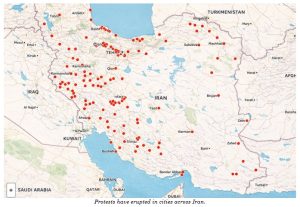
While the first part of this report focused on the securitization of border regions, mass arrests, and the use of the death penalty against Kurdish and Baluch communities, this second part examines additional forms of structural repression targeting ethnic and religious minorities in Iran. Within this framework, opaque detentions, enforced disappearances, restrictions on religious freedom, economic pressure, and social exclusion operate alongside executions and intimidation of families as tools of control and silencing. Sunni citizens in Iran, despite limited formal recognition in certain legal contexts, face widespread restrictions in access to senior administrative positions, employment opportunities, religious activity, and freedom of religious expression. These forms of discrimination are particularly pronounced in eastern and border regions.
In numerous cases, religious affiliation has reportedly influenced access to employment, professional advancement, and equal opportunities. Restrictions have also been reported regarding the holding of religious ceremonies, the activities of Sunni clerics, and the establishment or administration of religious centers.
Why Iran’s Oil Wealth Isn’t Reaching Its People
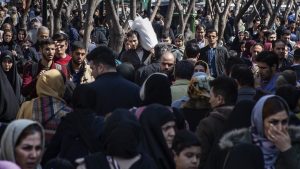
Despite steady oil exports under sanctions, Iran’s oil economy is draining value through discounts, shadow networks, and political priorities that bypass ordinary citizens.
Inside the corridors of Iran’s Oil Ministry on Taleghani Street and the dim backrooms of exchange offices in Dubai, the reality behind Iran’s oil wealth looks very different from the government’s official narrative of “economic growth.”
In 2026, Iran resembles a giant standing atop an ocean of energy while relying on underground brokerage networks to secure gasoline for its citizens and bread for shrinking household tables.
Paris Exhibition Condemns Executions in Iran, Calls for Democratic Republic Ahead of June 20 Rally
Paris, France – May 6, 2026 – Supporters of the People’s Mojahedin Organization of Iran (PMOI/MEK) organized a book stall and photo exhibition to denounce the execution of political prisoners and protesters following the January 2026 uprising. The event renewed calls for freedom and justice in Iran.

The event paid tribute to those executed by the Iranian regime, highlighting their sacrifice through powerful images and personal testimonies. The exhibition underscored the Iranian people’s ongoing resistance and their demand for a democratic republic.
MEK Supporters in Gothenburg Rally in 119th Week of Iran’s “No to Execution Tuesdays” Campaign
Gothenburg, Sweden — May 5, 2026: Supporters of the People’s Mojahedin Organization of Iran (PMOI/MEK) held a rally to mark the 119th consecutive week of the “No to Execution Tuesdays” campaign, a movement protesting the Iranian regime’s escalating executions and systemic repression.

Protesters condemned the recent execution of political prisoners and demonstrators arrested during the January 2026 uprising. On May 3, 2026, 28-year-old Mehrab Abdollahzadeh, a Kurdish protester, was executed in Urmia Prison by agents of the mullahs’ regime. The following day, May 4, three protesters in Mashhad—Mehdi Rasouli, Mohammad Reza Miri, and Ebrahim Dolatabadi—were also executed.
Iranian Resistance Supporters in Winterthur Condemn Executions in Iran, Urge Action Against the Regime
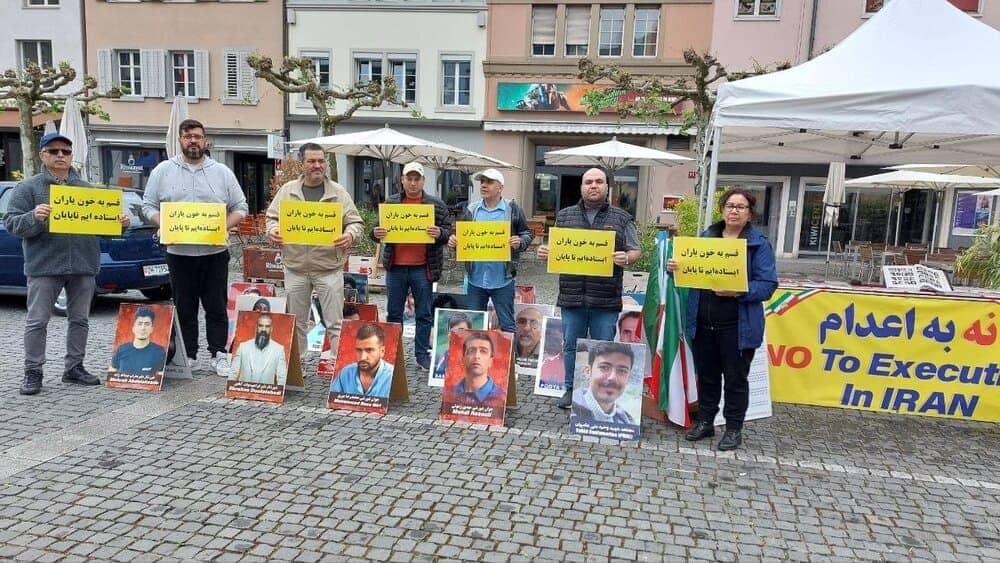
Winterthur, Switzerland – May 5, 2026: Supporters of the People’s Mojahedin Organization of Iran (PMOI/MEK) held a book stall and photo exhibition to protest the execution of PMOI political prisoners, along with protesters arrested in January 2026. The event also expressed solidarity with the “No to Execution” campaign.

The exhibition backed the NCRI President-elect Maryam Rajavi’s “No to Executions” campaign, calling for its global expansion. It also reaffirmed the call for a secular, democratic republic—rejecting both theocracy and monarchy.