

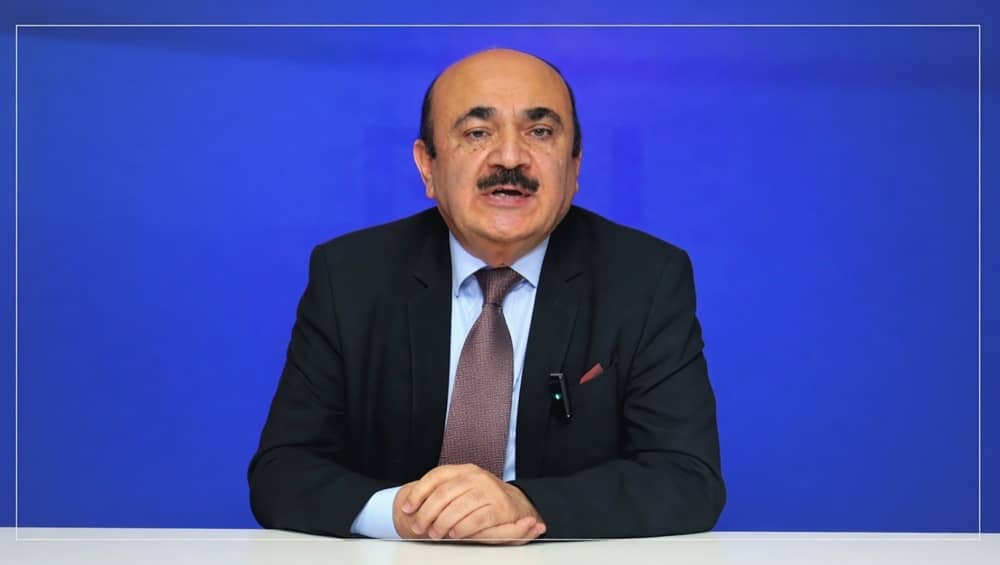
In an exclusive interview with Il Riformista on May 13, 2026, Mahmoud Hakamian, a member of the Foreign Affairs Committee of the National Council of Resistance of Iran (NCRI), clarifies the internal instability of the Iranian regime and the growing momentum of the organized resistance.
Hakamian describes a regime in a strategic “dead end,” weakened by the lack of a clear successor to Ali Khamenei and increasingly dependent on the IRGC for domestic repression. Following the 2026 uprisings, he asserts that the demand for a democratic republic has become irreversible. The NCRI is positioned as the primary democratic alternative, guided by Maryam Rajavi’s Ten-Point Plan. This platform emphasizes the separation of religion and state, the abolition of the death penalty, and a non-nuclear Iran.
Hakamian dismisses the regime’s “terrorism” labels as desperate propaganda aimed at a movement with deep domestic roots. He reaffirms the movement’s commitment to freedom, specifically advocating for a woman’s right to choose regarding the clothing, rejecting both monarchical and theocratic impositions.
The following is the full English translation of the interview:
Teheran, luci e ombre sul consiglio della resistenza. Hakamian (Commissione esteri del Mek) fa chiarezza https://t.co/iZGW3Abpmt
— Il Riformista (@ilriformista) May 13, 2026
What are the power dynamics within Iran today?
The regime has suffered serious blows, and no one is capable of replacing Ali Khamenei. No figure appears able to fill that void. However, the nature of the regime remains unchanged in its foundations: a system based on the principle of velayat-e faqih, which is an absolute religious dictatorship. The Revolutionary Guard Corps (IRGC) continues to play an increasingly decisive role in various fields, particularly in internal repression. What is entirely evident, however, is that the regime finds itself in a dead end: it has no credible strategic way out.
Will there be a regime change?
After the uprising of January 2026, the world witnessed the anger of the Iranian people and their clear demand for regime change and the establishment of a democratic republic. The question is no longer whether the regime will change, but rather when and how. The mullahs’ regime is weaker today than ever before and, in its 47 years of existence, has never been in such a fragile position. At the same time, the Resistance has never been as strong as it is today. Change will occur neither through policies of appeasement toward the regime nor through external military intervention. It will be born from within Iran, thanks to the action of the people and an organized resistance that constitutes its core. This is precisely the task carried out by the Resistance Units of the People’s Mojahedin Organization of Iran (PMOI), currently active in all 31 regions of the country.
As the world struggles to define right policy on #Iran, thousands of Iranians rally & march in support of regime change by the people & the resistance. Rejecting both Shah’s dictatorship & ruling theocracy, they advocate for a democratic republic #ParisFreeIranRally
Paris 8… pic.twitter.com/JNvpsdylC3— mahmoud hakamian (@HakamianMahmoud) February 5, 2025
Which political groups could present themselves as an alternative to the theocratic regime of the IRGC?
In Iran, there is a credible and reliable democratic alternative represented by the National Council of Resistance of Iran (NCRI). It is a coalition of democratic forces and personalities that rejects both the monarchical and theocratic systems and has been fighting for over 45 years for the establishment of a democratic republic. Maryam Rajavi, the President-elect for the transitional period toward popular sovereignty, has developed a ten-point program for the transition. This program includes the separation of religion and state, the guarantee of individual freedoms, gender equality, the right to autonomy for different ethnicities—particularly for the Kurds—the abolition of the death penalty, and the creation of a non-nuclear Iran.
This resistance has been the subject of numerous accusations, including the label of ‘terrorism’ or a perceived lack of a social base. What is the cause of these accusations?
These accusations are all part of a vast demonization campaign orchestrated by the mullahs’ regime and the Ministry of Intelligence against its primary adversary. When the regime realized it was unable to eliminate this democratic alternative—which is deeply rooted in society—through brutal and inhuman repression, it supplemented its repressive apparatus with a large-scale propaganda campaign funded with significant resources. To this end, in addition to official organs, numerous informal channels and lobbying networks have been mobilized.
Iran, la Terza opzione per il Regime Change: il 6 settembre a Bruxelles una marcia verso la libertà https://t.co/fqXgt344ho
— mahmoud hakamian (@HakamianMahmoud) September 1, 2025
Is the PMOI in favor of Sharia? Or does it have a liberal societal vision?
One of the ten points of Maryam Rajavi’s program is the separation of religion and state. Over the years, her slogan has been: ‘No to religion, no to the mandatory veil, and no to the mandatory government.’ Regarding the issue of the veil, it is worth recalling a significant historical episode. When Reza Shah Pahlavi (the grandfather of Reza Pahlavi) came to power, he forcibly imposed the removal of the veil on Iranian women, and many who wished to keep it were excluded from work. Similarly, once Khomeini came to power, he forcibly imposed the obligation of the veil. For this reason, the Iranian resistance opposes both of these models and believes that the choice must belong freely to the women themselves.