

THIS PAGE WILL BE UPDATED WITH THE LATEST NEWS
UPDATE: 07:00 PM CEST
UK MP Exposes IRGC Fronts, Calls for Embassy Closure and Asset Seizures in London
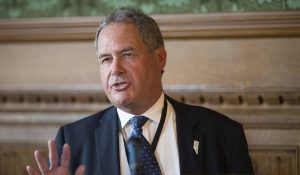
During a special national security session in the UK House of Commons, prominent Member of Parliament Bob Blackman demanded immediate and decisive government action to uproot the Iranian regime’s network of influence within the United Kingdom.
Addressing the Deputy Home Secretary for Security, Blackman revealed that at least 13 organizations currently operating as “charities” in London are taking direct orders and funding from Tehran. He identified these groups as front organizations for the Islamic Revolutionary Guard Corps (IRGC), noting that they control extensive financial and real estate assets across the capital on behalf of Iran’s clerical regime and its military wings.
Warning that the terrorist designation of the IRGC is “long overdue,” Blackman pressed the government on its current diplomatic tolerance, raising two critical questions:
-
Why does the Iranian embassy remain open, and why has the ambassador not been expelled?
-
Why are these so-called charities still permitted to operate while advancing Tehran’s security missions?
Blackman concluded by urging the UK government to move beyond standard diplomatic statements and implement strict executive and judicial measures. He emphasized that safeguarding British national security requires the immediate confiscation of all IRGC-linked assets and the definitive closure of Tehran’s avenues of influence.
Honduras Declares Hamas and Iran’s Revolutionary Guard as Terrorist Organizations

Tegucigalpa, May 14 (EFE). – The Government of Honduras announced this Thursday the designation of the Palestinian Islamist group Hamas and Iran’s Islamic Revolutionary Guard Corps (IRGC) as terrorist organizations.
The decision, adopted under the instruction of Honduran President Nasry ‘Tito’ Asfura, was communicated by the Secretariat of Foreign Affairs and International Cooperation. The ministry justified the measure as part of the strategic pillars of its foreign policy and its stance of “rejecting terrorism and its financing.”
This declaration, the Foreign Ministry’s statement adds, reaffirms “Honduras’s condemnation of terrorism and its financing in all its forms and manifestations.”
Furthermore, the statement notes, it reiterates “its commitment” to international cooperation to prevent and combat these threats.
UPDATE: 07:30 AM CEST
‘We Do Not Beg for Stolen Rights’: Elite Iranian Student Defies the Regime’s “Pardon” From the Shadows of the Gallows
Amidst a brutal wave of executions designed to terrorize dissidents, elite university student and political prisoner Ali Younesi has released a defiant open letter from Ghezel Hesar Prison, bluntly rejecting the Iranian regime’s offer of a “pardon.” Writing in the direct aftermath of a state-sanctioned massacre that saw the hanging of six of his cellmates—all members of the People’s Mojahedin Organization of Iran (PMOI/MEK)—Younesi’s letter proves the regime’s utter failure to break the spirit of Iran’s political prisoners.
In his letter, dated May 12, 2026, Younesi turns the tables on the ruling clerics, stating that it is the regime that must seek forgiveness from the grieving people of Iran. The full translation of his letter reads:
“In response to the Judiciary of the Executioners regarding the pardon of the remaining 7 months of my sentence: I have never asked for a pardon and never will.”
Iran’s Regime Continues Political Execution Spree in Fear of Restive Society
Besieged by relentless domestic and foreign crises, Iran’s regime is carrying out executions on a daily basis. Terrified of another nationwide uprising, the ruling mullahs are desperately utilizing the gallows to instill fear within a deeply restless society that is no longer afraid to confront the state’s apparatus of repression.
The focal point of this brutal campaign of state terror is the recent execution of courageous protesters who boldly stood up to the regime’s suppressive forces. Early on Wednesday, May 13, 2026, the regime hanged 55-year-old rebel Mohammad Abbasi in Ghezel Hesar Prison. Abbasi was arrested during the January uprising in Malard.
The judiciary accused Abbasi of participating in “riotous gatherings” and of involvement in the killing of State Security Force (SSF) Colonel Shahin Dehghan, a criminal figure who played an active role in suppressing the uprising.
Iran: MP Admits Corruption by Regime Officials Is a Cause of Rising Prices
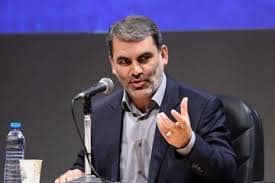
Simay Azadi – In an interview with the state-run Student News Agency, Mohsen Zanganeh, member of the Iranian Parliament’s Budget Committee, acknowledged in an that one of the causes of rising prices is the abuse and profiteering by government officials.
He said: “Another factor behind rising prices is corruption. Many officials who became rich in the 1990s did so because of their activities during the 8-year war. In every political faction, there are people who support and profit from the system.”
Zanganeh further added, “After the Revolution, many people were handed control of state-owned companies and board positions. It was clearly a case of systemic exploitation. Even now, in this wartime environment, there are people positioning themselves to become the next generation of ‘trillionaires.’”
He also described the war as one of the causes of rising prices, adding: “30% of the rising prices are due to the nature of war. 35% is due to the inefficiency of government institutions.”
Iranian Student Recounts Prison Abuse: My Brother Was Tortured Before My Eyes
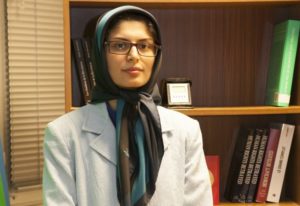
On May 10, 2026, the Daily Mail published an interview with Iranian student Shabnam Madadzadeh, a former political prisoner, member of the Mojahedin-e Khalq Organization, and human rights activist. The interview was conducted by Eliana Silver, senior foreign news reporter. In this interview, Shabnam Madadzadeh speaks about her experiences in the prisons of the mullahs’ regime and exposes the hidden dimensions of violence, torture, and widespread human rights violations in these prisons.
“I witnessed unimaginable horrors in Iran’s torture dungeons, including the screams of rape victims. Guards threatened to execute my brother in front of me if I did not sign a false confession.”
For 70 days, Iranian student Shabnam Madadzadeh lived alone in a cell measuring roughly three metres by two. The room contained almost nothing apart from three blankets, a thin carpet, and a searing fluorescent light overhead that never switched off. Her watch had been confiscated when she arrived, along with every personal belonging she carried, leaving her with no way to tell whether it was day or night.
Iran’s Political Crossroads: The Final Divide Between Freedom and Dictatorship
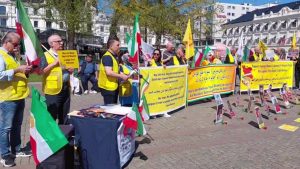
After decades of repression, uprisings, and political transformation, Iran’s political landscape is no longer ambiguous. A clear line now separates the forces of democratic pluralism from those seeking to preserve or reproduce authoritarian rule.
One of the most defining characteristics of Iran’s current political and social reality is that every political force is now undergoing a test of legitimacy — a test of national authenticity, historical credibility, and political accountability.
Unlike the 1979 revolution, when the true nature of competing political forces only became apparent after the fall of the monarchy, today Iran stands in an entirely different historical moment. After 47 years of clerical rule, the political identities, intentions, and records of virtually every faction have been exposed before the eyes of the Iranian people. This is especially true after the six major nationwide uprisings of the past three decades, which have profoundly reshaped public consciousness.
For the younger generation — the generation that has repeatedly fueled protests and uprisings — the political map of Iran is no longer blurred. The slogans, behaviors, and strategies of every current have been tested against the realities of repression, corruption, economic collapse, and social suffocation.
Paris Rally Nears as Iran’s Regime Faces Deepening Crisis and Growing Resistance

As Iran’s regime struggles with internal instability, economic collapse, and mounting social unrest, the upcoming gathering of the Iranian Resistance in Paris is emerging as a powerful political message of democratic change and organized resistance.
With less than six weeks remaining before one of the largest annual gatherings organized by the Iranian Resistance in Paris, this year’s event carries significance far beyond a traditional political demonstration.
The rally comes at a moment when Iran’s regime is confronting one of the most dangerous periods in its history — a convergence of political deadlock, economic collapse, growing social anger, and intensified internal repression. At the same time, resistance activities inside Iran continue to expand, particularly through the operations attributed to the so-called “Resistance Units” affiliated with the People’s Mojahedin Organization of Iran.
For supporters of the Iranian Resistance, the Paris gathering is not merely symbolic. It is intended as a declaration that despite decades of executions, imprisonment, demonization campaigns, and international pressure, the movement remains politically active, internationally connected, and deeply engaged with developments inside Iran.
The Return of SAVAK Symbols: A Dangerous Rehabilitation of Fascism
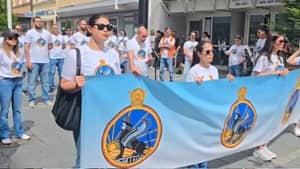
The public display of SAVAK insignia in Germany is not a nostalgic political gesture. It is an attempt to normalize the legacy of torture, dictatorship, and authoritarian violence under the guise of monarchist revivalism.
The shocking display of the SAVAK emblem during a gathering of monarchist supporters in Regensburg, Bavaria, was not merely an act of political provocation or extremist nostalgia. It was a political declaration — a deliberate attempt to rehabilitate one of the most notorious instruments of repression in modern Iranian history.
Displaying the symbol of SAVAK, the Shah’s secret police apparatus, in the heart of democratic Europe carries implications far beyond symbolic misconduct. It represents the normalization of torture, the glorification of authoritarian violence, and the whitewashing of crimes committed against generations of Iranians.
This incident is therefore not only a matter for the Iranian diaspora. It is also a test for democratic societies and the legal principles upon which postwar Europe was built.
Iran’s Employment Crisis: The Increase in Unemployment Insurance Registrations
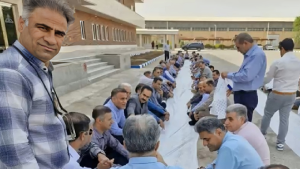
The increase in unemployment insurance applicants reflects the chaotic condition of workers following the warmongering policies of the clerical regime. While officials of the Iranian regime speak of managing wartime conditions, statistics published by state-run media and members of parliament present a very different picture of the labor market. The sudden rise in the number of unemployment insurance applicants, the closure of economic units, and the collapse of online jobs are only part of the consequences of war and economic crisis in Iran. Official reports now indicate that hundreds of thousands of people have registered to receive unemployment insurance, statistics that reveal the depth of recession and the expansion of poverty.
The state-run Eghtesad News website reported on May 12, citing Meysam Zohourian, a member of the regime’s parliament, that since the beginning of the war, around 205,000 people have registered to receive unemployment insurance. Zohourian presented these figures after a meeting with Ahmad Meydari, the regime’s minister of cooperatives, labor, and social welfare.
Silent Victims in Iran: The Repression of Christian Converts

In these days, when awakened humans have cried out against the flagrant violations of human rights in Iran under the rule of the Islamic Republic—and during times when a deafening silence of inaction has enveloped the world in the face of these egregious violations, which amount to crimes against humanity and massacre—we must also remember Christians, the silent victims of this regime. Although internet shutdowns have left little way to obtain up-to-date news regarding Christians imprisoned in the jails of the Islamic Republic, the intensification of the dire human rights situation in Iran—which we have witnessed particularly since the uprising of January 2026, ranging from the killing of protesters to mass arrests accompanied by relentless torture and unprecedented political executions—provides a clear picture of the current state of Christians in prison. This is especially true for women, as being a woman in a system that calls itself the “Islamic Republic” while abusing religion is, in itself, an unforgivable crime.
MEK Supporters in Kiel Protest Executions, Urge Democratic Republic in Iran
Kiel, Germany – May 13, 2026: Supporters of the People’s Mojahedin Organization of Iran (PMOI/MEK) organized a book stall to protest the Iranian regime’s increasing use of executions against political prisoners and protesters. The event demonstrated solidarity with the nationwide “No to Execution” campaign and called for immediate international action to confront the regime’s ongoing human rights abuses. Participants also demanded the unconditional release of all political prisoners.
The supporters voiced their backing for NCRI President-elect Maryam Rajavi’s “No to Executions” campaign and urged the international community to hold the Iranian authorities accountable for their systematic violations of human rights.
MEK Supporters in Kiel Protest Executions, Urge Democratic Republic in Iran #StopExecutionsInIran #NCRIAlternative #No2ShahNo2Mullahshttps://t.co/eeqoQRbJwt
— Iran Freedom (@4FreedominIran) May 14, 2026
London: PMOI Supporters Rally Outside UK Prime Minister’s Office Calling for IRGC Blacklisting
London, UK – May 13, 2026: Supporters of the People’s Mojahedin Organization of Iran (PMOI/MEK) held a protest rally outside the UK Prime Minister’s Office, calling on the British government to designate Iran’s Islamic Revolutionary Guard Corps (IRGC) as a terrorist organization.
Demonstrators chanted slogans including “UK UK listen to this, IRGC on the list!” and “UK UK take action, Silence is not an option!” urging the UK government to adopt a firm policy toward the Iranian regime and its IRGC.
#London: PMOI Supporters Rally Outside UK Prime Minister’s Office Calling for IRGC Blacklisting#BlacklistIRGC #FreeIran2026https://t.co/1d4UNCQ49n
— Iran Freedom (@4FreedominIran) May 14, 2026