

THIS PAGE WILL BE UPDATED WITH THE LATEST NEWS
UPDATE: 08:30 PM CEST
Dominican Republic Designates Iran’s IRGC And Hezbollah as Terrorist Organizations

Santo Domingo.- The Dominican Republic has officially designated Iran’s Islamic Revolutionary Guard Corps and the Lebanese group Hezbollah as terrorist organizations, according to the Dominican Ministry of Foreign Affairs. The government said the measure was adopted in accordance with relevant resolutions of the United Nations Security Council, the Inter-American Convention against Terrorism, and Dominican law.
Despite the designation, Iran maintains diplomatic representation for the Dominican Republic through its embassy in Cuba. The mission is headed by Ambassador Seyed Mohammad Hadi Sobhani, who presented his credentials to President Luis Abinader in December 2024.
New York-Based Iranian National Pleads Guilty to Alien Smuggling and Receiving Child Sexual Abuse Material

Earlier today in federal court in Brooklyn, Iranian national Sharon Gohari pleaded guilty to unlawfully smuggling aliens into the United States and intentionally receiving child sexual abuse material (CSAM).
For years, Gohari, who is a naturalized U.S. citizen and resided alternately in Iran and Nassau County, New York, solicited and received payments from Iranian nationals and others seeking to enter the United States unlawfully in exchange for arranging and facilitating their entry. At least one individual whom Gohari aided had associations with Iran’s Islamic Revolutionary Guard Corps (IRGC), which has been designated by the United States Department of State as a Foreign Terrorist Organization (FTO). During the investigation into Gohari’s illegal activities, law enforcement discovered that Gohari received and stored multiple videos on his phone depicting the rape of children, as well as hundreds of photos and videos reflecting the stalking and surreptitious recording of women throughout New York City. Today’s proceeding was held before United States District Judge Ann M. Donnelly.
UPDATE: 07:30 AM CEST
‘We Neither Forgive nor Forget’: Jailed Student Defiantly Rejects the Mullahs’ ‘Amnesty’
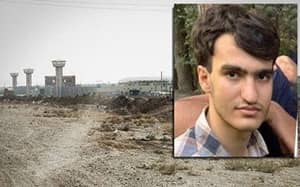
In a normal country, a brilliant mind like Amirhossein Moradi would be pushing the boundaries of physics in a research lab or observatory. Instead, this elite student from Iran’s prestigious Sharif University of Technology—and a 2017 silver medalist in the National Astronomy Olympiad—is languishing in Evin Prison as a political prisoner.
Arrested on April 10, 2020, alongside his peer Ali Younesi, Moradi was subjected to nearly two years of detention and interrogation before being sentenced to 16 years in prison on charges of supporting the People’s Mojahedin Organization of Iran (PMOI/MEK). Yet, despite years of unjust captivity, Moradi’s spirit remains unbroken. He recently released an open letter from Evin Prison vehemently rejecting a “clemency” offer from the regime’s judiciary for the remainder of his sentence.
Written in the aftermath of a massive popular uprising and a brutal wave of state-sanctioned killings, Moradi’s letter is a profound testament to the bravery of the Iranian resistance. By choosing to stand with his executed comrades, he exposes the regime’s failure to terrorize dissidents.
The Flame They Could Not Extinguish: Honoring Vahid Bani Amerian on the 40th Day of His Martyrdom
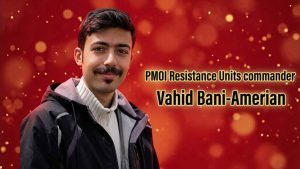
Today marks the 40th day since the martyrdom of Vahid Bani Amerian, a 33-year-old political prisoner and a proud member of the People’s Mojahedin Organization of Iran (PMOI/MEK). Vahid was executed alongside PMOI member Abolhassan Montazer on April 4, 2026.
These executions occurred as the profoundly vulnerable clerical regime desperately tried to maintain its grip on power. Reeling from the massive December 2025–January 2026 nationwide uprisings and acting under the fog of war following the death of Ali Khamenei on February 28, 2026, the mullahs rushed to the gallows to physically eliminate their most capable adversaries.
The regime intended to use Vahid’s execution to terrorize Iran’s rebellious youth. Instead, they immortalized a hero. Vahid’s life, his letters, and his final video testament leave behind an enduring legacy of immense compassion, unyielding bravery, and a conscious determination to sacrifice everything for a free Iran.
Iran: Female Political Prisoners Detained Under Deplorable Conditions

As temperatures rise and the critical conditions inside Evin Prison continue, new reports indicate a severe deterioration in sanitary conditions and an increasing spread of insects and vermin throughout prison wards. The situation has created serious health risks for prisoners, particularly female political prisoners.
According to published reports, the authorities’ failure to carry out routine pest control measures, along with incomplete reconstruction of sections of the prison damaged after bombardment-related destruction, has significantly worsened unsanitary conditions in prison halls and detention areas.
Prisoners report that the constant presence of rats, cockroaches, and other pests in cells and sleeping areas has become a permanent problem, increasing the risk of infectious diseases and skin infections.
Class Apartheid in Iran: How the Regime Is Turning Internet Access into a Privilege

Political crisis, economic crisis, cultural crisis, unemployment crisis, migration crisis, and a deepening cost-of-living catastrophe — modern Iran has become synonymous with permanent crisis. Yet beneath all these visible layers lies a deeper structural collapse that sustains and reproduces every other failure: the regime’s growing class divide.
Whenever a government institutionalizes political repression as the core of its survival strategy, it inevitably produces a society built on inequality, privilege, and organized plunder. The clerical regime ruling Iran has followed precisely this path since its inception. What began with censorship and political control has now evolved into something even more dangerous: the creation of a class-based internet system — an “approved” internet for insiders and a restricted, unaffordable version for ordinary citizens.
This is not simply a technological issue. In today’s Iran, internet access has become a marker of social status and political proximity to power. Just as education, healthcare, housing, and economic security have increasingly become privileges reserved for specific segments of society, free access to information is now being absorbed into the same architecture of discrimination.
Thirty-Five Million Iranians Face Water Shortages as Iran’s Water Crisis Reaches a Breaking Point
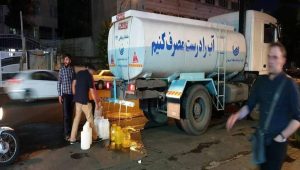
Iran’s water crisis has entered a dangerous new phase.
Officials within the country’s water sector now acknowledge that vast regions of Iran continue to suffer from declining rainfall, shrinking reservoir levels, and worsening pressure on drinking water supplies. At the center of the crisis stands Tehran — Iran’s most populous province — which has now become the country’s primary hotspot for “water stress.”
At the same time, millions of citizens across multiple provinces are already experiencing drinking water restrictions and severe reductions in accessible water resources, exposing the depth of an environmental and infrastructural collapse that has been building for years.
According to Isa Bozorgzadeh, spokesperson for Iran’s water industry, Tehran has now entered its sixth consecutive year of drought conditions. He stated that 11 provinces across the country are still experiencing rainfall declines exceeding 10 percent, with Tehran facing some of the worst conditions.
From Currency Shock to Pharmacy Lines: How Iran’s Collapsing Economy Destroyed Drug Security

Iran’s pharmaceutical crisis in 2026 is akin to a doomed voyage adrift on a tempestuous sea. For years, the warning signs were visible: currency instability, corruption, sanctions, shrinking public support systems, collapsing purchasing power, and growing dependence on fragile supply chains. Yet instead of structural reform, the regime responded with denial, propaganda, and temporary fixes. Today, the result is no longer merely an economic problem or a healthcare challenge. It is the gradual collapse of pharmaceutical security for millions of Iranians.
The medicine crisis in Iran has evolved far beyond the healthcare sector. It now symbolizes the broader breakdown of economic and social infrastructure under the Iranian regime.
The sudden surge in prices for essential drugs, the disappearance of critical medications from pharmacies, disruptions in supply chains, and the inability of insurance systems to absorb rising costs have pushed millions of patients into desperation. Treatment itself is increasingly becoming a class privilege rather than a public right.
Monarchy or Mirage? The Contradictions at the Heart of Reza Pahlavi’s Political Project
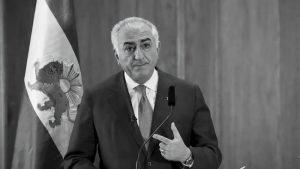
In recent years, the monarchist movement and Reza Pahlavi have attempted to present themselves as a viable political alternative for Iran’s future. Yet beneath this carefully constructed image lies a profound contradiction — one that exposes the structural weakness of the entire project.
The contradiction is simple: a movement that constantly relies on glorifying the monarchy’s past simultaneously insists that critics should “stop talking about history” and focus only on the future.
This paradox resurfaced during Reza Pahlavi’s recent visit to Europe, where he reacted defensively to journalists questioning the dictatorship of both Mohammad Reza Shah and Reza Shah. Rather than addressing concerns over authoritarianism, repression, and political abuses under the Pahlavi dynasty, he objected to the very discussion of the past and argued that attention should instead be directed toward the future.
Yet the central problem remains unavoidable: the entire political identity of the monarchist movement is built precisely on the reconstruction of that past.
Record Number of Imprisoned Writers Worldwide. Iran Ranks Second with 53 Jailed Writers

PEN America announced in its latest annual report on the state of freedom of expression worldwide that the number of imprisoned writers in 2025 has surpassed 400 for the first time since the index began publication in 2019.
The report also highlights a significant increase in the arrest of writers and cultural activists in Iran.
The report, published on Tuesday, May 12, states that in 2025 a total of 401 writers were imprisoned in 44 countries, compared to 375 writers in 40 countries the previous year.
PEN America emphasized in its Freedom to Write Index that over the past seven years, the number of imprisoned writers worldwide has increased by 68%, reflecting the continued intensification of repression against freedom of expression and the silencing of critical voices in various countries.
Detention of the Family of Abolfazl Paydar, a Victim of the January 2026 Uprising

The Islamic Republic not only engaged in an unprecedented massacre and committed war crimes against its own people during the nationwide protests of December 2025/ January 2026 (Dey 1404), but it has since refused to cease the arrest and harassment of the families of those killed, attempting in every way possible to silence their voices for justice. Many families have been prohibited from holding public ceremonies, speaking with the media, or announcing the names of their loved ones under threats and intimidation. In some cases, families have reported that a lack of cooperation with security agencies has resulted in consequences such as summons, arrests, or social deprivations.
Abolfazl Paydar, a 17-year-old from Sabzevar, was among the youngest victims of the December 2025/January 2026 nationwide protests. He was killed by live ammunition fired by security forces during the crackdown in Sabzevar.
Since his death, his family’s efforts to keep his memory alive — including organizing a birthday ceremony — have been met with repression, turning him into a symbol of the justice-seeking movement in Sabzevar and beyond.
Will the Oil Market Return to Its Previous Stability?
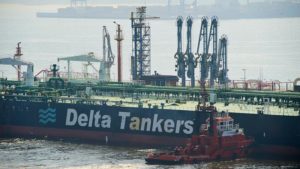
A recent Bloomberg report, based on satellite imagery, stated that oil loading operations at Iran’s Kharg Island oil terminal have been halted for several consecutive days. According to the report, no ocean-going oil tankers have been observed in the area during this period. This is described as the longest disruption in oil loading since the beginning of recent regional tensions affecting Iranian maritime export routes. Regardless of the operational details, this development sends an important signal to global energy markets: the Middle East oil supply chain remains vulnerable to geopolitical risks.
Global oil prices typically react sensitively to signals of potential supply disruption. In recent weeks, crude oil prices have been influenced by a combination of factors, including concerns over supply risks in the Middle East, increased production from non-OPEC producers, and relatively weak global demand growth.
In this context, even temporary disruptions at a key export terminal can lead to short-term upward pressure on crude oil prices. However, historical trends show that oil markets often return to equilibrium if supply interruptions are not sustained.
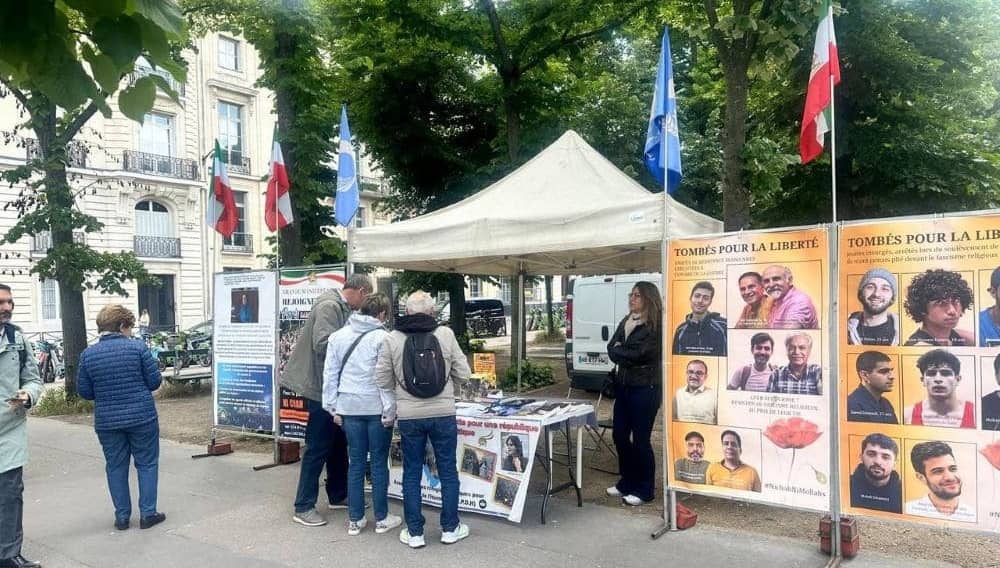
Paris Exhibition Condemns Executions in Iran, Calls for Democratic Republic Ahead of June 20 Rally
Paris, France – May 12, 2026 – Supporters of the People’s Mojahedin Organization of Iran (PMOI/MEK) held a bookstall and photo exhibition in Paris to condemn the execution of political prisoners and protesters following the January 2026 uprising. The event renewed calls for freedom, justice, and respect for human rights in Iran.

The exhibition honored victims of the Iranian regime’s executions, showcasing powerful images and personal stories that highlighted their sacrifice. It underscored the Iranian people’s ongoing resistance and their demand for a democratic republic.