

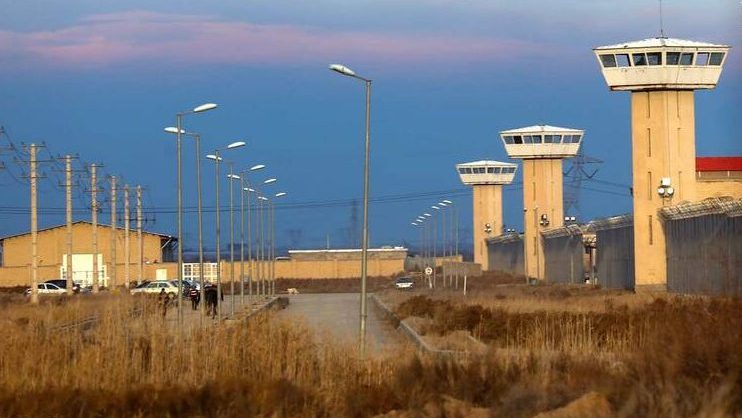
In a defiant, coordinated show of resistance against the escalating use of the death penalty, political prisoners across Iran marked the 121st consecutive week of the “No to Execution Tuesdays” campaign on May 19, 2026. Striking inmates issued a scathing joint statement characterizing state-sanctioned killings as the regime’s primary tool to crush public dissent and stave off its own collapse.
The hunger strike has expanded rapidly, now encompassing 56 different detention facilities throughout the country. Striking detainees emphasize that opposing the death penalty is an absolute necessity for defending the fundamental right to life in Iran.
Weaponized Executions and Militarized Streets
The campaign’s statement highlights a stark intensification of domestic repression over the past two months. Inmates report that authorities have effectively militarized city streets, utilizing regime loyalists to conduct public weapons training. Crucially, the statement condemns the “instrumental use of children” in these public displays, describing it as a systematic effort to normalize state violence and intimidate potential protesters.
The strike comes on the heels of several high-profile executions that have sparked fresh outrage:
- Political Target: In Zahedan Prison, authorities hanged Baluch political prisoner Abduljalil Shahbakhsh.
- Retaliation Against Protesters: In another recent execution, Mohammad Abbasi, a dissident detained during the nationwide uprisings, was put to death for his participation in the protests. Concurrently, his daughter, Fatemeh Abbasi, is currently serving a 25-year sentence at Evin Prison.
- Non-Political Inmates: The statement notes that alongside political dissidents, dozens of young Iranians are being sent to the gallows daily on non-political charges to manufacture a pervasive atmosphere of fear.
Iran's authorities are trampling upon children’s rights and committing a grave violation of international humanitarian law amounting to a war crime by recruiting children as young as 12 into a military campaign led by the Islamic Revolutionary Guard Corps. https://t.co/nRfBRAR8wA
— Amnesty Iran (@AmnestyIran) April 2, 2026
A Tool of Subjugation Met with Defiance
“We have repeatedly stated that execution, regardless of the charges, is not merely the execution of an unjust judicial sentence… but the most critical tool for state oppression and murder,” the statement reads, tracing the systemic and ideological roots of the practice back to the Velayat-e Faqih (Guardianship of the Islamic Jurist) system.
According to the striking prisoners, the regime’s reliance on the gallows betrays a deep-seated fear of public uprising, targeting a generation of youth acutely aware of systemic corruption, discrimination, and state embezzlement. “They execute to terrorize,” the prisoners wrote, “unaware that this violence does not extinguish the flames—it sows the seeds of awareness, resistance, and uprising in peoples’ hearts.”
56 Prisons United in Resistance
The “No to Execution Tuesdays” campaign called upon political, human rights, labor, and civil activists globally to amplify their voices and bring the plight of Iranian prisoners to international bodies.
On May 19, 2026, inmates went on hunger strike across a sprawling network of 56 detention centers, spanning both male and female wards. The striking institutions include:
Iran’s repression of women political prisoners has entered a new phase. Female prisoners face fabricated new cases inside prison, medical deprivation, solitary confinement, and even loss of citizenship.
Forough Taghipour received another prison sentence over a statement.…— IRAN HRM (@IranHrm) May 18, 2026
- Tehran & Central Region: Evin Prison (Men’s and Women’s wards), Ghezel Hesar Prison (Units 2, 3, and 4), Greater Tehran Prison, Central Karaj, Fardis Karaj, Qarchak, and Khorin Varamin.
- Western & Northwestern Regions: Diesel Abad (Kermanashah), Tabriz, Urmia, Ardabil, Sanandaj, Saqqez, Baneh, Marivan, Kamyaran, Ilam, Khoy, Salmas, Naghadeh, Miandoab, Mahabad, and Bukan.
- Southern & Southeastern Regions: Zahedan (Men’s and Women’s wards), Adel Abad (Shiraz), Sheiban and Sepidar (Ahvaz), system prison of Shiraz, Firozabad, Dehdasht, Behbahan, Ramhormoz, Borazjan, Bam, Kohnooj, and Yezd.
- Northern & Eastern Regions: Rasht, Roudsar, Amol, Gorgan, Mashhad, Sabzevar, Gonbad-e Qabus, Qaemshahr, Birjand, and Tabas.
The prisoners concluded their statement with a vision for the future, declaring the campaign a foundational step toward achieving justice, liberty, and the eradication of all forms of tyranny and discrimination in a free Iran.