

THIS PAGE WILL BE UPDATED WITH THE LATEST NEWS
UPDATE: 8:30 PM CEST
Iran: Neither War nor a Truce Will Resolve the Crisis

For the United States, the issue concerns security and strategic stability. For Europe, it raises questions relating to energy, terrorism and the defence of human rights. As for the countries of the Middle East, they see Tehran’s regional policy as a constant source of destabilisation.
However, beyond these differing perspectives, one reality is gradually becoming clear: the Iranian crisis cannot be resolved either through war or through diplomatic pressure alone. The key lies within Iranian society itself.
On 20 June, hundreds of European and American parliamentarians and political leaders will join a mass rally in Paris involving 100,000 members of the Iranian diaspora. Beyond its symbolic significance, this gathering reflects a major shift: the view is gaining ground that the Western policies pursued for decades towards Tehran have reached their limits.
UPDATE: 4:00 PM CEST
After the Iran Strikes, the West Must Confront the Third Option

The U.S. military has dealt irreparable damage to Iran’s theocratic dictatorship since the end of February. Yet amid a tenuous ceasefire and continuing tensions in the Strait of Hormuz, one reality is becoming increasingly undeniable: the ultimate solution to the Iran conflict must involve the removal of the mullahs’ regime.
While further bombing and destruction of the Islamic Revolutionary Guards Corps (IRGC) are fully warranted, the deployment of American troops on Iranian soil is not necessary if the right strategy is pursued. There is already an organized opposition movement inside the country—one increasingly capable of challenging the regime from within.
At the center of that movement is the People’s Mojahedin Organization of Iran (PMOI/MEK), the principal Iranian resistance movement and the largest constituent organization within the National Council of Resistance of Iran (NCRI), a coalition advocating for a democratic republic in Iran. The PMOI opposed both the Shah’s dictatorship and the current theocratic regime and has paid an enormous price over four decades, including the massacre of tens of thousands of its members and supporters.
UPDATE: 7:00 AM CEST
When Inflation Becomes a Matter of Life and Death in Iran

The pharmacist did not even look up before repeating the sentence that has become painfully familiar across Iran: “These medicines are either unavailable or must be purchased at free-market prices.”
The man stood silent for a few seconds before quietly asking: “If I buy only half of them, will his condition get worse?” There was no clear answer. At that moment, illness was not the only enemy standing beside that hospital bed. Poverty was there too. This is not merely the story of one family. It is a compressed portrait of a society where economic collapse, healthcare insecurity, and public despair have converged into a single daily reality. In today’s Iran, inflation is no longer just about shrinking dinner tables or rising household expenses. It has penetrated the most fundamental sphere of human survival: access to medicine, treatment, and basic healthcare.
For years, officials attempted to frame inflation as a temporary economic challenge or a statistical problem manageable through policy adjustments and public reassurances. But when families begin rationing medication, postponing treatment, or choosing between food and healthcare, inflation ceases to be an abstract economic concept. It becomes a humanitarian crisis.
Alternatives for Iran’s Future: “Not the First Address” — Europe’s Growing Distance from Pahlavi Becomes Visible
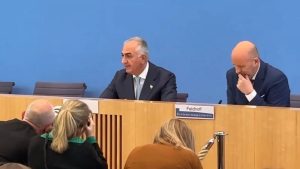
Reza Pahlavi’s trip to Germany at the end of April, following two contentious stops in Sweden and Italy, was less a demonstration of political strength than a stage upon which a political decline became increasingly visible — a decline that began with the failure of a broader strategy and culminated in Berlin with a clear political and media message: the bubble of the so-called “ready-made alternative” has burst.
In recent months, Pahlavi sought to position himself, amid war, repression, and the deadlock of the Iranian regime, as the central figure of a future transition and as a “ready alternative.” Yet in doing so, he relied not on social forces inside Iran, but on foreign war, external pressure, and media promotion. This strategy proved counterproductive. Support for an external war was perceived by large segments of Iranians, both inside and outside the country, not as determination, but as a detachment from the suffering of people living under bombardment.
The decline first became visible among Iranians abroad. In Sweden, protests by exiled Iranians, intellectuals, and activists confronted Pahlavi with questions about his family’s past — a past marked by “bloody dictatorship” and one-party rule. His response was telling: rather than distancing himself from that history, he described it as “a source of pride.” In Italy as well, political protests and media reactions disrupted efforts to stage a smooth and carefully managed visit. The culmination of this trend, however, came in Germany.
Iranian Citizens Struggle to Cover Expenses as Housing Crisis Deepens
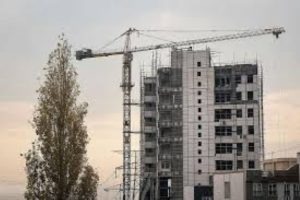
In recent months, the housing crisis has become one of the country’s most important economic and social concerns. Continuous price increases, declining purchasing power, and surging construction costs have pushed this crisis to a point where many families no longer have hope of becoming homeowners. What is seen today is a deep and structural crisis that is affecting people’s daily lives.
In recent years, the decline in the national currency’s value has played an important role in intensifying the housing crisis. With the currency’s depreciation, land and housing prices have surged dramatically. This has turned the issue of homeownership from an economic problem into a widespread social issue. Many young people who until a few years ago had some hope of buying a home now feel trapped in the face of this housing crisis.
In fact, the housing catastrophe in Iran has reached an acute stage in which runaway growth in purchase prices and rents has pushed a large part of society below the housing poverty line, to the point that phenomena such as living in small rooms, shared rentals, and forced migration to city outskirts have sharply increased.
Iran: The Ekbatan Case and the Use of Death Sentences in Protest Prosecutions

The collapse of six death sentences in the high-profile “Ekbatan Township” case has raised serious concerns about the use of capital punishment, coerced confessions, and security-based prosecutions against protesters in Iran. What began as one of the most severe judicial responses to the 2022 nationwide uprising ultimately ended with three defendants acquitted of murder charges and three others receiving reduced prison sentences after the Supreme Court overturned the original death verdicts. The dramatic reversal has intensified scrutiny of the ruling regime in Iran’s handling of protest-related cases; particularly the role of Revolutionary Courts, forced confessions, and media-driven criminalization before trial.
The case originated after the death of Basij member Arman Aliverdi during clashes in Tehran’s Ekbatan residential complex in October 2022. Following the incident, security forces launched sweeping raids across the neighborhood and detained more than 50 young residents.
MEK Supporters in Paris Protest Iran Executions, Urge Participation in June 20 Rally
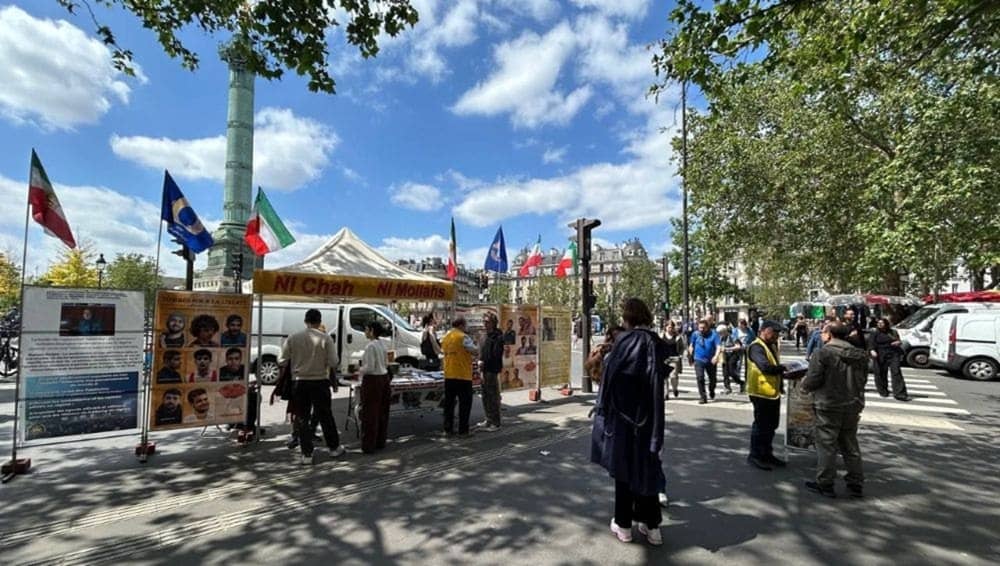
Paris, France – May 21, 2026 – Supporters of the People’s Mojahedin Organization of Iran (PMOI/MEK) organized an exhibition to protest the execution of political prisoners and demonstrators in the wake of the January 2026 uprising. The event underscored renewed demands for freedom, justice, and the protection of human rights in Iran.

The exhibition honored victims of the Iranian regime’s executions, showcasing powerful images and personal stories that highlighted their sacrifice. It underscored the Iranian people’s ongoing resistance and their demand for a democratic republic.
MEK Supporters in Essen Protest Executions in Iran, Call for June 20 Paris Rally
Essen, Germany – May 19, 2026 – Supporters of the People’s Mojahedin Organization of Iran (PMOI/MEK) held an exhibition in Essen, Germany, to protest the executions of PMOI political prisoners and protesters arrested during the January 2026 demonstrations. The event also expressed solidarity with the “No to Execution campaign.
Participants highlighted the Iranian people’s demand for a democratic republic led by the Iranian Resistance as a path toward peace and freedom.

Organizers also issued a clear call to action, urging freedom-loving Iranians and international supporters to join the major rally scheduled for June 20 in Paris under the slogan “A Democratic Republic for Iran.” The rally rejects both monarchical and theocratic dictatorships, emphasizing a third alternative based on democracy and popular sovereignty.