

THIS PAGE WILL BE UPDATED WITH THE LATEST NEWS
UPDATE: 3:00 PM CEST
EU Condemns Iranian Missile and Drone Proliferation at Non-Proliferation Conference in Vienna

The European Union has issued a sharp condemnation of Iran’s escalating ballistic missile and drone activities, characterizing them as an intensifying threat to international peace and security.
The statement was delivered in Vienna during the 25th Annual Regular Meeting of the Hague Code of Conduct against Ballistic Missile Proliferation (HCoC). Expressing “grave concern” over recent security dynamics in the Gulf Region, the EU directly criticized what it termed “unjustifiable” and “indiscriminate” strikes against regional states.
“The EU has strongly condemned the unjustifiable indiscriminate Iranian ballistic missile and drone attacks against countries in the region and reaffirms its solidarity with them,” the statement read.
Beyond regional stability, the European Union linked Tehran’s weapons programs to broader global security commitments. The bloc explicitly called on Iran to abide by its legally binding nuclear safeguard obligations under the Non-Proliferation Treaty (NPT). It urged a swift resumption of full cooperation with the International Atomic Energy Agency (IAEA) and demanded an immediate halt to all destabilizing actions, including the development and deployment of its ballistic missile program.
Danish Intelligence Says Iran Poses Increased Terror Threat
Danish intelligence said Friday that Iran was playing a larger role when it came to the threat of terrorism against the Scandinavian country, adding that the threat assessment was mirroring global developments.
The Danish national security and intelligence service, PET, said the overall threat to Denmark remained at four on their five-point scale, but added that in recent years the threats had “changed significantly in character.”
“Over the past year state actors have become increasingly important to the terror threat. We assess that this applies in particular to Iran, which poses a threat especially to Israeli and Jewish interests as well as certain Iranian dissidents in Europe, including Denmark,” Finn Borch Andersen, head of PET, said in a statement.
“The threat from Iran emanates from the Iranian intelligence services, which make use of both criminal networks and the recruitment of operatives in Europe to plan and carry out attacks,” he added.
UPDATE: 11:30 AM CEST
Belgium ‘Mostly Silent’ About Iran’s Protester Executions, Says Dissident

Belgium is doing far too little to stand up to the regime in Iran amid the largest mass murder of protestors in its history, according to a leading dissident based in Brussels.
Ali Bagheri, Secretary of the Iranian Youth Communities in Belgium, says Bart De Wever’s government has been “mostly silent” or too ready to appease the authoritarian leadership in Tehran.
The 36-year-old research engineer, who has lived in Belgium since 2015, told The Brussels Times that a spike in executions of political prisoners, predominantly young people who took part in widespread protests in December and January, is deeply concerning.
“We’re receiving news of executions every day. We’re talking about 19, 20 and 21 year olds. Others are on death row,” he said. “The regime has used the war with the US and Israel as a cover for this.”
UPDATE: 8:30 AM CEST
Maryam Rajavi at Canadian Parliament: Iran Executions and Peace
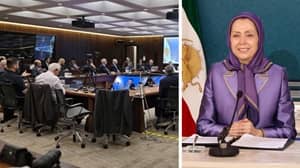
On Wednesday, May 27, a high-level conference was convened featuring members of the Parliament of Canada. The session was co-chaired by the Hon. Judy Sgro, Member of Parliament, Chair of the Standing Committee on International Trade, and former Minister of Citizenship and Immigration, alongside Michael Cooper, Member of Parliament. The event brought together a distinguished panel of Canadian and American dignitaries and experts, who delivered keynote addresses. Notable speakers included:
• Ambassador Robert Joseph, former U.S. Under Secretary of State for Arms Control and International Security;
• The Hon. Tony Clement, former Canadian Minister of Health, Minister of Industry, and President of the Treasury Board;
• Kyle Matthews, Executive Director of the Montreal Institute for Genocide and Human Rights Studies (MIGS).
The deliberations centered on several critical geopolitical questions:
• Will the clerical regime ever abandon its nuclear ambitions and abide by an agreement?
• What viable alternative possesses the capability to overthrow the ruling regime?
• The current state of human rights and the escalating wave of executions in Iran.
The conference commenced with a video message from Maryam Rajavi addressed to the participants.
Iran’s Looming Poverty Explosion: Economists Warn Over 40 Million People Face Starvation

Coinciding with World Hunger Day, a staggering admission within Iran’s state-affiliated media has laid bare the catastrophic reality of the country’s economic and social collapse. A report published by the Donya-e-Eqtesad daily has highlighted urgent warnings from leading economists and academics regarding an impending “poverty explosion.” Experts state that the devastating fallout of recent conflicts, combined with the total collapse of oil revenues, has pushed the Iranian population to the brink of absolute destitution. With projections indicating that those living under the absolute poverty line will soon surpass 40 million, the regime’s Ministry of Intelligence has reportedly issued internal security alerts, fearing imminent popular uprisings fueled by hyperinflation and systematic economic mismanagement.
During an economic policy symposium in Tehran, academic experts presented grim metrics reflecting a state of total structural paralysis. Hojat Mirzaei, a faculty member at Allameh Tabataba’i University, revealed that due to an effective maritime blockade and oil exports plummeting to near zero, Iran’s economic growth for the current year is projected to contract sharply between -8.8% and -10%.
Iran’s Regime Upholds Death Sentence of Political Prisoner Amin Farahavar
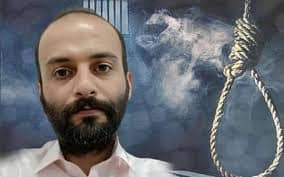
Following the massive nationwide uprisings of December 2025 to January 2026 that brought the Iranian regime to its knees, the ruling religious fascism is attempting to maintain its grip on power through a severe campaign of repression.
Terrified of the eruption of the people’s anger, the regime is intensifying executions, issuing heavy prison sentences, and harassing political prisoners to create an atmosphere of fear and terror. The latest of the regime’s actions is upholding the death sentence of 38-year-old poet and PMOI supporter Amin (Peyman) Farahavar, whose life is now in grave danger.
Mr. Farahavar’s death sentence was recently upheld once again by the regime’s Supreme Court on charges of ‘Baghi’ (armed rebellion) and ‘Moharebeh’ (enmity against God). In early May 2026, his lawyer’s request for a retrial was officially rejected, placing him in immediate danger.
Mr. Farahavar was initially sentenced to death on May 1, 2025, by criminal judge Ahmad Darvish-Goftar at the Revolutionary Court in Rasht, in a session held without the presence of a lawyer. Currently held in Lakan Prison in Rasht, he is systematically deprived of vital medical treatment. During his interrogations, he suffered internal bleeding, and he continues to endure intense pain from complications related to gallbladder surgery.
Iran Internet Dispute Deepens Amid Ongoing Blackout Crisis

Conflicting statements by Iranian officials and state-linked media on May 28 highlighted growing internal divisions over internet restrictions, as millions in Iran continue to face disruptions following the world’s longest nationwide internet blackouts.
The latest dispute erupted after members of parliament and state-aligned media criticized attempts by the administration of President Massoud Pezeshkian to partially restore internet access through a newly formed digital oversight body.
According to comments published by the state-run Mehr News Agency on May 28, Ahmad Rastineh, spokesperson for the Cultural Commission of Iran’s parliament, said reopening unrestricted international internet access would be “against the law” and urged Pezeshkian to reverse the decision.
Rastineh argued that the newly formed “Headquarters for Organizing Cyberspace,” created by presidential order, overlaps with the authority of Iran’s Supreme Council of Cyberspace, the body ultimately overseen by Supreme Leader.
Iran: Two Political Prisoner Sisters Sentenced to 16 Years in Jail

The Iranian regime has sentenced two imprisoned sisters, Kimia Davoudi and Tara Davoudi, to a combined 16 years in prison following their arrest during the nationwide protests of January 2026.
According to reports, the Tehran Revolutionary Court sentenced Kimia Davoudi to 10 years in prison and Tara Davoudi to six years. The two sisters are currently being held in the women’s ward of Evin Prison.
Kimia and Tara Davoudi were arrested in late January 2026 amid a broader crackdown by Iranian security forces on anti-government nationwide protests across the country.
Two sisters were subjected to violence and physical assault during their arrest. Their judicial proceedings were also reportedly conducted in a heavily securitized environment lacking transparency and due process.
Iran: Two Female Political Prisoners Sentenced to 53 Years in Prison
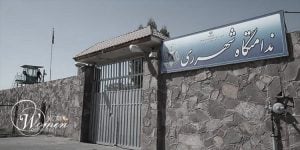
On Saturday, May 23, 2026, judicial authorities in Iran’s Semnan province announced a combined sentence of 53 years in prison for two political prisoners, Leila Ramezani and Fatemeh Malek-Ahmadi.
The charges leveled against them include “sending videos to opposition television networks” and “transmitting content and information.”
Fatemeh Malek-Ahmadi was sentenced to 26 years in prison, while Leila Ramezani received a 27-year sentence. In addition to their prison terms, both women face a series of severe social and civil bans, including being barred from government public service, a ban on international travel, and a lifetime restriction on joining political parties or socio-political groups.
The issuance of these heavy prison sentences, combined with extensive additional civil penalties, reflects an intensifying crackdown on women and people across Iran.
Iran’s Healthcare Crisis Deepens as Workers Lose Access to Medical Treatment Despite Paying Insurance

In Iran, millions of workers see part of their already insufficient wages deducted every month for insurance and medical coverage. Yet today, many of those same workers find themselves abandoned when illness strikes, wandering between pharmacies and treatment centers without access to even the most basic healthcare services.
The growing crisis surrounding “treatment eligibility” within Iran’s Social Security Organization has now become one of the most serious problems facing workers and insured citizens across the country. The crisis is not rooted in workers failing to pay their share. Rather, it is the product of contradictory laws, bureaucratic dysfunction, administrative delays, and failing digital infrastructure — all of which ultimately punish the most vulnerable layers of society.
According to the state-run newspaper Tose’e Irani, under Article 39 of Iran’s Social Security law, employers are given up to 30 days to submit insurance lists for the previous month without penalty. Yet the Social Security healthcare system only recognizes a worker’s treatment eligibility for 45 days after the last registered payment. This legal mismatch has left thousands of workers trapped in bureaucratic limbo precisely when they require urgent medical care.
Suppression of Women in Iran: Harsh Judicial Retaliation in the Wake of the 2026 Uprising

Recent protest movements, particularly the 2026 uprising, targeted the Achilles’ heel of the power structure: the pioneering role and leadership of women. In response to this fundamental shock, the security and judicial apparatuses have launched a broader wave of systematic suppression of women in Iran by unprecedentedly escalating and accelerating past repressive tools. This aggressive strategy possesses a multi-layered structure. On one hand, the Revolutionary Courts seek political retaliation and the suffocating of society’s voice by issuing death sentences for political and protesting women. On the other hand, the execution machine within the ordinary crimes sector targets female victims of social harms; ranging from child brides and domestic violence victims who acted in self-defense by killing their spouses, to destitute and impoverished women who, under the influence of smuggling rings affiliated with powerful institutions, fall victim to the gallows on drug-related charges. Through these parallel arms, the regime has equipped public intimidation with the harshest judicial mechanisms.
Today, the frontline of defiance against this onslaught is active within the women’s wings of prisons, where women’s resistance fuels the most authoritative anti-execution campaigns. In this article, we dissect the blatant dimensions of the systematic suppression of women in Iran by analyzing the following axes: the threat of death sentences being carried out against protesting and political women, the surge in execution statistics of women on ordinary charges in 2026, the critical condition of female political prisoners under pressure, the intensified pressures aimed at breaking the “No to Execution Tuesdays” campaign, and finally, the targeted escalation of the suppression machine against religious dissidents, specifically Baha’i women.
Geopolitical Leverage or Illusion of Strength? What’s Driving Iran’s Defiance in Doha
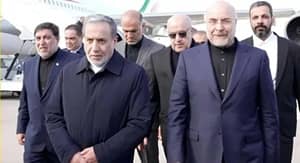
As diplomats in Doha struggle to stabilize a fragile ceasefire after months of conflict, Tehran’s hardline posture is raising a deeper question: is Iran negotiating from strength, or from fear of what may happen at home?
While diplomats behind closed doors in Doha work to preserve a fragile ceasefire after three months of relentless military confrontation, the contradictory signals emerging from both the battlefield and the negotiating room have surprised international observers.
U.S. President Donald Trump recently claimed that Tehran had come to the negotiating table “running on fumes” under severe economic and military pressure. But the conduct of Iran’s negotiating team in Qatar, alongside simultaneous military activity by the Islamic Revolutionary Guard Corps in the Persian Gulf, suggests a different picture. By adopting maximalist positions, Tehran is attempting to impose its conditions on Washington. Yet this diplomatic rigidity conceals the other side of the coin: fear of the regime’s internal Achilles’ heel — the people of Iran.
MEK Supporters in Karlsruhe Protest Executions, Support a Democratic Republic in Iran
Karlsruhe, Germany – May 26, 2026 – Supporters of the People’s Mojahedin Organization of Iran (PMOI/MEK) held an exhibition in Karlsruhe, Germany, to protest the execution of PMOI political prisoners as well as protesters arrested in January 2026. The event also expressed solidarity with the “No to Execution” campaign and supported for the National Council of Resistance of Iran’s (NCRI) Provisional Government and called for the establishment of a democratic republic in Iran.

The event emphasized the Iranian people’s demand for a democratic republic led by the Iranian Resistance as a path toward peace and freedom.
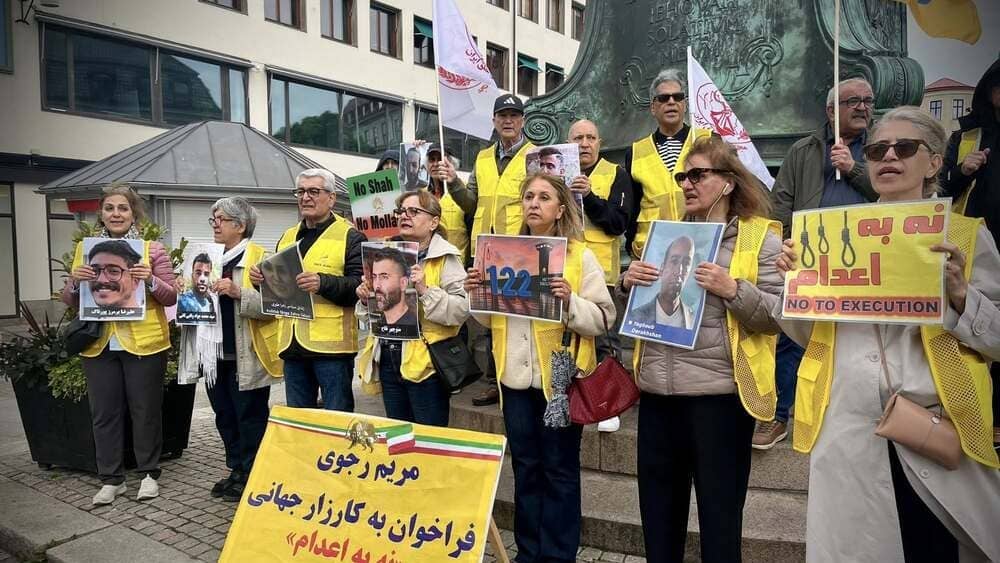
MEK Supporters in Gothenburg Mark 122nd Week of “No to Execution Tuesdays,” Honor PMOI Founders
Gothenburg, Sweden — May 26, 2026: Supporters of the People’s Mojahedin Organization of Iran (PMOI/MEK) held a rally to mark the 122nd consecutive week of the “No to Execution Tuesdays” campaign, a movement protesting the Iranian regime’s escalating executions and systemic repression.

Protesters condemned the recent execution of political prisoners and demonstrators arrested during the January 2026 uprising. They warned that dozens of political detainees and protesters arrested during recent uprisings are now at imminent risk of execution.