

THIS PAGE WILL BE UPDATED WITH THE LATEST NEWS
UPDATE: 12:30 PM CEST
Neither with the Ayatollahs nor with the Shah: What Is Happening in Iran

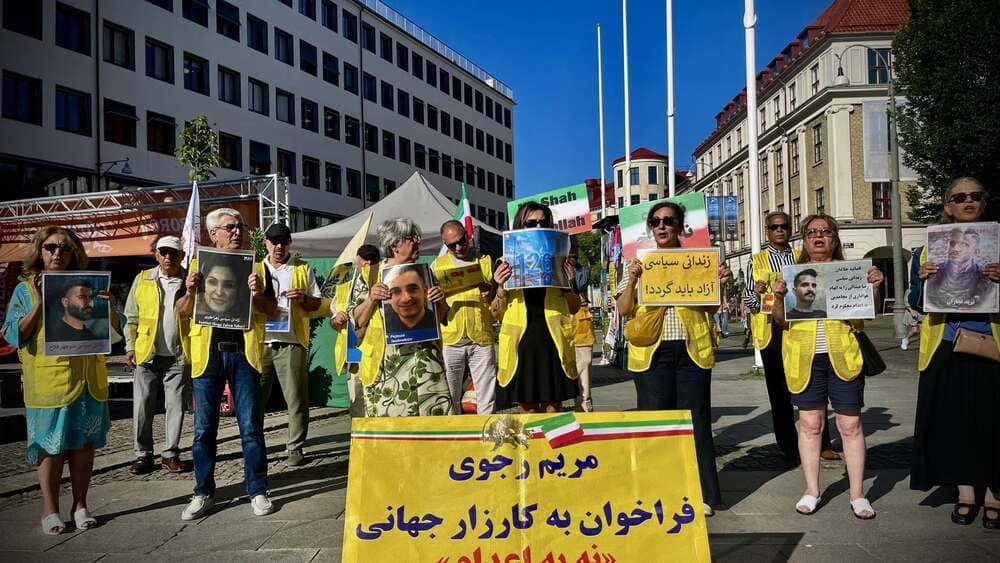
On a sweltering day in Rome, the National Council of Resistance of Iran (NCRI), led by Maryam Rajavi, took center stage. Rajavi, an Iranian politician and activist, has been designated as the “President of the Iranian Resistance for the transitional period until sovereignty is transferred to the people.”
The event was organized by Naike Gruppioni, a member of the Italian parliament from Brothers of Italy (Fratelli d’Italia) and a member of the Foreign Affairs Committee. The conference, titled “The Iranian Crisis and the Democratic Solution for the Future,” was held in the historic Sala della Regina of the Chamber of Deputies. It was attended by prominent international figures, including former New York City Mayor Rudy Giuliani, former U.S. Congressman Patrick Kennedy, former Italian Foreign Minister Giulio Terzi—currently chairman of the Senate’s European Union Policies Committee—as well as several Italian politicians.
Beyond the customary welcoming remarks, the central issue was raised by Fabio Rampelli, Vice President of the Chamber of Deputies, who emphasized the growing institutional and international attention being given to the Iranian people’s struggle for freedom and to the regime’s ongoing violations of human rights.
UPDATE: 9:00 AM CEST
Defying the Dictators: PMOI Resistance Units in Zahedan Chart the Path to a Democratic Republic
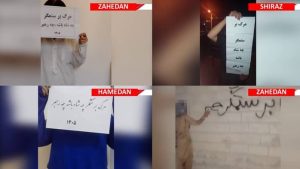
Despite extreme security measures, PMOI/MEK Resistance Units took to the streets of Zahedan on Friday, July 17, reflecting the Iranian people’s will to overthrow the ruling theocracy. Holding placards in public spaces, these activists demanded a democratic republic and rejected all forms of dictatorship.
This defiance comes at a critical juncture when the regime is weaker and more desperate than ever. Following the death of Ali Khamenei, his son Mojtaba has proven incapable of filling the resulting power vacuum.
During their activities, the Resistance Units focused heavily on the Islamic Revolutionary Guard Corps (IRGC). Activists displayed messages asserting that “blacklisting the IRGC as a terrorist organization is a prerequisite for peace, stability, and security.”
They emphasized that the time has come for concrete action against the clerical regime without political or economic considerations. The Resistance Units highlighted that the absolute clerical dictatorship relies on the IRGC as the ultimate instrument for preserving the Supreme Leader’s rule.
The Regime’s Next Battlefield Lies Within
Since the outbreak of war on February 28, 2026, the Iranian regime has sought to transform an external military conflict into a mechanism for its own political survival. Rather than focusing solely on confronting foreign adversaries, the wartime atmosphere became a convenient pretext for intensifying domestic repression, silencing dissent, and postponing the regime’s growing internal crises. Yet as the fighting subsided and a ceasefire took hold, the strategy began to unravel. The tensions that had been temporarily masked by the conflict quickly resurfaced, exposing a leadership increasingly divided over the future of the regime itself.
Throughout the conflict, the regime exploited wartime conditions to tighten its grip on society.
Thousands of young dissidents were reportedly arrested, while numerous participants in the January uprising and ten members of the PMOI were executed. At the same time, Basij forces remained deployed across cities for months in an effort to deter renewed public protests.
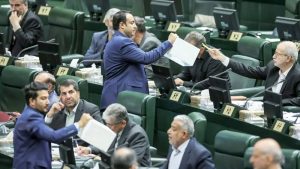
The authorities also resorted to extraordinary political measures designed to prevent internal disputes from spilling into the public sphere. Among them was the prolonged suspension of parliamentary activity, reflecting concerns that factional conflicts could further undermine the regime’s authority during a period of heightened instability.
Iran’s Structural Deadlock Leaves the Regime with No Path to Survival

The developments of the past year have stripped away any remaining illusion that the Iranian regime retains a viable path to long-term survival. Political turmoil, economic collapse, regional setbacks, and growing social unrest have converged to expose a system trapped in a structural deadlock from which there is no realistic escape.
Rather than demonstrating resilience, recent events have confirmed what the Iranian Resistance has argued for decades: the regime is fundamentally incapable of reform, unable to resolve its internal contradictions, and increasingly vulnerable to the demands of a society determined to bring about change.
One of the clearest manifestations of the regime’s predicament is the strategic dilemma it now faces over war and regional policy. On one side lies the bitter necessity of accepting ceasefire arrangements and scaling back its regional aggression. Such a retreat would undermine the image of strength that the regime has carefully cultivated for decades, weakening the strategic influence it has relied upon to project power beyond Iran’s borders. More importantly, it would expose the regime’s internal fragility and embolden domestic opposition.
Collective Hunger Strike at Ghezel Hesar Prison Calls for Halt to Executions
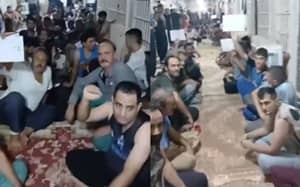
Reports from Iran indicate that the hunger strike by death row prisoners at Ghezel Hesar Prison, launched in protest over the possible execution of six prisoners, is continuing.
According to reports by human rights organizations, the hunger strike, which began on July 13 and continued at least through July 16, calls for halting the execution of six prisoners convicted of drug-related offenses who, according to the organization, have been transferred to solitary confinement ahead of their executions. Prison authorities have reportedly refused to transfer several of the hunger strikers to the prison infirmary despite the deterioration of their health.
Images published on social media show prisoners holding placards reading “No to Execution.”
Ward 2 of Ghezel Hesar Prison holds about 1,500 prisoners sentenced to death on drug-related charges.
Political Prisoner Massoud Jamei Transferred to Solitary Confinement for Torture
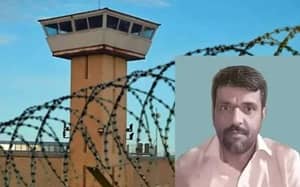
Reports received from Sheiban Prison in Ahvaz indicate that political prisoner Massoud Jamei, who has been sentenced to death twice, was transferred to solitary confinement after chanting protest slogans inside the prison and is being held under harsh conditions.
According to the Human Rights Society of Iran, the political prisoner is being held in a cell without an air conditioning system despite the extreme heat in Ahvaz. Informed sources have also reported that his head was shaved and that he has been subjected to physical and psychological abuse intended to humiliate him and break his spirit.
According to the report, Massoud Jamei was transferred to solitary confinement on the orders of prison officials following his protest slogans. Informed sources say that as temperatures have risen in Khuzestan Province, holding him in a cell without air conditioning has heightened concerns about his physical condition.
Sources close to the case also stated that after transferring the political prisoner to solitary confinement, prison agents shaved his head and subjected him to severe physical and psychological pressure. Officials at Sheiban Prison and Iran’s judiciary have not commented on the matter.
Sharp Rise in U.S. Dollar Exchange Rate in Iran After Resumption of War

As military clashes between the Iranian regime and the United States intensified once again, Iran’s foreign exchange and gold markets were hit by another wave of price increases, with the U.S. dollar surpassing 1.9 million rials in the free market.
According to exchange rates published in the free market, on Friday, July 17, 2026, the U.S. dollar traded at as high as 1.91 million rials. The euro also exceeded 2.18 million rials, while the British pound rose above 2.56 million rials.
This comes after the signing of a memorandum of understanding between Iran and the United States in mid-June, when foreign exchange and gold prices, which had reached unprecedented highs during the war, declined for a period and the market stabilized to some extent.
However, the resumption of military hostilities reversed that trend. In overnight U.S. strikes, several bridges and transportation routes in southern Iran were targeted. In response, according to reports, the Iranian regime carried out attacks against the Kurdistan Region of Iraq and some energy infrastructure in Kuwait.
How Iran’s Regime Uses the War to Preserve Its Rule
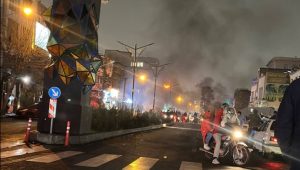
Since the start of the war on February 28, 2026, the Iranian regime has clearly sought to turn the conflict into a tool for its own survival. Rather than being devoted primarily to confronting an external enemy, the wartime atmosphere has been used to suppress society and control the regime’s internal crises.
Under the cover of the war, thousands of young protesters were arrested, large numbers of participants in the Dey uprising were executed, along with 10 members of the People’s Mojahedin Organization of Iran (PMOI/MEK). At the same time, the Islamic Revolutionary Guard Corps (IRGC) and Basij forces have remained deployed in the streets for months to prevent new protests, while the regime has taken a series of measures—including keeping the Majlis (parliament) suspended—to prevent its internal divisions from escalating.
However, since the ceasefire took effect, the regime’s instability has become increasingly evident. One of the clearest manifestations of this instability is the growing infighting within the ruling establishment. The signing of the memorandum of understanding with the United States created a deep rift at the top of the government—a division that was visible even during the funeral ceremony of former Iranian regime supreme leader Ali Khamenei.
Death-Row Cases in Iran
During the crackdown on the protests of December 2025–January 2026 and the judicial handling of political and national-security cases, Gholam-Hossein Mohseni-Eje’i, the head of the Islamic Republic of Iran’s judiciary, called on judicial officials to expedite proceedings, issue judgments and enforce sentences. The country’s highest judicial authority’s emphasis on accelerating proceedings in cases that may result in the deprivation of life raises serious concerns that speed and security considerations are being prioritised over independent investigations, the effective exercise of defence rights and the guarantees of a fair trial.
On Tuesday, 14 July 2026, Tehran Prosecutor Ali Salehi stated that cases relating to the 12-day war, the protests of Dey 1404 and arrests carried out during the recent conflict had been processed, on the instructions of senior judicial officials, with “precision and speed,” and that some had resulted in the issuance and enforcement of death sentences and other final judgments. Despite this official acknowledgment, he provided no figures concerning the number of people executed or sentenced to death, their identities, the charges brought against them, the evidence used to establish guilt, or the extent to which their defence rights had been respected.
War or Diplomacy? Iran’s Ruling Establishment Splits Over Negotiations with Washington
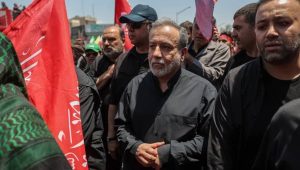
Tehran — The resumption of U.S. military strikes in southern Iran has not only placed the fragile understanding between Tehran and Washington on the verge of collapse. It has also brought into the open an internal struggle within the Islamic Republic, in which rival factions blame one another for the return of hostilities and advocate two opposing paths: continuing the war or returning to negotiations.
On one side of the dispute, media outlets and political figures critical of Iran’s hardline factions argue that the actions taken after the Islamabad understanding in the Strait of Hormuz destroyed an opportunity to end the war. On the other, newspapers aligned with hardline circles reject that account, portraying negotiations as a tool the United States uses to impose its demands on Iran.
The dispute, however, has moved beyond criticism of President Masoud Pezeshkian’s government. Jahan-e Sanat reported that the Islamabad understanding had been approved by 12 of the 13 members of the Supreme National Security Council, yet hardliners close to the Paydari Front and Saeed Jalili continued to pressure both the government and the negotiating team despite the council’s decision.