


THIS PAGE WILL BE UPDATED WITH THE LATEST NEWS
UPDATE: 5:30 PM CEST
Clashes Between Khamenei Supporters and Shirazi Followers- 140 Arrested and 54 Injured
Clashes that erupted in the Iraqi city of Karbala revealed tensions between religious and political groups participating in the Arbaeen commemorations of Imam Hussein, amid reports of 140 arrests and 54 injuries.
The confrontations took place after supporters of the Iranian regime gathered in front of the office of Sadegh Shirazi, raising photos of Ali Khamenei and his son Mojtaba, along with banners bearing political and religious slogans.
The Iraqi channel Al-Sha’aier reported that some participants chanted slogans deemed provocative by supporters of Khamenei and his son, triggering clashes before Iraqi police intervened to contain the situation.
According to circulating accounts, tensions flared up again later in the surrounding area, prompting Iraqi security forces to use force to quell the unrest. Meanwhile, the reported numbers of detainees and casualties have not been independently verified.
Albania Targeted by Over 14.6 Million Cyberattack Attempts in First Half of 2026
Albania’s National Cyber Security Authority (AKSK) reported that the nation faced relentless cyber hostile activity during the first six months of 2026.
According to official data released by the agency, “During the first half of 2026 (January–June), a total of 14,628,595 cyberattack attempts were recorded against Albania’s cyber ecosystem.” The authority emphasized the intense volume of these threats, noting that “This equates to approximately 56.4 cyberattack attempts every minute.”
The attempts targeted key national assets across public and private domains:
- Target Breakdown: “Of the total number of attempted attacks, 54% targeted important information infrastructures, while 46% targeted critical information infrastructures.”
- Impacted Sectors: “The attacks were directed at a wide range of sectors, including the financial sector, public administration, digital infrastructure, the energy sector, and other key industries.”
AKSK confirmed that it “continues to monitor cyber threats on an ongoing basis and strengthen protective measures to enhance the resilience and security of the country’s information infrastructures.”
Historical Context and Iranian Cyber Aggression
These massive technical attacks occur against a backdrop of prolonged state-sponsored targeting. Speaking in Montenegro on June 5, 2026, Albanian Prime Minister Edi Rama explicitly addressed the threat from Tehran while recalling the decision to sever diplomatic relations with the regime:
“Everyone knows Albania’s enemies. We know them. Everyone knows our story with them. The Iranian regime has long been conducting cyberattacks against us and has caused us great damage, which forced us to expel them.”
UPDATE: 1:30 PM CEST
Damascus Confronts Iran-Backed Militias in Iraq and Lebanon with “Firm Messages”
The Syrian government has in recent days begun changing its approach to dealing with Iran-aligned militias on both sides of its borders with Iraq and Lebanon. The shift has taken a military form, involving a reorganization of army and security forces in border areas, including the restructuring of Syrian military and security forces responsible for border security in Deir ez-Zor, the Damascus countryside, and the Syrian coast. It has also taken a political form, through clear messages that Syria will not stand idly by in the face of any cross-border attack from Iraq into Syrian territory.
The Syrian shift has been driven by several factors. Politically, one of the most prominent is the new position of Saudi Arabia and the Gulf states toward attacks carried out by Iraqi militias against the kingdom and other Gulf countries. Domestically, it is also driven by the growing level of threat posed by Iranian cells inside Syrian territory and along the borders, as well as by Iran’s direct acknowledgment of this threat in a message conveyed to the Syrian government through Iraqi officials.
On Thursday, July 30, Syrian President Ahmed al-Sharaa held separate phone calls with Saudi Crown Prince Mohammed bin Salman and United Arab Emirates President Sheikh Mohammed bin Zayed Al Nahyan, discussing regional developments with the two Arab leaders. The calls came one day after Saudi Arabia carried out targeted strikes against positions belonging to Iraqi militias after the latter attacked oil facilities in the kingdom. They also came days after Iran’s Islamic Revolutionary Guard Corps (IRGC) announced strikes on the Al-Tanf border area with Iraq, as well as an Iranian threat conveyed to Damascus through an Iraqi intermediary that any Syrian intervention in Lebanon would be met with an Iranian response.
America’s Water Systems Are Under Attack. Iran May Be to Blame

A recent wave of cyberattacks on American water systems is raising alarm at all levels of government, with U.S. authorities reportedly suspecting Iran-linked hackers.
The FBI reported Thursday that “malicious cyber actors” targeted water and wastewater utility companies in at least seven states over the prior four days, resulting in a “loss of monitoring and control functionality.” Officials in Michigan, Minnesota and New Jersey have reported attacks.
Federal authorities suspect hackers connected to Iran carried out the attacks, according to The New York Times. But U.S. officials have not definitively determined the source of the disruptions.
Multiple experts told The Hill the modest security systems in place at water treatment facilities make those sites “vulnerable” to attacks. While they could not be certain of Iran’s involvement, they said the behavior was consistent with Tehran’s modus operandi.
Sharp Spike in Executions, Death Sentences in Iran

“I am alarmed by the rise in executions and death sentences issued in Iran since March and that capital punishment continues to be used to instill fear among the population and suppress dissent,” UN High Commissioner for Human Rights Volker Türk said in a statement, urging Iranian authorities to urgently halt all executions and move towards the abolition of the death penalty.
Widespread civilian protests against the Government began at the end of 2025 linked to economic unrest, soaring inflation and widespread shortages. The crackdown which followed led to thousands of deaths, with thousands more detained, together with a months-long internet blackout.
A independent UN fact-finding mission on Iran last month urged Iranian authorities to halt the executions of 10 men who took part in protests in Isfahan this year and strongly condemned the 19 July executions of two others sentenced to death in the same case.
UPDATE: 8:00 AM CEST
PMOI Resistance Units Amplify The ‘No to Executions Tuesdays’ Campaign Across Iran
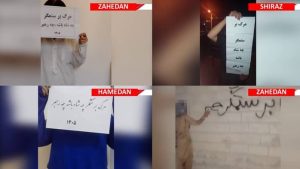
Despite the Iranian regime’s escalating use of public executions to maintain its fragile grip on power, PMOI Resistance Units have taken to the streets across Iran to project messages of defiance in support of the “No to Executions Tuesdays” campaign. Following the massive nationwide uprisings of January 2026, the religious dictatorship has increasingly resorted to systemic massacres of political prisoners in a desperate attempt to quell a rebellious society that no longer fears its apparatus of repression.
On August 4, Resistance Units launched a coordinated campaign across major cities—including Tehran, Shiraz, Isfahan, Tabriz, and Kermanshah—risking their safety to display placards and paint graffiti. Activists in Tehran painted graffiti reading, “Political prisoners must be freed” and “No to state executions,” while in Shiraz, messages declared, “No to the regime of executions.”
In Isfahan, Resistance Units held placards supporting the campaign and rejecting capital punishment. The messaging targeted the regime’s pseudo-legal justifications for its crimes, highlighted by activists in Tabriz who displayed a placard reading, “Justice will not be achieved with executions.”
Political Prisoner Parisa Kamali Condemns the Mullahs’ Execution Machine from Yazd Prison
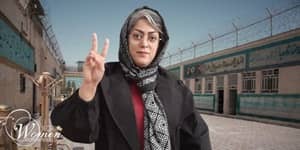
Parisa Kamali Ardakani, an Iranian political prisoner currently serving an eight-and-a-half-year sentence, has released a powerful audio message from behind the bars of Yazd Central Prison. Despite facing severe repression, internal exile, and lengthy imprisonment, she refuses to be silenced, proving that the regime’s attempts to break the spirit of political prisoners have utterly failed.
In her smuggled audio file, Kamali states that the Iranian people are “always mourning” and have not yet swallowed the grief of the January government massacres. The regime’s strategy of using serial executions and massacres is a desperate tool to instill fear and ensure its survival, but this tactic is fundamentally backfiring by fueling the people’s rage.
Drawing a direct line of systemic state violence spanning decades, Kamali states, “From 1988 to this day, blood has been flowing.” She expresses unwavering hope for the future, declaring, “We have escaped a bitter death and are full of anger. We have faith that a day will come when execution will no longer have a place in our country’s constitution.”
Parisa Kamali was arrested on April 29, 2024, in Isfahan and was initially incarcerated in Dowlatabad Prison before facing three separate legal cases brought against her in Isfahan and Ardakan.
Stolen Legacy: How Reza Pahlavi Rewrites His Father’s and Grandfather’s Constitutional Violations as Achievements
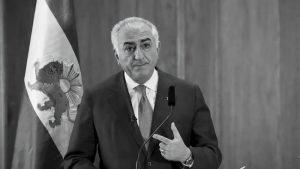
In a recent post on X marking the anniversary of the 1906 Constitutional Decree, Reza Pahlavi, the self-styled crown prince of Iran’s defunct monarchy, claimed that “a large part of [the Constitutionalists’] ideals were realized and implemented during the rule of the two Pahlavi kings.” He praised his grandfather, Reza Shah Pahlavi (r. 1925–1941), and his father, Mohammad Reza Shah Pahlavi (r. 1941–1979), as executors of constitutionalism, modern justice, and national sovereignty.
The historical record tells a different story. Far from upholding the 1906 Constitution, both Pahlavi monarchs systematically violated its text, subverted its institutions, and crushed the very movements that sought to realize its promises. What Reza Pahlavi now celebrates as “achievements” were, in fact, the spoils of authoritarian rule—built on coups, constitutional amendments engineered for dynastic power, and the suppression of parliament, press, and political dissent.
The 1906–1907 constitutional framework was Iran’s first serious attempt to limit monarchical absolutism and establish a rule-of-law state. Key provisions included:
- Obligation of the Shah to uphold the constitution (Article 51 of the Fundamental Law).
- Establishment of an elected parliament (Majles) with legislative authority and cabinet accountability.
- Guarantees of civil liberties, including freedom of the press and freedom of association (subject to religious constraints in the 1907 Supplement).
- Judicial independence, with judges protected from arbitrary dismissal (Articles 81–82 of the 1907 Supplement).
Iran’s Teachers Under Pressure: Why the Regime Fears Independent Educators
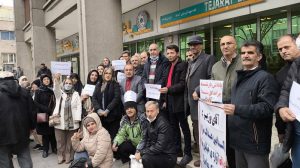
The repression of teachers in Iran has intensified significantly following the nationwide protests of January 2026, with educators, labor activists, and independent union members increasingly targeted by security forces. Human rights reports indicate that the authorities have expanded their crackdown beyond the protest period itself, using arrests, judicial harassment, and administrative penalties to silence one of the country’s most influential social groups.
Teachers have long occupied a respected position within Iranian society, particularly in local communities where they play a central role in education and civic life. Their visible participation in nationwide demonstrations placed many educators under close surveillance by intelligence and security agencies.
According to reports, numerous teachers and education workers were detained not only during the nationwide protests but also weeks and even months after demonstrations had subsided. Many arrests were carried out without due process, particularly in smaller cities where labor activists remained under close scrutiny.
Iran Human Rights Review: At Least 77 Executions and 160 Arrests Recorded in July 2026

The Iranian regime continued its sweeping crackdown on dissent throughout July 2026, carrying out at least 77 executions, arresting 160 people, and leaving 19 civilians dead in shootings by security forces, according to documented human rights reports.
The month’s figures illustrate the continued use of executions, arbitrary detention, and lethal force as central instruments of repression. Particularly alarming was the execution of seven political prisoners, many of whom had been arrested during recent nationwide protests.
Human rights monitors documented 77 executions in prisons across Iran during July. Those executed included:
- 7 political prisoners (five executed in prison and two publicly)
- 3 women
- 2 juvenile offenders
- 65 male prisoners
- 4 Baluch citizens
- 10 Kurdish citizens
- 5 Afghan nationals
Parliamentary Research Center Warns About Expansion of Poverty in Iran

A new report by the Iranian regime’s Parliamentary Research Center paints an alarming picture of the future of livelihoods and the expansion of poverty in Iran. According to the state-run Siasat Rooz newspaper on July 27, “If the current trend continues, the poverty rate will increase from 41% in 2026 to 45.5% in 2028.” As a result, nearly half of the country’s population would be living below the poverty line. These figures are not merely economic indicators; they reflect conditions that many citizens experience through rising daily expenses, declining purchasing power, and increasing difficulty in meeting basic needs.
The Iranian regime’s Parliamentary Research Center emphasizes in its report that the expansion of poverty is not limited to declining household incomes. It identifies deteriorating educational quality, the gradual removal of healthcare services from household budgets, malnutrition, rising school dropout rates, increased child labor, and the expansion of social harms as among the most significant consequences of this trend.
The Pressure of Growing Cost of Living on Iranian Families

The livelihood challenges facing the Iranian people have forced what is described as a “survival economy” upon society. According to the state-run Entekhab news website on August 3, a survival economy is “an economy in which people monetize every small opportunity, not out of interest in a minimalist lifestyle or sustainable consumption, but in order to manage their daily expenses under the pressure of rising living costs.”
In previous years, online marketplaces were primarily used to buy and sell homes, cars, and investment assets. Today, however, browsing listings on these platforms presents a very different picture of the financial condition of Iranian households. These advertisements indicate changing consumption patterns and mounting economic pressures, reflecting the growing impoverishment of Iranian society.
On August 4, the state-run Rokna news agency published a report titled “Unusual Listings on Divar (a website for classified ads): From Selling Hair to Renting Laptops!” stating:
“The growing number of online listings featuring unusual items such as human hair, second-hand shoes, and empty perfume bottles reflects economic changes and financial pressures in society.”
Iran’s Talks with the U.S. Expose Rare Public Split Inside the Ruling Establishment

Tehran — Efforts to bring Iran and the United States back to the negotiating table have exposed a rift within the political structure of the Islamic Republic that can no longer be explained by the traditional divide between reformists and conservatives. Mohammad Javad Zarif, the former foreign minister, and Mehdi Mohammadi, the strategic adviser to the speaker of parliament, despite coming from different political backgrounds, have both called for making use of the opportunity for diplomacy. At the same time, Davood Mohammadinia, a former member of Iran’s nuclear negotiating team, has warned that opponents of this path have gone so far as to challenge the Supreme National Security Council itself.
This realignment comes as regional mediators have intensified efforts to prevent a return to war. Qatar, Oman and Pakistan have pursued consultations over the Strait of Hormuz and a possible path toward dialogue between Tehran and Washington. Yet Tehran and Washington continue to offer different accounts of the nature of these contacts. Foreign Ministry spokesman Esmail Baghaei said: “We are not negotiating with the United States. The negotiations are with Oman and are focused on reaching an understanding on a mechanism that would ensure safe navigation through the Strait of Hormuz.”
Gothenburg Rally Backing the 132nd Week of “No to Execution Tuesdays” Across 59 Iranian Prisons
Gothenburg, Sweden — August 4, 2026: Supporters of the People’s Mojahedin Organization of Iran (PMOI/MEK) held a rally in solidarity with the 132nd consecutive week of the “No to Execution Tuesdays” campaign, a movement protesting the Iranian regime’s escalating executions and systematic repression.

Participants also highlighted the regime’s intensifying crackdown, the rising number of executions, and broader repressive measures. They chanted slogans such as “Down with the executioner regime” and called for the immediate release of all political prisoners.
Berlin Exhibition Condemns Iran’s Wave of Executions and Calls for a Democratic Republic in Iran
Berlin, Germany – August 4, 2026 – Supporters of the People’s Mojahedin Organization of Iran (PMOI/MEK) held a book table and photo exhibition condemning the execution of political prisoners, as well as protesters arrested during the January 2026 uprising.

The event denounced the ruling clerical regime, describing the executions as a blatant violation of human rights. The exhibition paid tribute to the victims by displaying their photographs at various locations and reaffirmed its commitment to continue the struggle until the regime is overthrown and a democratic republic founded on peace, freedom, and justice is established in Iran.
Paris Exhibition Condemns Executions, Calls for a Democratic Republic in Iran

Paris, France – August 4, 2026 – Supporters of the People’s Mojahedin Organization of Iran (PMOI/MEK) held a book table and photo exhibition condemning the execution of political prisoners, as well as protesters arrested during the January 2026 uprising.
The event highlighted the Iranian people’s call for a democratic republic under the leadership of the Iranian Resistance as a path toward peace, freedom, and justice.
Organizers called on the French public and the international community to recognize the suffering of the Iranian people and their firm rejection of all forms of dictatorship, whether monarchical or theocratic. Through powerful images and personal testimonies, the exhibition showcased the courage and sacrifices of participants in the January 2026 uprising while denouncing the regime’s ongoing human rights violations, including the execution of political prisoners.