

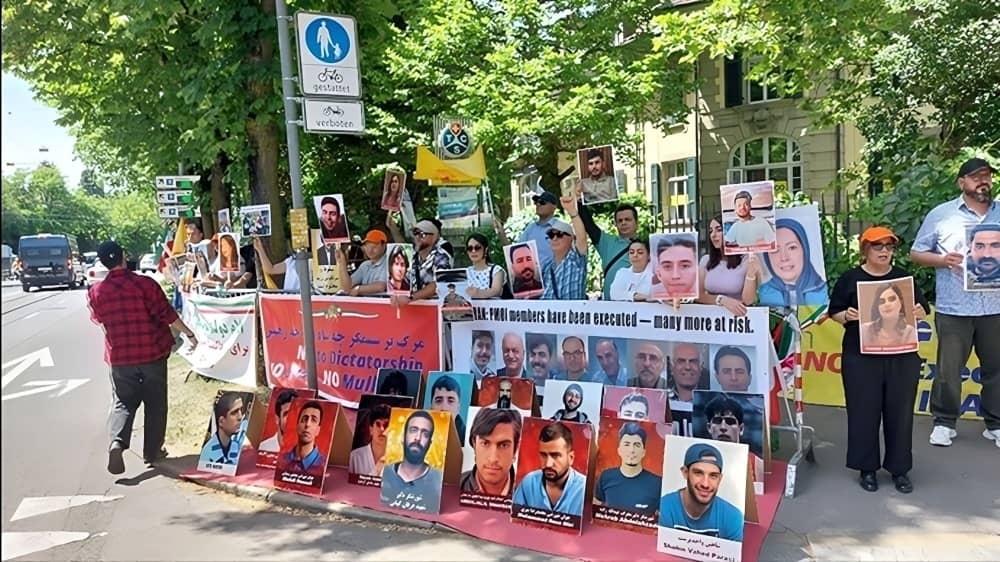
From May 31 to June 7, 2026, a massive, multi-continental mobilization by the Iranian diaspora and supporters of the National Council of Resistance of Iran (NCRI) has surged across major global capitals and urban centers, directly countering Tehran’s escalating domestic repression. Spanning Western Europe, North America, and Australia, these highly coordinated rallies, street exhibitions, and information campaigns are systematically exposing the clerical regime’s brutal “strategy of the noose” following the historic January 2026 nationwide uprising. By channeling widespread public outrage over a recent wave of political executions into a unified global call for a democratic republic, these international actions are actively building momentum for the upcoming June 20 Free Iran Rally in Paris. This unprecedented wave of expatriate resistance underscores the regime’s complete inability to isolate domestic dissent, transforming local grievances into a potent, internationally recognized movement for systemic change.
June 6, 2026
Expatriate networks and solidarity committees accelerated their public outreach campaigns across several European countries, focusing heavily on generating international awareness for the plight of political prisoners inside Iran. In Locarno, Switzerland, Iranian dissidents organized a book stall and information center, distributing literature to local citizens detailing the regime’s human rights violations and urging participation in the upcoming grand rally in France. Simultaneously, coordinated public actions and information tables were deployed by freedom-loving Iranians throughout Germany, specifically activating networks in Hamburg, Heidelberg, and Elmshorn. In Paris, supporters established an effective presence near the Charles Michels sector, utilizing public displays to rally support for the ongoing domestic uprisings and to advocate for the complete dismantlement of the clerical dictatorship.
MEK Supporters in Heidelberg Urge Participation in June 20 Paris Free Iran Rally #No2ShahNo2Mullahs #StopExecutionsInIran #100KFreeIranRallyhttps://t.co/BxGtwW49L5
— Iran Freedom (@4FreedominIran) June 7, 2026
June 5, 2026
The international momentum continued to expand northward into Scandinavia and deepen within the French capital. In Copenhagen, Denmark, a large assembly of activists staged a public demonstration expressing solidarity with the MEK-led Resistance Units inside Iran and issuing a comprehensive call to action for the international community to back the democratic alternative. In Paris, supporters focused their efforts on academic and cultural hubs, setting up a major informational book stall directly in front of the historic Sorbonne University. This action featured an extensive exhibition documenting recent state-sanctioned hangings and promoting the structural framework of a democratic republic based on the NCRI’s Ten-Point Plan. Activists also maintained operational momentum in Elmshorn, Germany, ensuring a continuous presence to educate the European public on the necessity of ending the policy of appeasement toward Tehran.
June 4, 2026
Demonstrators in the German capital marked a significant milestone in their sustained diplomatic pressure campaign against the mullahs’ establishment. In Berlin, dedicated supporters of the resistance entered the ninety-seventh consecutive day of their sit-in and hunger strike directly outside the gates of the Iranian regime’s embassy, demanding the immediate cessation of political executions and the closure of the diplomatic facility. Parallel to this ongoing protest, activists in Paris maintained their multi-day street exhibitions, ensuring that the French public and visiting international delegates remained continuously informed of the severe human rights abuses taking place across Iran’s specialized execution prisons.
2-MEK supporters in Heidelberg call for global participation in the June 20 Free Iran rally in Paris, promoting a democratic alternative to dictatorship.#No2ShahNo2Mullahs #StopExecutionsInIran #100KFreeIranRally pic.twitter.com/l77qlHjhKt
— Iran Freedom (@4FreedominIran) June 7, 2026
June 3, 2026
Focusing their resources on the focal point of European diplomacy, organized volunteer teams inside Paris executed multiple, high-visibility book stall operations throughout the city. These synchronized public installations utilized photographs, translated testimonies, and policy documents to illustrate the direct continuity of state terror from the 1988 massacres to the present day. The public messaging emphasized that the current internal crackdowns reflect a deeply unstable clerical apparatus terrified of another domestic explosion.
June 2, 2026
A highly coordinated, multi-state offensive coincided with the global observation of the “No to Execution Tuesdays” campaign, resulting in significant public actions across Switzerland, Germany, Sweden, the Netherlands, and France. In Zurich, Switzerland, an extensive public exhibition was mounted to protest the hanging of political prisoners and to demand the total abolition of the death penalty. In Bremen, Germany, protesters assembled under the unifying slogans of “No to the Shah! No to the Mullahs!” and “Regime change in Iran by the people of Iran,” explicitly carrying portraits of recent martyrs to visually demonstrate the human cost of the theocracy. In Gothenburg, Sweden, a powerful rally marked the 123rd consecutive week of the anti-execution campaign, where speakers fiercely condemned the June 1 judicial murders of Mehrdad Mohammadinia and Ashkan Maleki, two young protesters whom the regime had labeled as ringleaders of the January uprising. Concurrently, in Amsterdam, the Netherlands, a major book table and photographic installation occupied the historic Dam Square, drawing thousands of international visitors and channeling their support toward the upcoming June 20 rally. Supporters in Paris reinforced this international wall of solidarity by launching localized information drives across several municipal districts.
Paris Exhibition Condemns Executions in Iran, Calls for June 20 Grand Rally #100KFreeIranRally #StopExecutionsInIran #No2ShahNo2Mullahshttps://t.co/N0BJeter8G
— Iran Freedom (@4FreedominIran) June 6, 2026
June 1, 2026
Kicking off the operational week, resistance networks in Paris initiated a comprehensive, two-day international exhibition protesting the regime’s accelerated judicial killing machine. The event served as a major launching pad for the mobilization towards the June 20 “Free Iran” assembly, organizing under the explicit banner of establishing a democratic republic for Iran based on popular sovereignty and the separation of religion and state.
May 30, 2026
A massive, synchronized global demonstration activated diaspora communities across North America, Europe, and Australia, delivering a sweeping rebuke to the clerical regime’s domestic terror apparatus. In Melbourne, Australia, supporters organized an impactful book stall and photographic exhibition, urging the Australian government to take a decisive stance against Tehran’s systemic human rights abuses. In Bern, Switzerland, members of the Baluch community joined forces with broader Iranian expatriate groups to stage a fierce protest directly in front of the regime’s embassy, complementing a broader nationwide solidarity action across Switzerland to condemn the ongoing execution of political prisoners and regional minorities.
A similar high-stakes diplomatic protest occurred in Oslo, Norway, where demonstrators outside the Iranian regime embassy demanded immediate European intervention to halt the gallows, a sentiment echoed by diaspora cells throughout Norway. In Canada, synchronized rallies disrupted major urban centers, with massive turnouts recorded in both Toronto and Vancouver where organizers urged the international community to recognize the Iranian public’s complete rejection of both theocratic and monarchical dictatorships. In Sweden, large-scale mobilizations occurred simultaneously in Malmö and Gothenburg; during the Gothenburg rally, furious participants demanded that the Swedish government immediately close the regime’s embassy in Stockholm, which they explicitly denounced as an active hub for state-sponsored espionage and terrorism. Across Germany, decentralized support networks organized parallel solidarity actions, joining the global chorus to voice their unwavering endorsement of NCRI President-elect Maryam Rajavi’s Ten-Point Plan, framing it as the only viable roadmap for a pluralistic, gender-equal, and democratic future.
12 Days to go 100,000 Free Iran Rally
14:00 CEST – Place Vauban, Paris 7 – June 20, 2026 #100KFreeIranRally🛑Stop Executions In Iran
⛔️No to Shah No to Mullahs
✅Yes to a Democratic Republic pic.twitter.com/VCiEG7Su9E— Iran Freedom (@4FreedominIran) June 7, 2026