

Three-minute read
The executions of commander Hamed Validi and Mohammad (Nima) Massoum Shahi mark a critical turning point in the Iranian regime’s long-standing war against its organized opposition. While clerical dictatorship attempts to project an image of absolute control, these judicial murders represent a profound strategic failure. For decades, the ruling establishment has poured billions of dollars into a sophisticated machinery of repression and misinformation. This apparatus did not merely operate within Iran’s borders; it actively utilized a network of friendly reporters and proxy voices within foreign mainstream media and international think tanks to manipulate global perception. The goal was to portray the regime as stable, politically reformable and military undefeatable, while characterizing its fiercest opponent, the People’s Mojahedin Organization of Iran (PMOI), as a fringe group with no domestic support.
Since 2015, this campaign of narrative spinning has intensified. Realizing that the growth of internal Resistance Units could no longer be ignored, the regime shifted from a policy of total censorship to one of active demonization. It flooded the airwaves and international publications with labels of “terrorism” and “cultist” behavior, desperate to convince both the Iranian public and the Western world that the PMOI lacked a legitimate base. However, the recent wave of executions has effectively dismantled this multi-billion-dollar facade. A regime does not resort to the gallows for an irrelevant group, nor does it execute individuals who have no presence within its society.
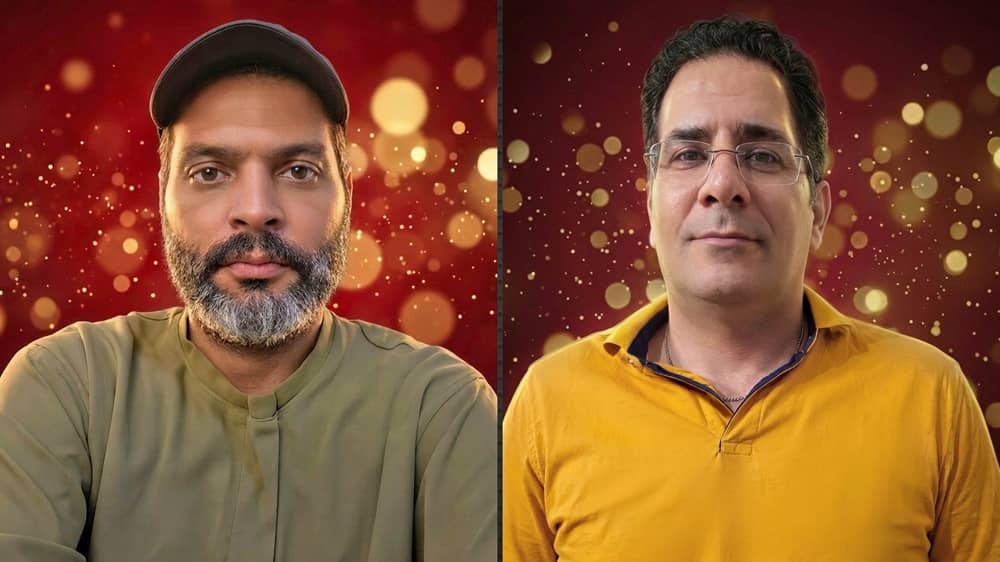
The individuals recently martyred—including Commander Hamed Validi, a 45-year-old civil engineer, and Nima Shahi, a 38-year-old technical worker—illustrate the deep-rooted nature of the Resistance. These were not marginal figures; they were professionals with brilliant futures and specialized skills who were arrested in Tehran and subjected to severe torture before facing a judicial farce. When we consider the six other PMOI members recently executed—Mohammad Taghavi, Akbar Daneshvarkar, Babak Alipour, Pouya Ghobadi, Abolhassan Montazar, and Vahid Bani Amerian—a clear pattern emerges that contradicts every regime talking point. These eight individuals represented a cross-section of Iranian society, spanning different ages, social classes, and professional backgrounds. Their diverse paths to the resistance prove that the PMOI’s reach extends into every stratum of the population, from the technical sectors to the educated middle class.
On April 20, Iran's regime executed PMOI members Hamed Validi and Mohammad (Nima) Massoum Shahi, in a desperate attempt to prevent another uprising and its overthrow by Iran's rebellious youth.#StopExecutionsInIran pic.twitter.com/PjSG6yf0bK
— People's Mojahedin Organization of Iran (PMOI/MEK) (@Mojahedineng) April 20, 2026
This reality forces a series of uncomfortable questions upon the regime’s propaganda machine and its international proxies. Why would a successful, highly educated civil engineer like Hamed Validi choose a path of such extreme risk? Why would young Iranians with promising careers and families sacrifice everything to join the Resistance Units? What is it about the message of organized resistance that resonates with a technical worker in Karaj and a seasoned activist in Tehran alike? These questions shatter the regime’s claim of “foreign-backed espionage” and reveal the victims as native dissidents who were motivated by a genuine desire for freedom and national dignity.
By returning to the physical elimination of political prisoners, the regime has signaled that its efforts to discredit the PMOI through character assassination have failed. Every rope used at Karaj Central Prison serves as a grim admission that the Iranian people have not been fooled by state-sponsored narratives or the articles placed in Western media by “friendly” commentators. Instead of stifling the uprising, these executions act as a catalyst for further dissent. The casual observer and the grieving neighbor are left to wonder what truth these martyrs held so dear that the state felt compelled to kill them. In its desperate bid to stay afloat, the regime has only succeeded in proving that the very organization it claimed was dead is, in fact, the most potent threat to its survival. The blood of these professionals and activists serves not as an end, but as a bridge to a future where the wall built upon fear and lies finally crumbles.