

Two-minute read
The clerical dictatorship is currently navigating a profound internal crisis, presiding over a highly volatile society while simultaneously managing escalating regional conflicts. However, behind the fiery rhetoric directed at external adversaries lies a more immediate domestic strategy: weaponizing the current state of war to accelerate a brutal crackdown on civil society. By conflating grassroots dissent with foreign espionage, the ruling establishment is silencing an increasingly restless population, a campaign inadvertently aided by the remnants of Iran’s former monarchical regime, whose rhetoric provides the state with the exact pretext it seeks to legitimize its actions.
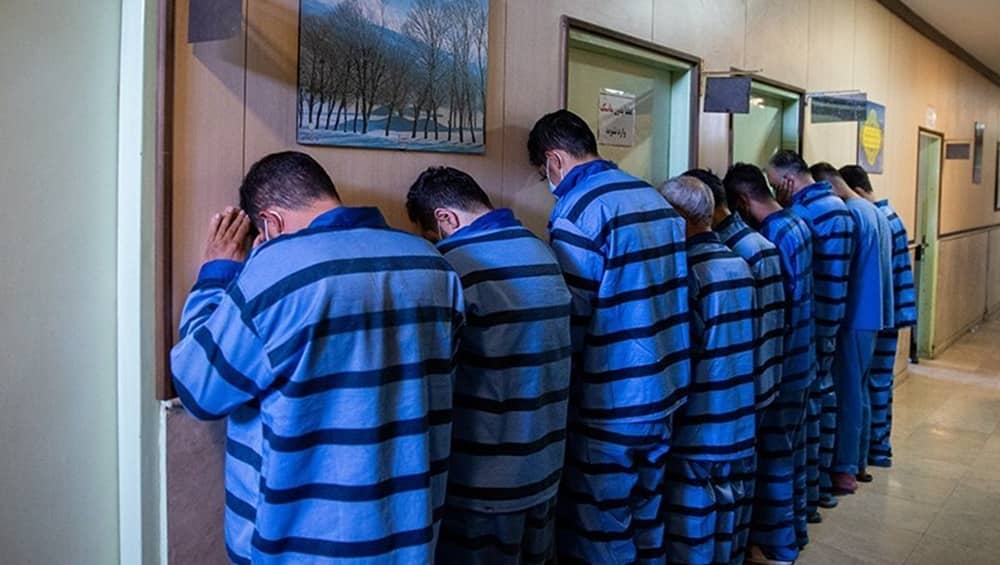
To combat internal challenges, the state apparatus has initiated a massive wave of domestic repression under the guise of wartime security. On June 8, 2026, Mizan News Agency, the official outlet of the Iranian Judiciary, published statements from Judiciary Spokesman Asghar Jahangir detailing a sweeping new security dragnet. Jahangir announced the rapid implementation of a “Social Defense” plan, an initiative nominally designed to protect the nation against enemy strategies but which, in practice, criminalizes a broad spectrum of civil behavior. During a public address, Jahangir explicitly stated that 3,121 individuals have been prosecuted as “traitors to the homeland” and “mercenaries,” with 2,406 already arrested and detained. The judiciary justifies these mass arrests by linking them directly to the regional conflict, with the spokesman asserting that citizens are facing charges ranging from “security, economic, military, and financial” actions to merely possessing satellite internet devices utilized to allegedly aid the enemy.
"The widening crackdown comes as the country struggles to stabilize after #IranWar that degraded significant portions of its infrastructure, while simultaneously exposing vulnerabilities inside the clerical dictatorship," writes @MasumehBolurchi.https://t.co/vkaKRzSuu2
— NCRI-FAC (@iran_policy) April 16, 2026
Nowhere is this exploitation of the war narrative more evident than within the country’s higher education system. A comprehensive field report published on June 7, 2026, by the domestic daily newspaper Tosee Irani revealed a rapidly deteriorating, highly securitized environment across major academic institutions following a five-month campus closure. Disciplinary committees are systematically bypassing standard legal protocols to execute mass purges of the student body, explicitly weaponizing the regional conflict during disciplinary hearings. According to the report, students summoned to these committees are subjected to inquisition-style questioning regarding their patriotism. In one documented instance at Sharif University of Technology, interrogators demanded of a student, “How much do you think you share in the blood of the martyrs of this war?” and directly accused them by stating, “You are complicit in the blood of those killed in Minab”. These calculated accusations are designed to transform students participating in peaceful, on-campus protests into military adversaries of the state.
While the state’s crackdown is inherently driven by its own survival instincts, its propaganda machine has been handed a potent weapon by actors outside the country. Notably, Reza Pahlavi, the son of Iran’s former dictator, has, through his public posturing and perceived support for foreign military strikes on Iranian soil, provided the ruling clerics with a desperately needed excuse to intensify domestic repression. By framing the struggle against the regime as one that invites foreign air power and military intervention, Pahlavi has allowed the state security apparatus to easily conflate genuine, homegrown democratic movements with foreign espionage.
#Iran News: State-Run Newspaper Says Reza Pahlavi and Monarchists Have Served Clerical Regimehttps://t.co/iey2VpMKXU
— NCRI-FAC (@iran_policy) April 8, 2025
By deliberately highlighting Reza Pahlavi and his warmongering demands in particular, the Iranian regime seeks to create the false impression that the entire opposition favours war, thereby handing the state the perfect narrative to label student activists, striking workers, and ordinary protesters as a fifth column rather than citizens demanding civil rights.
This rhetoric does not weaken the repressive apparatus; rather, it arms it with the narrative of treason necessary to execute, imprison, and expel dissidents under the unassailable cover of national defense. The Iranian people are thus caught in an agonizing vise, battling a tyrannical state that views its own citizens as the enemy, while external political narratives actively undermine the legitimacy of their independent struggle for a democratic society.