

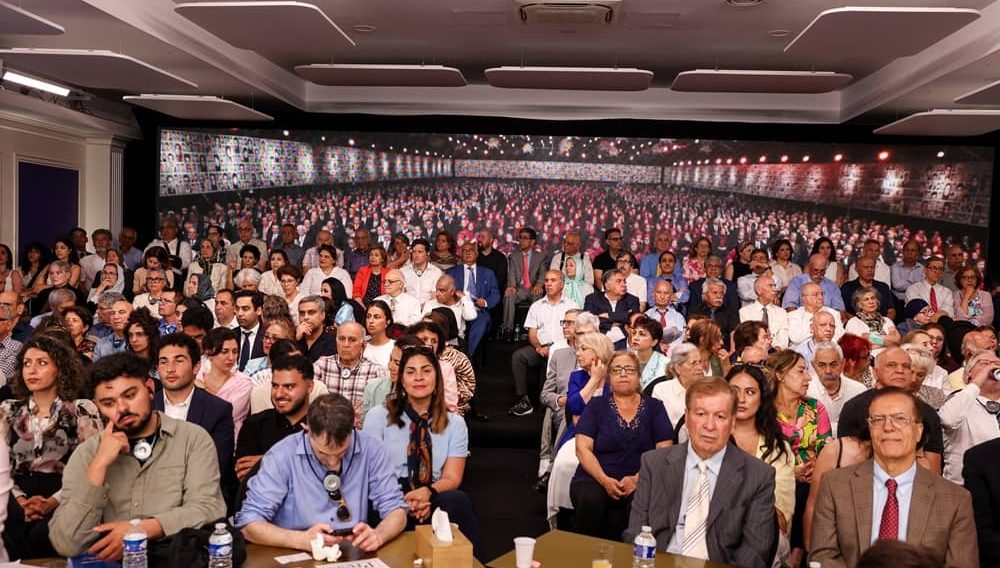
THIS PAGE WILL BE UPDATED WITH THE LATEST NEWS
UPDATE: 7:30 AM CEST
Speech at the Free Iran Summit 2026
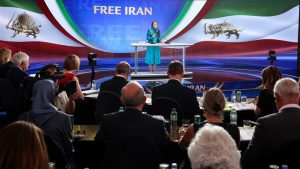
Mrs. Maryam Rajavi’s speech: “On the forty-fifth anniversary of the nationwide Resistance of the Iranian people against religious fascism, I pay tribute to the pioneers of that great uprising on June 20, 1981, and to all the heroes and martyrs of the continuous, arduous, and blood-soaked struggle of these long years. To them, I say: salute, salute, salute!
This Resistance began with the uprising of half a million people in Tehran on June 20, 1981—the most significant political turning point after Khomeini seized power. The choice before us was stark: existence or extinction, freedom or dictatorship, resistance or surrender. We chose resistance. Massoud Rajavi‘s message was simple and enduring: ‘I resist for freedom; therefore, I am.’
“This is a Resistance that carries the most legitimate, the deepest, and the most hard-earned aspirations of the Iranian people over the past 120 years. It will continue its march until the democratic revolution of the Iranian people triumphs.
This year also marks the 120th anniversary of Iran’s Constitutional Revolution against absolute monarchy and tyrannical kings.”
Seven Students of Sharif University of Technology Expelled and Banned from Education
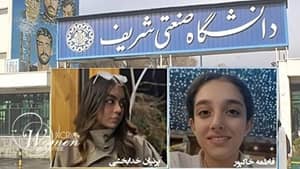
Seven students at Tehran’s Sharif University of Technology have been expelled by the disciplinary committee. They included two female students, Fatemeh Khakpour and Parnian Khodabakhshi.
Parnian Khodabakhshi, a materials science and engineering student, has been expelled and handed a 5-year ban from academic education.
Fatemeh Khakpour, an undergraduate chemistry student, has also been expelled.
The rulings issued for these seven students of Sharif University of Technology follow a wave of crackdown on students after the January 2026 nationwide uprising. These sentences issued hastily without any fair trial or due process, solely serve to silence the voice of student protest.
A similar situation unfolds at Khajeh Nasir University. A number of protesting students are facing physical bans from entering the university campus, in addition to having disciplinary files opened against them.
Some of these students had previously been deprived of dormitory housing, with their educational and welfare services completely cut off.
Iran’s Post-War Challenge: A Deepening Crisis of Trust Threatens the Regime’s Future
Even before the dust of war has settled and any formal post-war understanding has been reached, concerns about the future stability of Iran’s ruling system are already emerging from within the regime’s own media. While external conflict has long served as a means of diverting attention from mounting domestic discontent, the end of war threatens to expose what many analysts view as the regime’s most fundamental challenge: the growing confrontation between Iranian society and the clerical establishment.
State-controlled newspapers are increasingly warning about what they describe as “structural uncertainty” and a continuing decline in social capital—an acknowledgment that the regime’s internal vulnerabilities may now outweigh external threats.
In its June 17 edition, the government-linked newspaper Tose’e Irani highlighted a series of challenges that it suggested could prove more dangerous to the regime than foreign military pressure.
What makes these warnings notable is the implicit admission that a crisis long concealed behind narratives of external threats can no longer be ignored. According to the paper, Iran is entering a period in which broad promises and official propaganda are no longer sufficient to maintain public confidence.
Iran’s Water Crisis: Women on the Front Lines of a Silent Disaster
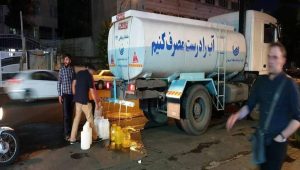
Iran’s water crisis is no longer merely an environmental or economic challenge; it has become one of the country’s most serious social and humanitarian threats. Experts have warned for years about the consequences of mismanagement of water resources, excessive extraction from groundwater reserves, climate change, and ineffective policies. Today, however, the effects of this crisis are more visible than ever in people’s daily lives, especially among women.
Iran is now among the countries experiencing severe water stress. According to the World Resources Institute, Iran is one of the 25 countries facing the highest levels of water stress in the world. This means that a large share of the country’s renewable water resources is consumed each year, a trend that seriously threatens the sustainability of its water supplies.
According to official statistics, Iran’s rainfall has declined significantly over recent decades. At the same time, excessive extraction of groundwater has caused many of the country’s plains to experience land subsidence, a phenomenon experts consider irreversible.