

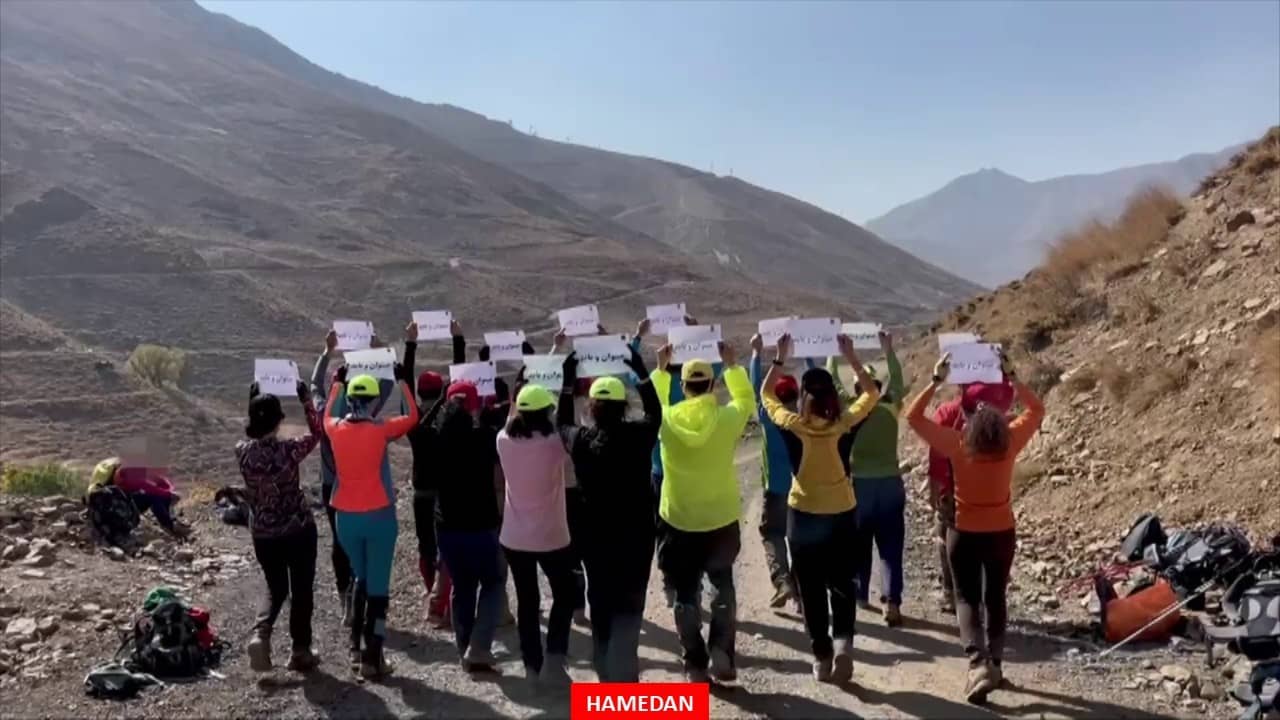
The forty-fifth anniversary of the Iranian people’s nationwide Resistance is not merely a historical occasion. It is a reminder of a fundamental choice that has defined Iran’s modern struggle since June 20, 1981: surrender to religious tyranny or resist for freedom. Through imprisonment, executions, exile, demonization campaigns, and international political pressures, this Resistance has endured. Today, it stands at the center of Iran’s defining equation: neither foreign war, nor appeasement, nor a return to the former dictatorship can bring freedom to Iran. The only viable path is change by the Iranian people and their organized Resistance.
For more than four decades, the clerical regime has relied on three instruments for survival: domestic repression, regional warmongering, and the pursuit of nuclear weapons. These policies are not accidental. They are the strategic pillars of a regime incapable of addressing the most basic needs of the people and that has no answer to the Iranian people’s demand for liberty. War has always served as a tool for more oppression and now as a shield against uprisings at home, while peace and ceasefire have been treated by the regime as existential threats. This is why any genuine agreement that ends war and reduces the suffering of the Iranian people must be welcomed. But it must also be understood that this regime will not voluntarily abandon executions, terrorism, nuclear blackmail, or interference in the region. These are not excesses of the system; they are its method of survival.
For more than four decades, Western governments pursued policies of “engagement,” “constructive dialogue,” and “critical dialogue,” while disregarding the Iranian people and their organized resistance. Far from moderating the regime, these policies helped ensure its survival. At Tehran’s urging, some governments even went so far as to curtail the legitimate activities of the democratic opposition. This misguided policy has inflicted great harm on the Iranian people and jeopardized regional and global peace and stability—consequences that are now plain for all to see.
"Today, Western nations are reaping exactly what they sowed. The consequences of their appeasement have breached their own borders. European and #American citizens are routinely taken hostage to be used as diplomatic bargaining chips. Global economic arteries are continually…
— NCRI-FAC (@iran_policy) May 23, 2026
The last-minute ban on the major Free Iran rally in Paris, scheduled for 20 June, was, as Boris Johnson put it, “capitulation to the regime.” Ironically, according to the French authorities, the ban was justified by terrorist threats against the rally emanating from both the Iranian regime and supporters of the deposed Shah, some of whom have become increasingly active and are seeking to rehabilitate the legacy of the Shah’s notorious secret police.
Tens of thousands of Iranians and supporters of freedom had reached Paris from across Europe and beyond to express a simple message: the people of Iran reject both the Shah and the Mullahs. Tehran’s attempt to silence that message did not demonstrate the regime’s strength; it revealed its fear. The clerical dictatorship fears an organized alternative far more than scattered protest, foreign pressure, or rhetorical condemnation. It fears a movement that has roots inside Iran, a long record of sacrifice, and a clear democratic program for the transfer of sovereignty to the people.
The controversy surrounding the Paris rally also exposed another important truth: the remnants of the Shah’s dictatorship have repeatedly served to obstruct uprisings, while presenting the world with a false choice between two forms of dictatorship. The Iranian people have already answered this false choice in the streets: “No to the Shah, no to the mullahs.” Iran’s future cannot be built by recycling the past, whether under a crown or a turban. A democratic republic is not a slogan; it is the necessary political framework for ending the cycle of dictatorship.
"As #IranWar outcome reveals the bankruptcy of both the theocracy’s defiance and the monarchy’s reliance on foreign powers, it vindicates only those whose strategy has always been self-reliant, independent, and grounded in the organizational capacity to bring about regime change…
— NCRI-FAC (@iran_policy) June 16, 2026
The central question, therefore, is not whether the regime is weak. It is. The deeper question is whether there exists a force capable of turning public anger into organized change. The answer lies in the National Council of Resistance of Iran and its constituents, including MEK Resistance Units, the young men and women who operate under the harshest repression and keep alive the spirit of uprising across Iran. They are not a virtual campaign, media construction, or an artificial project manufactured abroad. They are the living expression of a society that has accumulated decades of pain, poverty, humiliation, and anger under religious fascism.
The Resistance’s credibility also comes from its record. It was the Iranian Resistance that exposed the regime’s secret nuclear facilities at Natanz and Arak in 2002 and, through repeated revelations over decades, became one of the principal obstacles to the mullahs obtaining an atomic bomb. It was this movement that paid the heaviest price in prisons and execution chambers, including during the 1988 massacre, when thousands of political prisoners, most of them PMOI/MEK members, were executed for refusing to renounce their beliefs. Such a movement cannot be dismissed by propaganda, nor erased by repression.
"On the morning after the ceasefire, every exhausted and exasperated mind, long numbed by the #IranWar, will turn instinctively toward the search for real change and the practical means to bring this regime to an end." https://t.co/8Tmh0Sl0Kc
— NCRI-FAC (@iran_policy) April 9, 2026
The National Council of Resistance of Iran’s proposal for a provisional government offers a clear democratic roadmap. Its purpose is not to seize power, but to transfer sovereignty to the Iranian people through free elections for a Constituent Assembly within six months of the regime’s overthrow. This is precisely what distinguishes a democratic alternative from both the ruling theocracy and the remnants of monarchy: it places the ballot box, not inheritance, force, or clerical authority, at the center of Iran’s future. It is time for Western governments to correct their Iran policy by incorporating its missing element: the Iranian people and their organized Resistance.
Iran does not need a foreign war. It does not need another dictator. What it needs is recognition of the Iranian people’s right to overthrow tyranny and build a republic based on sovereignty, equality, pluralism, and peaceful coexistence. The watchwords of this struggle are simple and profound: peace and freedom. And despite all repression, bans, executions, and conspiracies, those words are now louder than ever.