

THIS PAGE WILL BE UPDATED WITH THE LATEST NEWS
UPDATE: 1:00 PM CEST
France Just Surrendered to The Iranian Regime. Britain Must Not Be Allowed to Do the Same
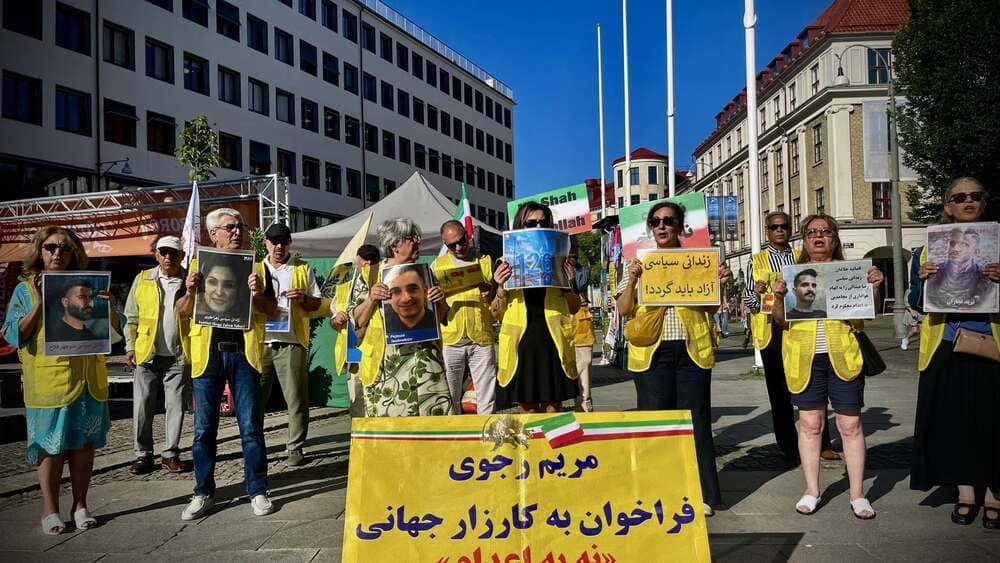
Last weekend, I travelled to Paris to address what was intended to be a rally of more than 100,000 Iranians whose demand was both simple and profound: that their country should once again be free.
Instead, I witnessed an extraordinary act of political weakness.
The arrangements for the rally had been agreed weeks in advance with the organisers, the National Council of Resistance of Iran (NCRI). Yet, at the eleventh hour, the Paris Police Prefecture issued an order preventing it from proceeding as planned. The official explanation was couched in the language of public order. The political effect was unmistakable. A Western democracy had chosen to silence the principal democratic opponents of one of the world’s most brutal dictatorships.
Speaking later in Paris, I said the incident demonstrated the Iranian regime’s ability to lean on weak governments. I make no apology for that observation. Tehran has spent more than four decades learning how to exploit hesitation in the West. It understands that when democracies equivocate, postpone or search for reasons not to act, the regime can press harder. It interprets compromise not as goodwill but as surrender.
UPDATE: 7:30 AM CEST
The Enemy of All Dictators: Why the Iranian Resistance Terrifies Both the Shah and the Mullahs
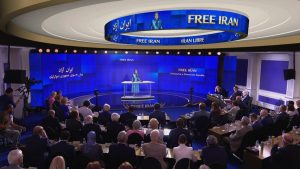
At the Free Iran 2026 Summit in Paris, politicians and dignitaries from diverse global backgrounds converged on a single, powerful reality: the Iranian Resistance is the ultimate enemy of both the current religious dictatorship and the deposed monarchy.
World leaders at the summit explicitly recognized this dynamic, acknowledging that the Iranian people and their Resistance refuse to trade one tyrant for another. British MP David Jones emphasized this sentiment, stating that “the people of Iran reject dictatorship in all its forms. They reject the present religious dictatorship, and they do not want a return to the past of the Shah.” Former U.S. Under Secretary of State Ambassador Robert Joseph summarized this unified international stance with a clear mandate: “No to theocracy. No to monarchy.”
The coordinated efforts by the remnants of the Shah and the ruling mullahs to attack the organized Resistance prove that the PMOI/MEK stands as the definitive barrier to tyranny in Iran.
Mojtaba Khamenei’s Succession Did Not Solve the Crisis—It Exposed It
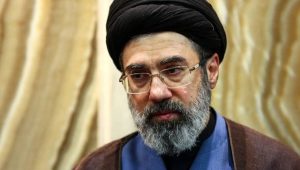
The transfer of power following Ali Khamenei’s death marks one of the most consequential moments in the history of the Mullahs’ regime. Yet rather than securing the future of the regime, the succession has exposed the structural weaknesses, legitimacy deficit, and mounting political challenges confronting the doctrine of Velayat-e Faqih.
Leadership transitions in authoritarian systems are often presented as demonstrations of continuity and stability. In reality, they frequently reveal the very fractures such systems spend decades attempting to conceal. The succession of Mojtaba Khamenei following the death of his father appears to fall squarely into the latter category.
Although the regime has projected an image of institutional unity, reports emerging from political circles close to the establishment suggest that Mojtaba Khamenei’s elevation was far from uncontested. Even within the regime’s own constitutional framework, questions have been raised about both the process and the level of support he received.
According to accounts attributed to members of the Assembly of Experts, only 59 of the body’s 84 members participated in the decisive vote, while 15 of those present reportedly withheld their support. If those figures are accurate, Mojtaba Khamenei secured the leadership with the backing of barely half of the Assembly’s total membership—hardly the overwhelming consensus the regime has sought to project.
When Silence Becomes a Political Choice: The Paris Rally Ban and the Battle Over Iran’s Future
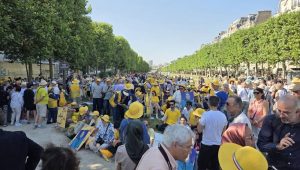
The French government’s decision to prohibit the June 20 Free Iran rally raised questions that extend well beyond public order. It highlighted the increasingly blurred line between defending democratic values and inadvertently serving the interests of Tehran by restricting those who campaign against executions and for democratic change.
The controversy surrounding the French government’s decision to ban the June 20 rally in Paris deserves far more than a passing political debate. The implications extend beyond one demonstration or one security assessment. They touch a more fundamental question: what happens when a democratic country limits peaceful advocacy against executions, human rights abuses, and dictatorship in Iran?
The issue cannot be examined in isolation. The prohibition came as Iran continues to intensify executions, suppress dissent, and eliminate every form of political opposition at home. At precisely such a moment, restricting one of the largest international gatherings in support of democracy and human rights inevitably raises difficult questions about whose interests are ultimately served.
This is why the Paris decision resonated far beyond France. Whether intentional or not, preventing thousands of supporters of democratic change from assembling risked weakening one of the few international platforms dedicated to exposing the Iranian regime’s human rights record. In practical terms, the ban limited public condemnation of executions while reducing the visibility of the organized democratic opposition.
Bread Price Hike in Iran: A Regime Trapped Between Economic Plunder and Fear of a Hunger Uprising
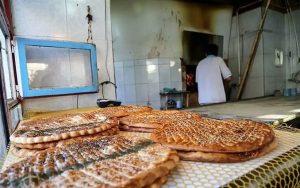
Bread has long been the most essential staple for millions of Iranian families. For the country’s poorest households, it represents the minimum threshold between survival and hunger. The regime’s decision to dramatically increase bread prices therefore carries consequences that extend far beyond inflation, touching the political and social stability of a society already burdened by years of economic decline.
According to the state-run newspaper Donya-e-Eqtesad, citing new government-approved pricing, the cost of major bread varieties has reached record levels. Lavash bread has increased from 1,400 to 2,700 tomans, Barbari from 5,300 to 10,000 tomans, Taftoon from 2,300 to 4,500 tomans, and Sangak from 7,400 to 15,500 tomans. The nearly 100 percent increase marks one of the steepest bread price hikes in recent years.
The government’s handling of the issue also reflects its awareness of the political risks involved. Since the beginning of the year, officials repeatedly issued contradictory statements, alternately denying and confirming plans to raise bread prices. These mixed messages appeared aimed at softening public reaction before implementing the inevitable increase.
Such caution is hardly surprising. Iranian regime authorities understand that bread prices carry exceptional political sensitivity, particularly in low-income communities where food costs consume a substantial share of household budgets. Throughout Iran’s modern history, rising food prices have repeatedly served as catalysts for widespread social unrest.
Global Torture Index: Iran Is Among the World’s Highest-Risk Countries for Torture

The latest Global Torture Index identifies Iran as one of the world’s highest-risk countries for torture, impunity, and state violence. It warns that the intensification of repression following last year’s military conflict has increased the risk of torture, ill-treatment, arbitrary detention, and other serious human rights violations. The World Organisation Against Torture (OMCT) and partner organizations published the second edition of the Global Torture Index on Thursday, June 25. The index assesses the risk of torture in 39 countries across different regions of the world.
The report was released on the eve of June 26, the United Nations International Day in Support of Victims of Torture, which the UN designated to emphasize the absolute prohibition of torture and support for its victims and survivors.
According to the Iran data, compiled in cooperation with the Impact Iran coalition, torture is deeply embedded in the laws, policies, and official practices of Iran’s regime.
Grossi: A Very Robust Verification System is Needed for Iran’s Nuclear Program

Rafael Grossi, Director General of the International Atomic Energy Agency (IAEA), said that a very robust verification system is needed to ensure that nuclear weapons are not developed in Iran.
Speaking to reporters in Japan on Friday, June 26, Grossi said, that he thinks the objective of this recent agreement between the United States and Iran is to ensure that nuclear weapons are not developed in Iran. Iran’s regime has also clearly stated that it has no such intention.”
Grossi continued, but merely declaring an intention is not enough. IAEA must establish a very robust verification system as soon as possible, whenever it is practically feasible.
Rafael Grossi also announced that the memorandum of understanding between Washington and Tehran allows IAEA inspectors access to Iran’s nuclear facilities.
At his press conference in Japan, Grossi said that an agreement exists and that, to implement it, the IAEA must have access to Iran and conduct inspections. He expressed hope that he would be in Iran soon.
IRGC Drone Attack in Hormuz Triggers UN Halt and Exposes Iran’s Fractured Authority

Escalating tensions in the Strait of Hormuz, accompanied by reports of a drone attack on a Singapore-flagged commercial vessel, led to the immediate suspension of a UN-coordinated evacuation operation and sparked sharp disagreements among Iranian media over the country’s diplomatic achievements.
According to international reports and confirmations from regional maritime authorities, a Singapore-flagged cargo vessel came under attack 7.5 nautical miles off the coast of Oman. The incident prompted an immediate response from the International Maritime Organization (IMO), which suspended its coordinated operation to evacuate commercial ships waiting in the area due to the absence of sufficient security guarantees.
The incident in this vital global energy corridor has once again drawn international attention to the clash between diplomatic and military approaches within Iran’s foreign policy.
Manchester Exhibition Highlights Iran’s Human Rights Crisis and Call for a Democratic Republic
Manchester, UK – June 25, 2026: Members of the Academics in Exile Association in the UK, supporters of the People’s Mojahedin Organization of Iran (PMOI/MEK), organized a book table and photo exhibition in Manchester to raise awareness about the worsening human rights situation in Iran. The event highlighted the Iranian regime’s escalating wave of executions, including the execution of political prisoners and protesters arrested during the January 2026 demonstrations.

Through photographs, publications, and testimonies, the organizers sought to draw public attention to the suffering of the Iranian people and their determination to reject all forms of dictatorship, whether monarchical and theocratic.