

THIS PAGE WILL BE UPDATED WITH THE LATEST NEWS
UPDATE: 11:00 AM CEST
US Expands Sanctions Targeting Iran Oil, Cryptocurrency Sectors

Treasury Secretary Scott Bessent said the department had also frozen $130 million held in digital wallets linked to Iran’s central bank, hitting a sector that has seen increased activity since the start of the war.
The move came after US forces carried out a fourth straight day of strikes against Iran and reimposed a naval blockade, with Iran in turn hitting ships in the Strait of Hormuz, according to the International Maritime Organization.
Iran started blocking the strait — a key waterway for energy transit — after US-Israel attacks in February. Washington imposed an initial blockade on Tehran’s ports from mid-April to mid-June.
“This action is part of Treasury’s ongoing efforts to ramp up economic pressure on the Iranian regime after it resumed destabilizing attacks in the Strait of Hormuz,” the Treasury Department said in a notice Tuesday.
FCDO Summons Iranian Chargé d’Affaires Over Islamic Revolutionary Guard Corps Qods Force’s Role in Directing Attacks by Proxy Groups
The Foreign, Commonwealth and Development Office has today summoned the Iranian Chargé d’Affaires in London in response to the Islamic Revolutionary Guard Corps Qods Force’s (IRGC-QF) role in directing proxy groups to carry out a series of attacks across Europe. An FCDO spokesperson said: “Today, upon instruction from the Foreign Secretary, the Chargé d’affaires of the Islamic Republic of Iran to the United Kingdom was summoned to the Foreign, Commonwealth & Development Office. Mr Ali Nasimfar was summoned in response to the Islamic Revolutionary Guard Corps Qods Force’s (IRGC-QF) role in directing the Islamic Movement of the Companions of the Right (IMCR) to carry out a series of attacks across Europe between March and May.
“IRGC activity attempts to undermine the safety and security of the UK and our allies. Despite repeated warnings, Iran’s intelligence services have not ceased in their hostile activity. Instead, Iran has sought to intensify its malign behaviour, which is completely unacceptable.
Massachusetts Man Convicted of Violating U.S. Sanctions Against Iran

A Massachusetts man was convicted yesterday in federal court in Boston following a 14-day jury trial for charges related to a scheme to illegally export sophisticated electronic components from the United States to Iran.
Mahdi Mohammad Sadeghi, 43, a dual U.S.-Iranian national of Natick, Massachusetts, was convicted of one count of conspiracy to violate the International Emergency Economic Powers Act (IEEPA) and the Iranian Transactions and Sanctions Regulations (ITSR); and two counts of violation of the IEEPA and the ITSR. U.S. District Court Judge Indira Talwani scheduled sentencing for Oct. 13.
The defendant was charged by criminal complaint in December 2024 alongside Mohammad Abedininajafabadi, also known as Mohammad Abedini (Abedini), of Tehran, Iran, and subsequently indicted by a federal grand jury shortly thereafter. They were again charged in a superseding indictment in December 2025. Abedini remains a fugitive in wanted status.
UPDATE: 7:30 AM CEST
PMOI Resistance Units Send Strong Message With 25 Daring Operations Across Iran
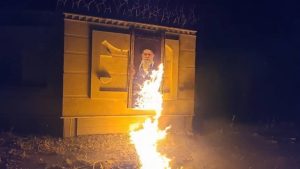
On July 10, 2026, following the Iranian regime’s lavish and highly militarized state funeral ceremonies for the eliminated supreme leader Ali Khamenei, PMOI Resistance Units launched a nationwide campaign of defiance. While the regime desperately sought to manufacture a hollow display of unity and social backing for the newly installed supreme leader, Mojtaba Khamenei, the Resistance Units targeted centers of and symbols repression and corruption. Their daring operations echo the true desire of the Iranian people: the total overthrow of the mullahs’ rule and the establishment of a democratic republic.
Across the country, Resistance Units shattered the regime’s propaganda efforts by destroying billboards and banners of eliminated supreme leader Ali Khamenei, newly installed leader Mojtaba Khamenei, regime founder Ruhollah Khomeini, and eliminated IRGC Quds Force commander Qasem Soleimani. Operations spanned major cities including Tehran, Isfahan, Babol, Yazd, and Arak.
Furthermore, the Resistance Units directly targeted the regime’s apparatus of suppression and espionage. In Karaj, they set fire to the entrance of an IRGC Basij base, and in Zahedan, they torched the signpost of a Basij base explicitly tasked with spying on and suppressing students. In Dorud, a billboard belonging to the Ministry of Intelligence was targeted, a propaganda billboard promoting espionage for the IRGC was set ablaze in Khorramabad, and a regime building in Aligudarz was set on fire.
Iranian Women Trapped by War, Poverty, and Domestic Abuse
The war and intensifying economic crises in recent months have exerted the greatest and most direct pressure on Iranian women, placing them on the frontline of vulnerability as the psychological resilience of families sharply declines.
The inevitable consequence of these conditions is an unprecedented rise in domestic violence against women, a violence that increasingly manifests in complex psychological, emotional, and economic forms, severely jeopardizing both their physical and mental safety.
Livelihood pressures, severe economic insecurity, and war-induced anxiety have fueled an escalation of abusive behaviors against women within the home. While domestic violence was once primarily recognized through physical assault and battery, women now constantly face emerging and pervasive forms of abuse, such as systematic humiliation, threats, extreme control, deliberate deprivation of financial resources, and continuous psychological distress.
These behaviors, running parallel to physical violence, emotional abuse, and neglect, inflict profound psychological attrition on them.
Organized Resistance, Not Another Dictatorship: Why Iran’s Democratic Future Depends on a Real Alternative
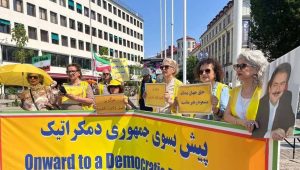
For years, international debate over Iran has revolved around the wrong questions. Can another round of negotiations stabilize the regime? Could another faction within the ruling establishment introduce meaningful reform? Would restoring the monarchy provide the country with stability?
None of these questions addresses the root of Iran’s crisis.
The country’s turmoil is not the product of one incompetent administration or a series of misguided policies. It stems from a political system that denies citizens the right to freely choose their government while treating every independent organization as an existential threat. As long as that structure remains intact, replacing officials, negotiating temporary agreements, or recycling former rulers cannot produce lasting stability.
The real question is far more consequential: which political force is capable of transforming widespread public discontent into a sustainable democratic transition?
Iran today faces overlapping economic, social, and political emergencies.
New Social Security Corruption Report Exposes the Depth of Systemic Corruption in Iran
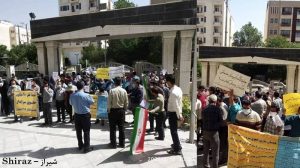
A new investigation into corruption within Iran’s Social Security Organization (SSO) has once again exposed the scale of financial misconduct embedded in the regime’s institutions. The report, published by the Iranian Labor News Agency (ILNA), documents billions of dollars’ worth of financial irregularities, embezzlement, and questionable transactions, underscoring what many observers describe as systemic corruption rather than isolated misconduct.
The figures are staggering. According to the report, documented embezzlement and financial violations involving cash transactions total more than 18.5 trillion tomans. When the reported losses from the alleged undervalued sale of a company worth 50 trillion tomans are included, the total financial damage exceeds 51.8 trillion tomans.
These figures do not include an additional €4.002 billion and $59 million in alleged foreign currency violations linked to the organization.
But beyond the enormous sums involved lies a far more significant issue: whose money was lost.
Iran’s Economic Crisis Leaves People with Disabilities Without Essential Support
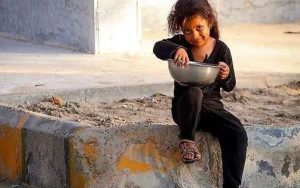
Iran’s worsening economic crisis is taking an increasingly severe toll on one of the country’s most vulnerable populations. According to a report by the Iranian Labor News Agency (ILNA), the regime has suspended livelihood assistance payments for many people with disabilities since June, citing a lack of funding within the State Welfare Organization.
The report also states that payments for nursing allowances and subsidies for essential hygiene supplies have been delayed, leaving thousands struggling to cover even their most basic daily needs. The cuts come as soaring inflation, rising healthcare costs, and the continued deterioration of living standards push vulnerable families deeper into poverty.
ILNA attributed the current crisis to the regime’s long-standing neglect of those under the Welfare Organization’s care, particularly people with disabilities.
The report argued that the worsening conditions are the result of ineffective government policies and the absence of equal social, economic, and political opportunities. It also warned that the situation becomes even more severe in provinces farther from Tehran, where access to services is often more limited.
European Union and Regional Organizations Reject Iran Regime’s Threats in the Strait of Hormuz
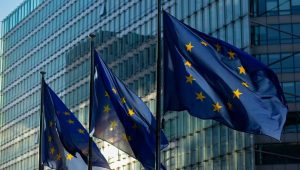
International pressure on the Iranian regime intensified this week as European and regional organizations issued coordinated condemnations of its attacks on commercial shipping and neighboring countries, while rejecting any attempt to impose restrictions or fees on vessels transiting the Strait of Hormuz.
The statements reflect growing concern over the regime’s actions in one of the world’s most strategically important waterways, where disruptions threaten both regional security and global trade. In a joint statement, Germany, France, and the United Kingdom condemned what they described as the Iran regime’s reckless attacks against commercial shipping in the Strait of Hormuz and neighboring countries.
The three European governments specifically condemned attacks targeting Qatar, Kuwait, Bahrain, Oman, and Jordan, while calling for the immediate restoration of normal commercial shipping through the vital maritime corridor.
The statement underscored the importance of maintaining freedom of navigation and preventing further escalation in the Gulf.
Warning Over the Imminent Execution of Political Prisoner Aref Khoshkar in Iran

Following the transfer of political prisoner Aref Khoshkar, who has been sentenced to death, to a solitary confinement cell at Ghezel Hesar Prison in Karaj, concerns have intensified over the imminent implementation of his execution. According to received information, Khoshkar, who is currently being held in Unit 3 of Ghezel Hesar Prison, was transferred to a “suite,” or solitary confinement cell, on July 9. Informed sources have warned that his execution could be carried out in the coming days.
Aref Khoshkar was arrested during the nationwide protests of 2022 and was sentenced to death on charges of killing a member of the Basij, the Iranian regime’s paramilitary force affiliated with the Islamic Revolutionary Guard Corps (IRGC). His family and relatives have expressed deep concern over his condition and have called on international human rights organizations and public opinion to give urgent attention to his case.
According to available information, on the evening of Saturday, October 8, 2022, during public protests in Tehran’s Fallah neighborhood, a member of the Basij militia affiliated with the IRGC was killed. Published reports indicate that Aref Khoshkar was arrested about one month later, on November 11, 2022, and was transferred to prison in mid-December 2022 on charges of premeditated murder.
Near-Complete Halt to Shipping Through the Strait of Hormuz

Bloomberg, citing vessel-tracking data, reported that maritime traffic through the Strait of Hormuz came to an almost complete halt during the early hours of Tuesday, July 14.
An analysis of Automatic Identification System (AIS) data shows that the number of vessels whose positions and movements were visible has dropped sharply. Some ships have also switched off their tracking systems due to heightened security risks. As a result, publicly available data do not necessarily reflect all vessel movements.
The disruption follows attacks on oil tankers, the resumption of reciprocal attacks between Iran’s regime and the United States, and the increased risks associated with transiting the Strait of Hormuz. Data from Kpler, a maritime analytics company, also show that tanker traffic has fallen to its lowest level in about two months, with only six oil tankers passing through the strait on Sunday.
Berlin Car Caravan by PMOI Supporters Welcomes UK Designation of IRGC as Terrorist Organization
In Berlin, supporters of the People’s Mojahedin Organization of Iran (PMOI/MEK) celebrated the UK government’s decision to designate the Islamic Revolutionary Guard Corps (RGC) as a terrorist organization with a convoy of vehicles through the city’s streets. Waving Iranian flags and the emblem of the PMOI, they described the move as a significant step in confronting the Iranian regime’s principal instrument of repression and terrorism.

Chanting slogans in support of freedom and popular sovereignty, they reaffirmed their commitment to continuing the struggle until democratic change is achieved in Iran.
PMOI Supporters in London Rally Outside Parliament to Welcome UK’s IRGC Terrorist Designation
London – Parliament Square, July 13, 2026: Following the UK government’s decision to designate the Islamic Revolutionary Guard Corps (IRGC) as a terrorist organization, supporters of the People’s Mojahedin Organization of Iran (PMOI/MEK) and the National Council of Resistance of Iran (NCRI) gathered in Parliament Square outside the UK Parliament to welcome the move.

Participants described the proscription of the IRGC as a significant and long-overdue step toward holding the Iranian regime accountable for its terrorism, domestic repression, and regional destabilization. They hailed the decision as another major blow to the ruling clerical regime in Tehran and emphasized the need for continued international action against the regime’s principal instrument of repression and terrorism.