

THIS PAGE WILL BE UPDATED WITH THE LATEST NEWS
UPDATE: 7:00 PM CEST
Iran: Rudy Giuliani: “The Regime Is a Threat to the West; Italy Should Support Rajavi”

(LaPresse) – The Sala della Regina at the Italian Chamber of Deputies hosted a conference titled “The Iran Crisis: A Democratic Path for the Future.” The event featured Maryam Rajavi, President-elect of the National Council of Resistance of Iran (NCRI). Among the speakers was former New York City Mayor Rudolph “Rudy” Giuliani.
Speaking to reporters before entering the Italian Parliament, Giuliani said: “We hold these events across Europe and America to raise awareness of the very strong alternative that exists to what is happening in Iran.”
According to the former New York mayor, “there is nothing worse than the hundreds of thousands of people they have killed and continue to execute every single day.” For this reason, Giuliani argued, anyone who stands with Europe, America, and Israel must oppose these “maniacal murderers.”
“They pose a threat to Italy, Europe, and the West,” he said. “They want to destroy Western civilization.”
Iran and Europe: Why the Third Option Is the Alternative to War or Appeasement

For more than four decades, Western policy toward the Islamic Republic of Iran has oscillated between two strategies: war or appeasement.
Whenever Tehran intensifies its military activities, accelerates its nuclear program, or escalates regional provocations, calls for a show of force grow stronger. Conversely, as soon as tensions ease, the focus shifts back to dialogue, negotiations, and the hope of a gradual transformation of the regime.
Yet after decades of this recurring pattern, the reality is undeniable: neither military confrontation nor diplomatic concessions have succeeded in bringing about lasting changes in the behavior of the Iranian regime.
Iran: Europe Does Not Have to Choose Between War and Appeasement

For more than four decades, Western policy toward the Islamic Republic has swung between two strategies: war or appeasement. Whenever Tehran intensifies its military activities, accelerates its nuclear program, or escalates regional provocations, calls for a show of force grow louder. When tensions subside, however, the priority shifts back to dialogue, negotiations, and the hope that the regime will gradually change.
Yet despite this constant cycle, one conclusion is clear: neither military confrontation nor appeasement has succeeded in bringing about a lasting change in the behavior of the Islamic Republic of Iran.
The regime continues to expand its regional networks, fuel conflicts across the Middle East, and brutally repress its own population. The consequences extend far beyond Iran’s borders. Successive conflicts in the region have contributed to rising defense spending, instability in energy markets, increased migration flows, and a growing sense of insecurity that directly affects European societies.
UPDATE: 6:00 PM CEST
Iran: Terzi (Brothers of Italy): It Was an Honor to Hear Maryam Rajavi, President-elect of the National Council of Resistance of Iran, Speak in the Senate

“Today, Iran is sinking ever deeper into the abyss of horrific human rights violations and the atrocities the regime inflicts on its own people. It is an abyss that, for several months now, has affected the entire international community and all of us. Therefore, it is an honor to hear a genuine voice of the Iranian people such as Madame Rajavi. Her movement, the People’s Mojahedin Organization of Iran (PMOI/MEK), is recognized as a resistance movement and as a group of politically persecuted individuals by the United Nations, as well as by European countries and much of the Western world, including the United States.
The National Council of Resistance of Iran is, in fact, the movement that most closely embodies the fundamental principles of the rule of law and the defense of human rights. It is for this reason, among others, that we firmly support it. It is also a coalition of the various forces that make up the resistance to the regime and, as Madame Rajavi emphasized, more than half of its members are women. Since the beginning of the resistance against Khomeinism, more than 100,000 political opponents have been killed by the regime, yet this has not stopped the Iranian people’s demand for freedom. Since the beginning of this year, the world has witnessed the regime’s bloody repression, and more than 2,000 members of the People’s Mojahedin have gone missing during the uprisings. In her detailed address, Madame Rajavi recalled the violent methods employed by the Ayatollahs and the Islamic Revolutionary Guard Corps (IRGC), explaining the close intertwining of political, military, and judicial power, the increasing use of the death penalty to terrorize the population, and the communications blackouts imposed to silence the voices of the many—especially the very young—who, despite everything, continue to fight for a freer and more dignified life.”
FDI – Brothers of Italy | Senate: “Iran: Terzi (FdI): It Is an Honor to Hear Maryam Rajavi, President-elect of the National Council of Resistance of Iran, in the Senate”

Giulio Terzi di Sant’Agata, a senator from Brothers of Italy (FdI) and Chairman of the Senate Committee on European Union Policies, expressed his honor at hearing the testimony of Maryam Rajavi, President-elect of the National Council of Resistance of Iran (NCRI), before the Italian Senate. The hearing took place before the Senate’s Human Rights Committee.
According to Terzi, Iran continues to sink deeper into a crisis marked by severe human rights violations and atrocities committed by the regime against the civilian population. In recent months, he said, the situation has increasingly drawn the attention of the international community.
Terzi stressed that Madame Rajavi’s voice represents an authentic expression of the Iranian people. He said that the People’s Mojahedin Organization of Iran (PMOI/MEK), which she represents, is recognized by the United Nations as a resistance movement and as a group of politically persecuted individuals, as well as by European countries and most Western nations, including the United States.
Syria Seizes Weapons Hidden in Tanker Truck, Says Cargo Was for Hezbollah
DUBAI, July 16 (Reuters) – Syrian authorities said on Thursday they had foiled an attempt to smuggle advanced weapons and missiles across the border from Iraq, with an Interior Ministry source quoted by state news agency SANA saying the shipment appeared destined for Hezbollah.
Syria’s General Authority of Ports and Customs said the shipment, which included rockets and drones, was concealed inside “one of the oil tanker-trucks headed to the city of Baniyas”. It was discovered during routine inspection procedures at the al-Tanf border crossing between Syria and Iraq after customs officers subjected the suspected vehicle to a more thorough search.
Following the seizure, Iraq said it would form a high-level committee to investigate. The military’s Joint Operations Command said Baghdad would coordinate with Syrian authorities to establish the circumstances of the attempted smuggling, hold those responsible to account, and strengthen security along the shared border.
US Says It Issued Sanctions to Disrupt Iran’s Weapon Procurement
WASHINGTON, July 15 (Reuters) – The U.S government issued sanctions on Wednesday targeting individuals and entities that it said were a part of an international network helping Iran procure weapons.
The sanction targets include Iranian and Russian nationals, as well as entities bases in Iran, Russia and Nigeria, the U.S. Treasury Department said in a statement.
The move comes amid heightened tensions between Washington and Tehran, including recent hostilities over control of the Strait of Hormuz, and as the Trump administration ramps up pressure on Iran through a series of sanctions measures.
UPDATE: 3:00 PM CEST
Everyone Thinks Iran Fears American Bombs. Tehran Thinks Otherwise.

As American and Israeli strikes continue to hit military targets across Iran, many in Washington assume that the Islamic Republic’s greatest fear is another wave of air attacks. That assumption is understandable. Missile bases can be destroyed. Nuclear facilities can be damaged. Military commanders can be eliminated. But none of these targets explains the behavior of Iran’s rulers.
If bombs are what Tehran fears most, why does the regime devote so much of its energy to imprisoning students, shutting down the internet, executing political prisoners, and hunting its own dissidents? The answer is simple.
The Islamic Republic fears one thing more than American bombs: It fears losing control over the Iranian people. That fear explains much of the regime’s behavior.
UPDATE: 2:00 PM CEST
At Last, Britain Stands Up to Iran’s Terror Masters

Britain has finally found its voice. After years of hesitation, equivocation, and diplomatic contortions, the U.K. has designated Iran’s Islamic Revolutionary Guard Corps (IRGC) under its new State Threats regime, acknowledging what millions of Iranians, together with intelligence agencies across the democratic world, have understood for decades. The IRGC represents the beating heart of the world’s foremost state sponsor of terrorism.
The obvious question remains—why did Britain wait so long? The United States led the way by designating the IRGC in 2019. Canada followed. Australia adopted a similarly robust position. The European Union steadily tightened sanctions against the Guard Corps, its commanders, and its financial empire. Britain lingered at the back of the queue, clinging to the illusion that restraint and quiet diplomacy might somehow temper Tehran’s behavior. Successive governments feared upsetting a regime with which Britain still maintains diplomatic relations through its embassy in Tehran. Appeasement became official policy, wrapped in the comforting language of engagement.
UPDATE: 8:00 AM CEST
The UK’s IRGC Ban and the Imperative to Recognize the Iranian People’s Right to Overthrow the Regime

On Monday, July 13, 2026, the British government officially banned support for the Islamic Revolutionary Guard Corps (IRGC) and its linked groups.
The UK’s proscription is a highly welcomed and long-overdue step that validates the decades-long warnings of the Iranian Resistance. However, designating the IRGC must not be the end of the road. As this development proves that the regime relies entirely on state-sponsored terrorism to survive, the sole logical next step for the international community is to completely isolate the religious fascism ruling Iran and officially recognize the Iranian people’s right to confront this terror apparatus and overthrow the regime.
For years, Western capitals were paralyzed by a policy of willful blindness, desperate to preserve bilateral ties with Tehran. But the UK’s legal pivot demonstrates that the IRGC’s terrorism is an active, borderless threat that can no longer be ignored. The UK implemented new powers under the fast-tracked National Security (State Threats) Act 2026. The government and intelligence agencies acted upon deep concerns regarding foreign powers paying organized crime groups for sabotage and surveillance on British soil.
The new powers close a critical gap in existing laws around state-linked actors, making it entirely illegal to show support for the IRGC.
Reza Pahlavi’s Contradictions on the IRGC: Years of Defending the Guards, Now Applauding Their Blacklisting
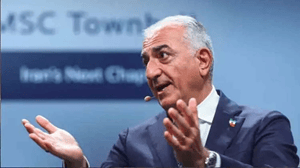
Britain’s recent decision to designate the Islamic Revolutionary Guard Corps (IRGC) as a terrorist organization has been welcomed by many Iranians who have long held the IRGC responsible for systematic repression, executions, torture, and regional destabilization. Yet among those expressing support for the move is Reza Pahlavi—a position that stands in sharp contrast to years of public statements defending engagement with the IRGC and its personnel.
For years, Reza Pahlavi repeatedly argued that members of the IRGC and the Basij should be viewed as potential allies rather than as integral components of the regime’s repressive machinery. His latest endorsement of the IRGC’s terrorist designation therefore appears inconsistent with his previous rhetoric.
Reza Pahlavi’s own public statements over the years provide a documented record of his approach toward the IRGC. On November 3, 2018, during an interview with Iran International, he stated: “I am in contact with members of the Basij and the IRGC.”
He expanded on this position in 2020, arguing that his political strategy relied on the very institutions responsible for enforcing the regime’s rule: “If the Islamic regime wants to carry out a final crackdown in Iran, we will not allow that to happen, because my support will come from these very law enforcement forces, from these very IRGC members, from these very Revolutionary Guards, from these very Basij members, and from these very military personnel.”
Resistance Units Expand Support for Iran Prisoners’ “No to Execution Tuesdays” Campaign Across the Country
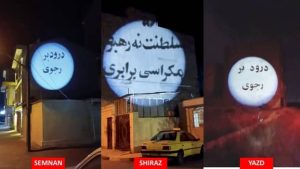
Resistance Units across Iran have launched a new wave of coordinated activities in support of the prisoners’ “No to Execution Tuesdays” campaign, reinforcing growing public opposition to the regime’s continued use of executions as a tool of repression.
The coordinated actions took place as the campaign expanded to 58 prisons across Iran, reflecting the persistence of a movement led by political prisoners and supported by activists nationwide. Through banners and public displays in numerous cities, Resistance Units called for an immediate halt to executions and voiced solidarity with prisoners facing death sentences.
Resistance Units carried out activities in Tehran, Karaj, Sari, Isfahan, Shiraz, Mashhad, Behbahan, Kermanshah, Naein, Babol, Gorgan, Zabol, and Birjand, where banners were displayed condemning the regime’s execution policy and supporting the nationwide prison campaign.
Iran’s Future Will Be Decided by Its People—Not Foreign Powers

Rarely has Iran stood at a political crossroads as consequential as the one it faces today.
The balance of power surrounding the Iranian regime has shifted noticeably over recent months. Mounting international pressure, deepening internal divisions, and an increasingly fragile economy have combined to create one of the most uncertain periods in the history of the ruling establishment.
Yet amid this uncertainty, one lesson has become increasingly clear: the future of Iran cannot be determined by foreign governments or military confrontation. Sustainable political change will ultimately depend on the Iranian people themselves.
For years, Western governments pursued policies that alternated between engagement, economic pressure, and diplomatic negotiations with the Iranian regime. Critics argued that this approach often underestimated the regime’s willingness to preserve its power through repression at home and confrontation abroad.
Recent regional tensions have exposed the limitations of relying solely on external pressure to alter the regime’s behavior. While military confrontations and diplomatic crises may weaken state institutions or reshape regional calculations, they do not automatically produce democratic outcomes.
Iran’s Economic Collapse Is Structural—Not Cyclical

Inflation, currency collapse, and shrinking production reveal that Iran’s economic crisis is rooted in the regime’s political structure, not in temporary sanctions or policy mistakes.
For decades, the Iranian regime has portrayed the country’s recurring economic crises as the product of sanctions, external pressure, or policy missteps. Each new administration has promised better management, fresh reforms, or diplomatic breakthroughs that would restore growth and improve living standards.
Yet Iran’s economic trajectory tells a different story.
Today’s economic paralysis is no longer a temporary downturn or a cyclical recession. It reflects the exhaustion of an economic model built on political repression, institutional corruption, monopolistic control, and the prioritization of regime survival over national development. The mounting evidence suggests that Iran’s crisis is structural, leaving little room for meaningful recovery without fundamental political change.
The War Between the United States and Iran’s Regime Enters More Complex Phase
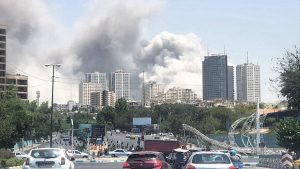
As the military confrontation between the United States and the Iranian regime expands, new developments have emerged on the region’s military, diplomatic, and economic fronts. The Islamic Revolutionary Guard Corps (IRGC) announced missile and drone attacks against U.S. positions in Kuwait and Jordan, while the United States reported launching a new wave of strikes against military targets in southern Iran and around the Strait of Hormuz.
In a statement, the IRGC claimed it had targeted a range of U.S. military facilities and equipment in Kuwait, including a satellite communications center, radar and air defense systems, a Patriot missile complex, logistics warehouses, and HIMARS missile launchers with missile and drone attacks. However, the statement did not identify the base that was allegedly targeted. The IRGC also urged Kuwaiti citizens not to miss the opportunity to attack facilities affiliated with the United States.
Iran’s Regime Issues Death and Prison Sentences in Cases Related to War Period and January Protests
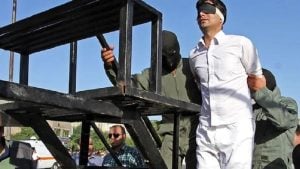
Tehran Prosecutor Ali Salehi announced that all cases related to the 12-day war, the recent war with the United States, and the January 2026 protests have been finalized and referred to court, with some resulting in final death and prison sentences.
Speaking on Tuesday, July 14, on the sidelines of a ceremony in Tehran, Salehi said these cases had been handled on the orders of the head of Iran’s judiciary and the chief justice of Tehran Province “with precision, speed, decisiveness, and severity,” and that the majority had resulted in verdicts.
He added that final rulings in some of these cases, including death and prison sentences, have been forwarded to the sentence enforcement authorities and that the convicted individuals are currently serving their punishments.
Salehi had also announced in April the seizure of movable and immovable assets belonging to more than 250 people linked to what he called “counter-revolutionary networks,” but this time he did not disclose the exact number of cases, those convicted, or the nature of the charges.
U.S. Defense Sec: Baghdad Must Disarm Militias Aligned with the Iranian Regime

U.S. Secretary of Defense Pete Hegseth announced on Tuesday, July 14, that during his meeting with Iraqi Prime Minister Ali al-Zaidi, he emphasized the need to deepen bilateral cooperation.
Hegseth said Iraq must assert its sovereignty to strengthen this cooperation and disarm militias aligned with the Iranian regime, which he said were responsible for more than 600 attacks on U.S. forces this spring.
The U.S. defense secretary also said Washington expects Iraq’s security forces, including the Peshmerga and other security forces of the Kurdistan Region, to take the leading role in operations against ISIS as the mission of the international coalition against the group is reduced.
He added that a stable Iraq could pave the way for expanded trade and defense cooperation between Baghdad and Washington.
Later the same day in Washington, al-Zaidi also met and held talks with U.S. President Donald Trump.
Evin’s Political Women Prisoners Under Escalating Pressure; International Action Is Imperative

Political women prisoners in Evin Prison are facing a new wave of organized repression, in addition to enduring the grinding, daily conditions of the ward detailed further in the text. Reports indicate that following the change in Evin Prison’s management—which has intensified overall pressure on political women prisoners—a clandestine plot is currently underway to exile and transfer these women to the notorious Qarchak Prison in Varamin, replacing them with women convicted of financial crimes.
On July 12, 2026 (21 Tir 1405), Evin Prison guards launched a sudden raid on the women’s ward (Ward 6), transferring approximately 50 prisoners convicted of financial crimes from various detention centers—including Qarchak Prison and several other cities—into the upper floor of this ward. Simultaneously, prisoners were informed that additional groups of general-crime convicts were en route to the facility.
This ward also holds women protesters detained during the nationwide uprisings of January 2026 (Dey 1404). This measure by prison authorities, which constitutes a flagrant violation of the “principle of separation of crimes,” was met with fierce resistance and protests from the uprising detainees. During the confrontation, prison guards engaged in physical altercations with the political women prisoners and violently transferred two of the protesters, Masoomeh (Mahsa) Noori and Masoomeh (Farah) Nassaji, to solitary confinement.
1,500 Death Row Prisoners on Hunger Strike in Ghezel Hesar; Call for Urgent International Action

Qezel Hesar Prison, where the execution of prisoners is carried out systematically, currently holds 1,500 prisoners on death row. Faced with the rapidly accelerating rate of executions, these prisoners have found no other means to defend themselves than embarking on a protest hunger strike. Many of these prisoners, convicted of ordinary crimes, are themselves victims of poverty, corruption, flawed economic policies, and the Iranian government’s allocation of public wealth to military tools to fuel its regional wars. They have been sentenced to death for transporting, smuggling, or dealing a few grams or kilograms of drugs, while the actual major drug cartel in Iran is the Islamic Revolutionary Guard Corps (IRGC) itself.
The protesting prisoners have declared that their hunger strike is not only to save the lives of their fellow cellmates but is a collective opposition to the policy of expanding the death penalty, particularly in drug-related cases. According to them, this punishment, rather than confronting the main smuggling networks, takes the lives of the victims of poverty and systemic deprivation.
Inside Iran’s Post-War Power Struggle: Competing Narratives Within the Ruling Elite

Developments over the past several days in parliament, the National Security Commission, and media outlets aligned with the ruling establishment suggest that the official narrative of “post-war unity” is facing intense competition over foreign policy, the limits of the government’s authority, and the definition of the national interest.
In less than a week, media outlets aligned with different factions of Iran’s ruling establishment highlighted a series of developments that initially appeared unrelated: the removal of two hardline figures from the presidium of the National Security Commission, unprecedented attacks on the government of Masoud Pezeshkian, criticism of negotiations with the United States, calls for reforms to the country’s governing structure, and renewed controversy over Iran’s nuclear program. Taken together, these developments present a coherent picture of competition within the ruling establishment—a competition over the future direction of the Islamic Republic in the post-war period.
PMOI Supporters in Copenhagen Welcome UK’s Terrorist Designation of IRGC
Copenhagen, Denmark – July 14, 2026 – Following the UK government’s decision to designate the Islamic Revolutionary Guard Corps (IRGC) as a terrorist organization, supporters of the People’s Mojahedin Organization of Iran (PMOI/MEK) held a rally to welcome the move.

Participants described the proscription of the IRGC as a significant and long-overdue step toward holding the Iranian regime accountable for its terrorism, domestic repression, and destabilizing activities across the region. They welcomed the decision as a major blow to the ruling clerical regime in Tehran and stressed the need for continued international action against what they described as the regime’s principal instrument of repression and terrorism.
PMOI Supporters in Paris Condemn Executions, Back Democratic Republic in Iran
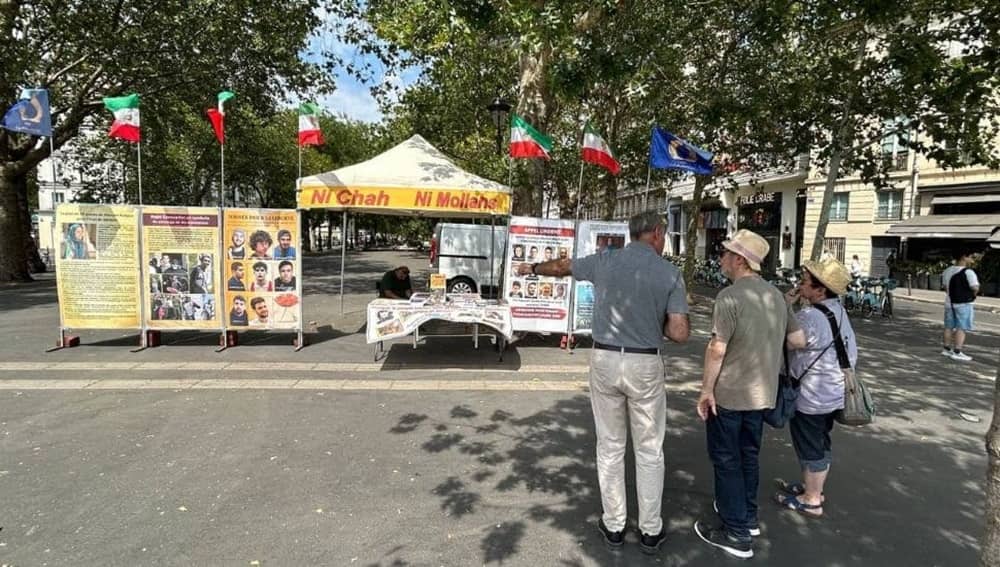
Paris, France – July 13, 2026 – Supporters of the People’s Mojahedin Organization of Iran (PMOI/MEK) set up a book table and photo exhibition to condemn the execution of political prisoners affiliated with the group, as well as that of protesters who had been detained during the January 2026 uprising. The event underscored the Iranian people’s demand for a democratic republic, led by the Iranian Resistance, as a pathway to peace, freedom, and justice.

Organizers called on the French public and the international community to recognize the suffering of the Iranian people and their unwavering rejection of all forms of dictatorship, whether monarchical or theocratic. Through powerful images and personal testimonies, the exhibition highlighted the courage and sacrifices of participants in the January 2026 uprising while condemning the regime’s ongoing human rights violations, including the execution of political prisoners.