

Three-minute read
Iran is engulfed in a severe socio-economic crisis, driven by geopolitical adventurism, systemic mismanagement, and hyperinflation. As the state navigates regional conflicts, the domestic population is bearing the brunt of soaring costs for essential goods. Rather than addressing the root causes, the government relies on a sophisticated playbook of media manipulation to manage public outrage while covertly advancing highly unpopular economic policies.
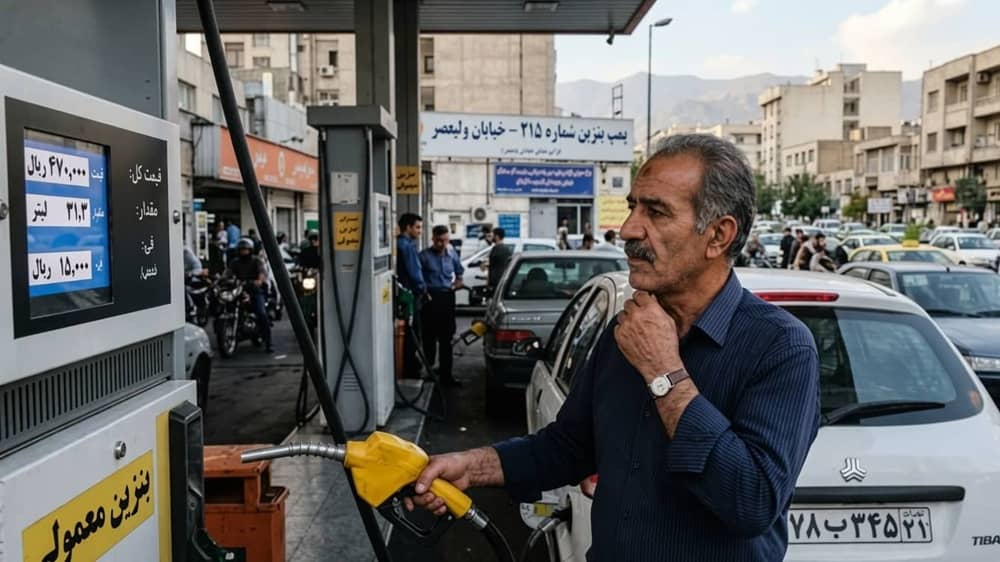
This strategy of deception is most evident in the regime’s handling of critical energy subsidies. Recently, rumors surged regarding a massive spike in gasoline prices to 10,000 tomans per liter starting July 23, 2026, stemming from comments by a member of the parliamentary energy commission. State-linked media outlet Fararu swiftly attempted to defuse the public anxiety, publishing an explanatory piece framing the news as a “media misunderstanding”. The outlet claimed the 10,000 toman figure only applies to a speculative “third tier” rate for excessive consumption, insisting the base quotas of 1,500 and 3,000 tomans remain untouched. However, this back-and-forth between trial-balloon announcements and official denials is a classic regime tactic used to gradually acclimate the public to impending price shocks and preempt street unrest.
This manipulation of fuel prices coincides with alarming forecasts regarding the nation’s food supply. A July 20, 2026, report in the state-run Shargh daily laid bare the extreme vulnerabilities in Iran’s agricultural sector due to disruptions in the Strait of Hormuz. The publication warned that food security is heavily tethered to energy and transport networks, noting that the surging costs of nitrogen and phosphate inputs will inevitably hit domestic retail markets within three to six months.
"While the military and economic stalemate over #Hormuz continues to bleed the global economy, the only path that has ever truly threatened the brutal theocracy is an internal, society-driven unraveling," writes @MasumehBolurchi.https://t.co/g7804cnDe7
— NCRI-FAC (@iran_policy) April 27, 2026
Rhetoric of Sacrifice versus Street Realities
Despite these compounding pressures, the regime’s leadership demands unconditional submission. Addressing the Supreme Judicial Council on July 20, 2026, its president Masoud Pezeshkian spun the narrative of economic catastrophe born of the regime’s warmongering as a necessary consequence of national pride, failing to admit this has been forced upon the population without their consent. “When we decide to stand and resist against the enemy, we must also accept the consequences of this decision, and society cannot be expected to face no difficulties in wartime conditions,” he declared. Pezeshkian further entrenched the absolute authority of the Supreme Leader, arguing that scientifically and ideologically, the country must adhere to one decision-maker.
The Iranian public, however, is fiercely rejecting this forced sacrifice. On July 19 and 20, 2026, widespread demonstrations erupted across major cities, including Isfahan, Ahvaz, Shush, Tabriz, and Tehran. Retirees, workers, and housing applicants took to the streets to protest systemic poverty and the plundering of public wealth by state institutions and the Islamic Revolutionary Guard Corps (IRGC). Protesters chanted slogans such as “Our expenses are in dollars, our salaries are in Rials,” and “Only in the street do we get our rights,” highlighting the vast disconnect between the regime’s regional ambitions and the population’s empty tables.
The regime’s inability to silence dissent extends deep into its prison system, which is buckling under severe infrastructural collapse and human rights abuses. Inmates at Ghezel Hesar Prison, facing rising execution rates, launched a hunger strike, declaring on July 19, 2026, that it is “the last voice of those who have no other way to make their voices heard.” Simultaneously, facilities like Sheyban and Sepidar prisons in Ahvaz are experiencing nightmarish conditions; severe overcrowding and constant power outages in 50°C heat have forced desperate prisoners to hold asthma patients under cold water just to keep them alive.
"Washington was prepared to provide a financial and #diplomatic lifeline; however, Tehran's regime lacked both the will and the capacity to play along. Because it is too weak and fragile to accept it," @MehdiOghbai writes.https://t.co/6R3QiV6hSS
— NCRI-FAC (@iran_policy) July 14, 2026
A System Built on Borrowed Time
The convergence of deceptive fuel pricing, looming agricultural crises, and widespread public unrest underscores a state apparatus operating on borrowed time. Even Pezeshkian cautioned on July 20 that unchecked economic pressures could irreversibly damage the state’s vast social capital. As Tehran continues to rely on strategic denial and ideological repression, the Iranian people’s daily struggle for survival ensures that the domestic socio-economic front remains the regime’s most volatile vulnerability.
Having successfully cracked down on every major uprising throughout its entire lifespan, the regime might be embarking on the illusion that it can always rely on outgunning the sheer masses of protesters, and that its plundering, warmongering, and throwing the world’s fifth most resource-rich country into the category of the world’s most miserable can go unpunished. But as history has shown, no dictator has been spared the consequences of their actions, and even a brutal crackdown has its limitations.