

Three-minute read
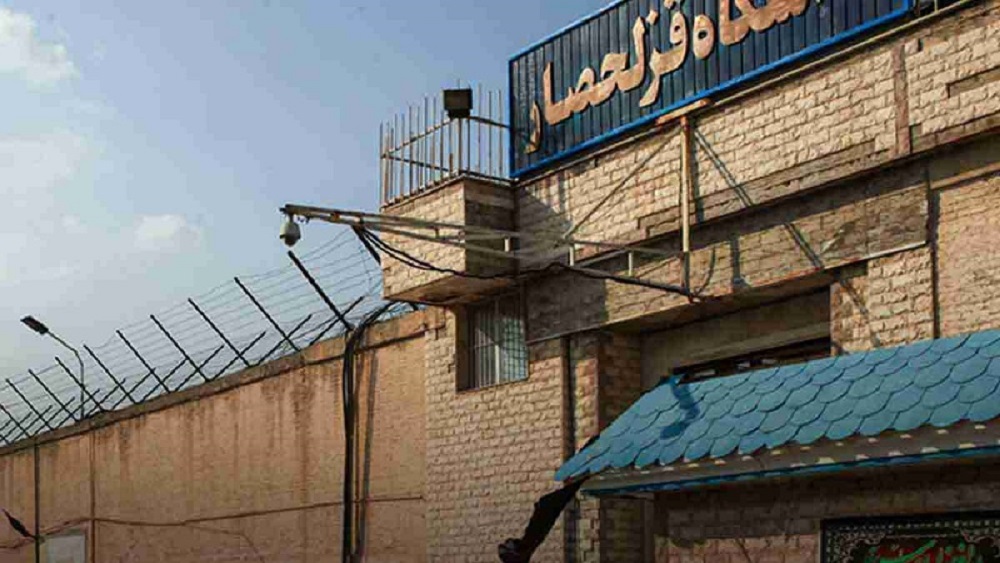
On July 13, six men in Ward 2 of Ghezel Hesar prison in Karaj were dragged to solitary confinement to be hanged. What followed was not silence. The ward refused its food rations. Then the sit-ins began, then the chanting — “No to execution,” “Be our voice” — and then, when after two weeks the clerical regime’s judiciary had still not sent a single official to answer them, men began sewing their own lips shut with needle and thread. Rights groups put the number of participating death-row prisoners at more than 1,500.
On July 28, the regime blinked. Officials and judicial authorities finally came to the ward and pledged to suspend executions in drug-related cases while the prisoners’ petitions were reviewed. The strike was suspended.
Understand precisely what did and did not happen. This was not mercy. A system that has executed more than 420 people in seven months and over 2,150 last year by Amnesty International’s count, does not suddenly discover a conscience over breakfast. It does not care whether the men it plans to hang die of starvation first. What moved it was arithmetic. The families had begun gathering outside the walls. The videos were leaving the prison. The word “uprising” was beginning to attach itself to a queue of mothers in Karaj — and of everything in this world, the clerical regime fears an uprising most, because an uprising is the only thing that has ever taken power away from it.
After a 16-day hunger strike by 1,500 death-row prisoners in Qezel Hesar Prison, the regime's judiciary was forced to retreat: executions in the unit were halted, six prisoners returned from solitary confinement, and the authorities promised that all death sentences will be… pic.twitter.com/GK2b1WiBei
— Mohammad Mohaddessin (@Mohaddessin) July 29, 2026
This is the second time in nine months the same arithmetic has produced the same retreat. In October 2025, after a week-long collective hunger strike in the same ward, representatives of the judiciary chief and the head of the Prisons Organization arrived with an identical promise: executions suspended for at least six months, cases reviewed, the anti-narcotics law amended. The prisoners ended their strike. The regime broke every word of it, which is why the ward was starving again in July. The lesson is not that the regime’s promises mean anything. The lesson is that its promises are receipts — proof, in its own hand, that it’s weak.
So why can it not simply stop? Because the gallows is not policy; it is infrastructure. A society this combustible — crushed wages, a collapsing currency, water and power rationed, a population that has already come into the streets twice in four years and came out again in January 2026 in numbers that forced a three-month national internet blackout — is held down by fear alone. Stop the executions and the fear leaks out. Worse, from the regime’s point of view, stop them and the Basiji and the Revolutionary Guard sent to break heads in the street receive a message they cannot un-hear: impunity has an expiry date. That is why the machine keeps running even when it is politically ruinous. Rope is the only currency the regime has left.
Despite decades of repression, #propaganda and mass killings, a new generation continues to defy the clerical authorities by joining the Resistance.
By @khansari_mhttps://t.co/ARvZxjuJMg— NCRI-FAC (@iran_policy) July 28, 2026
Notice, too, whom it spends that currency on most freely. Since the January protests, the regime has hanged people for alleged membership of the Mojahedin-e Khalq at a rate it applies to no other current — six defendants in a single case, thirteen killed in months for links to the organization and other banned groups, alongside 26 executed over the protests and 26 more on other political charges, per Amnesty. The regime’s own priorities are its most honest testimony: it reserves the gallows for the organized and the unbending, for the force that crosses every red line it has drawn and does not retreat. Everything else it can tolerate.
Alongside the rope comes the theatre: at least 240 coerced televised confessions since the January protests, an unprecedented volume, faces blurred, scripts written by interrogators, Israel and America inserted on cue. The blurred face is itself the message — cover yourself if you like, we will still find you. The Iranian people call them out as propaganda videos; the UN’s special rapporteur says they exist to recast protesters as dangerous criminals. They are not evidence of penetration. They are evidence that the regime no longer believes its own broadcasts can persuade anyone of anything, and has fallen back on frightening them instead.
As the 2026 #IranWar grinds on and diplomacy stalls, one July from the past offers a stark, often-overlooked lesson about what ultimately shapes the regime’s fate.
What really ended the fighting in 1988 — and what it means for ending today’s war. via @khansari_m…— NCRI-FAC (@iran_policy) July 18, 2026
Which returns us to Ghezel Hesar, and to the only strategic conclusion available. Khomeini spent eight years swearing that peace with the enemy meant burying Islam (himself). Then, in 1988, when an organized and determined Iranian force had raised the cost of continuing beyond what he could pay, he drank what he called the poisoned chalice, accepted the ceasefire, and was dead within a year. The regime does not respond to appeals. It responds to bills it cannot pay. Fifteen hundred starving men in Karaj have just written it another one.