

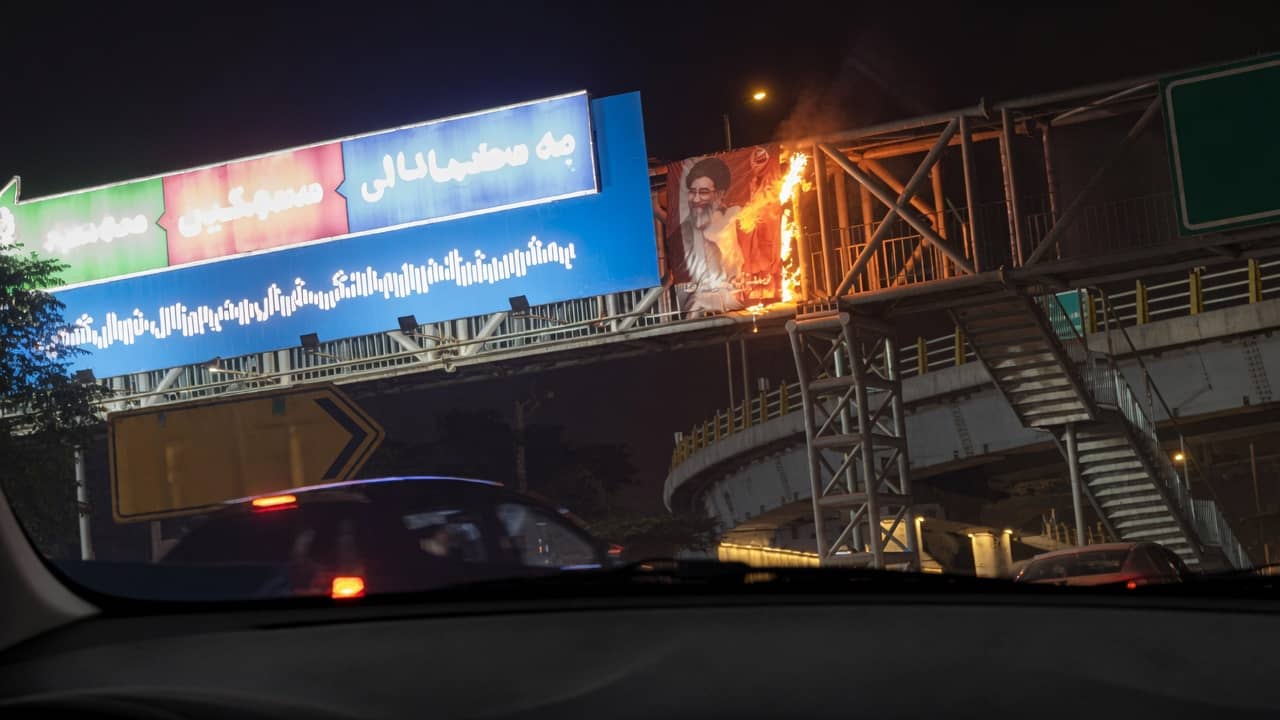
An extraordinary wave of underground defiance and coordinated anti-regime operations swept across Iran during the week of July 26–August 1, 2026, piercing the clerical regime’s extensive security apparatus and revealing a deepening political crisis for the ruling clerics. Faced with a highly contested transition of power to Mojtaba Khamenei and a surge of state-sanctioned executions intended to paralyze the public with fear, the MEK Resistance Units launched a massive, nationwide counter-offensive. Driven by outrage over the execution of 26-year-old Resistance Units member Mehdi Khanaki and coinciding with major political anniversaries—including Operation Eternal Light and the 1988 massacre—these clandestine actions spanned dozens of urban centers. The widespread operations systematically shattered the state’s projection of absolute control, proving that a sophisticated and deeply entrenched revolutionary momentum continues to challenge the fundamental survival of the clerical dictatorship.
July 31, 2026
In the southeastern city of Zahedan, MEK Resistance Units resumed their weekly public activities, defying the regime’s pervasive apparatus of execution and suppression. Marking the anniversary of the 1988 massacre of more than 30,000 political prisoners, activists took to public spaces despite intense threats from state security forces to hold placards declaring that the massacre marked the beginning of an ongoing struggle intertwining society’s destiny with freedom. Highlighting statements from Maryam Rajavi that the slaughter of political prisoners was a bloody clash between the Middle Ages and the generation of tomorrow, the activists emphasized that the regime of massacre will ultimately be overthrown to establish a democratic republic. The units directly challenged the current wave of executions—including MEK member Mehdi Khanaki and two protesters in Isfahan—asserting that state killings only demonstrate the ongoing uprising of the people against religious fascism.
Simay Azadi Exclusive 🚨 PMOI Resistance Units Report 60 Operations Across Iran
On July 28, 2026, the group said its units targeted IRGC Basij bases and burned banners bearing officials’ images. It described the actions as a response to reported ties between Mojtaba Khamenei and… pic.twitter.com/E5gaWhKwMx
— SIMAY AZADI TV (@en_simayazadi) July 29, 2026
July 28, 2026
In a massive show of operational capability, underground cells executed sixty daring, synchronized strikes across the country, serving as an explosive rejection of the state’s attempts to enforce public allegiance to Mojtaba Khamenei. Incendiary attacks and targeted arson devastated Islamic Revolutionary Guard Corps (IRGC) and Basij suppression bases in Damavand, Pardis, Kermanshah, Khomeyni Shahr, Gachsaran, Qaem Shahr, Iranshahr, Meshginshahr, Urmia, and Khorramshahr. Activists specifically targeted anti-student Basij centers with firebombs in Dezful and Kermanshah, while Ministry of Intelligence (MOIS) espionage billboards were effectively torched in Kermanshah and Bandar Abbas. Furthermore, centers of ideological suppression, including religious seminaries and an anti-Islamic guidance office, were struck by blazes in Kermanshah, Khash, and Aligudarz, alongside setting fire to the Aligudarz city council building.
Simultaneously, the resistance dismantled the regime’s visual dominance by torching massive banners and posters of Ali Khamenei, Mojtaba Khamenei, Ruhollah Khomeini, Ebrahim Raisi, and Qasem Soleimani. These aggressive anti-propaganda strikes swept through Tehran, Mashhad, Shiraz, Isfahan, Yazd, Zahedan, Saveh, Karaj, Kerman, Hamedan, Ilam, Neyshabur, Birjand, Ahvaz, Bandar Genaveh, Khaf, and Bushehr. Concurrently, the 131st week of the “No to Execution Tuesdays” campaign saw mobilized activities by rebellious youth across Qazvin, Tehran, Mashhad, Eslamshahr, Isfahan, Tabriz, Shiraz, Ahvaz, Bandar Abbas, Kermanshah, Urmia, Hamedan, and Ramsar.
On July 28, PMOI/MEK Resistance Units launched 60 daring operations across Iran, directly challenge the regime’s attempts to project an aura of power and stability after the appointment of its new supreme leader Mojtaba Khamenei. pic.twitter.com/Fz78pTUyhG
— People's Mojahedin Organization of Iran (PMOI/MEK) (@Mojahedineng) July 31, 2026
July 27, 2026
Marking the exact first anniversary of the state-sanctioned murders of veteran political prisoners Behrouz Ehsani and Mehdi Hassani, Resistance Units mobilized across Iran to honor their legacy. Defying a heavily militarized surveillance state, activists installed flower wreaths and bouquets prominently featuring photos of the fallen heroes in public spaces. Bold memorial tributes erected in Karaj, Mashhad, Shahr-e Qods, and Tehran carried powerful messages declaring that the names and memories of the martyrs remained an eternal source of pride and a guiding light in the hearts of the people. In Gonbad-e Kavus, a dedicated visual tribute explicitly linked the blood of the martyrs and the ongoing suffering of political prisoners directly to the persistence of the national liberation struggle.
July 26, 2026
The historical anniversary of the 1988 Operation Eternal Light was marked by sophisticated image projection campaigns, leafleting, and public displays, demonstrating the resistance’s ability to control public spaces. In Kermanshah, at Enqelab Square and the Bisotun Cultural Complex, activists projected illuminated messages declaring that the historic military operation had guaranteed the ultimate victory of the revolutionary solution over religious fascism. In Bandar Abbas, along Imam Hossein and Abu Musa Boulevards, projections featured images of the resistance leadership alongside slogans emphasizing that the spirit of Eternal Light continues to flow through the Resistance Units across Iran today. Parallel commemorative actions, including localized photo calls and leaflet distributions, were successfully executed in Tehran, Tabriz, and Mashhad.
Karaj
"Dearest Mehdi, your memory will live on forever in our hearts." pic.twitter.com/qrU9dujwJR— People's Mojahedin Organization of Iran (PMOI/MEK) (@Mojahedineng) July 29, 2026
July 25, 2026
A sweeping nationwide campaign commemorated the anniversary of Operation Eternal Light, proving the sustained and expansive operational capacity of the underground networks. Activities honoring the 1,304 fallen soldiers of the National Liberation Army took place across Tehran, Kermanshah, Tabriz, Mashhad, Isfahan, Shiraz, Ahvaz, Kerman, Bandar Abbas, Hamedan, Sanandaj, Bandar Anzali, Babol, Gilan-e Gharb, Saqqez, and Dorud. In Kermanshah, at the historic Hassanabad pass where the 1988 battles took place, activists laid fresh flowers and delivered recorded vows to continue the fight. In Tehran, secret memorial tables adorned with candles and portraits of the martyrs were set up, accompanied by video declarations from activists stating that their generation remains cohesive, resolute, and unwavering in its determination to overthrow the clerical regime.
The events of the week spanning July 27 to August 2, 2026, expose a catastrophic failure in the Iranian regime’s domestic survival strategy. In a desperate bid to project an aura of invincibility and enforce an unquestioned transition of power to Mojtaba Khamenei, the clerical establishment has leaned heavily into a campaign of terror, marked by surging state executions. However, this doctrine of fear has spectacularly backfired. Rather than paralyzing the populace, the executions of figures like Mehdi Khanaki, Behrouz Ehsani, and Mehdi Hassani have served as a powerful catalyst, galvanizing underground Resistance Units to carry out sixty coordinated strikes against hard regime targets. Ultimately, this relentless wave of nationwide defiance lays bare the regime’s internal deadlock: a decaying dictatorship backed into a corner, terrified by its own citizens, and confronting an organized revolutionary generation determined to establish a democratic republic.