

THIS PAGE WILL BE UPDATED WITH THE LATEST NEWS
UPDATE: 8:00 PM CEST
The Mullahs Are Terrified of Their Own People

Over the years, I have taken part in many conferences and rallies supporting the movement for regime change and democratic governance in Iran. Spearheaded by the National Council of Resistance of Iran and its leader, Maryam Rajavi, this movement has steadily gained vital support from lawmakers and pro-democracy activists around the world. Attendees at these gatherings come from all over, offering me the opportunity to hear praise for their platform in a number of different languages.
Yet, in each of those situations, it has been clear to me that everyone in attendance was ultimately speaking the same language — a shared language of commitment to democratic principles and universal human rights.
It makes perfect sense for that broader fight to begin in Iran and focus on the severe abuses taking place there. The mullahs’ regime is widely recognized as the world’s leading state sponsor of terrorism. Just this past January, its Islamic Revolutionary Guard Corps undertook its worst crackdown on dissent to date, killing several thousand peaceful protesters in a desperate bid to suppress the public.
UPDATE: 7:00 AM CEST
No Bowing Down: One Year Later, The Martyrdom of Mehdi Hassani Continues to Fuel Iran’s Resistance
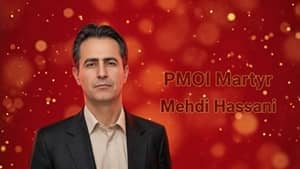
We are marking the first anniversary of a heinous act of state-sanctioned murder. One year ago, on the morning of July 27, 2025, the clerical regime in Iran executed Mehdi Hassani, a political prisoner and devoted member of the People’s Mojahedin Organization of Iran (PMOI/MEK). The regime intended his death to be a calculated act of terror, a warning to a restless and defiant population increasingly gravitating toward the Iranian Resistance.
However, looking back on the letters and messages he smuggled out of prison in the months before his execution, it is clear that the regime’s terror tactics failed. Mehdi Hassani consciously chose to give his life for the cause of a free Iran.
His ultimate sacrifice stands as a testament to the fact that the regime’s brutality only hardens the resolve of PMOI members. This unbreakable spirit is the engine of the PMOI’s 60-year struggle against the dictatorships of both the Shah and the mullahs—a formidable force that the regime cannot destroy.
The Death Commissions of 1988: How Iran’s Regime Turned Sham Trials into Mass Executions
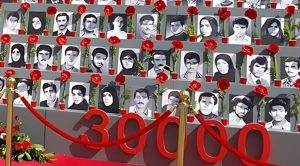
The mass execution of political prisoners in Iran during the summer of 1988 was not the result of judicial proceedings. It was orchestrated through special bodies that became known as the “Death Commissions”—ad hoc panels that operated entirely outside the framework of law and due process.
Rather than functioning as courts, these commissions served as instruments for implementing a predetermined campaign of extermination. Their members did not evaluate evidence, investigate criminal conduct, or determine guilt under any recognized legal standard. Instead, prisoners were subjected to brief ideological interrogations designed to decide whether they would live or die.
The commissions ignored even the regime’s own legal procedures. Prisoners were denied access to lawyers, appeals, or any opportunity to challenge the decisions that sealed their fate.
Instead of examining alleged criminal acts, the Death Commissions focused almost exclusively on political and religious beliefs.
Prisoners were questioned about whether they would renounce their political affiliations, express remorse for past activism, or condemn opposition organizations. Those associated with the People’s Mojahedin Organization of Iran (PMOI/MEK) were frequently asked whether they would publicly denounce the organization and its leadership.
Three Setbacks for Iran’s Execution Policy Signal a Growing Anti-Execution Movement

As the Iranian regime has intensified executions of political prisoners and protesters under the cover of regional conflict, three significant developments over the past two days have highlighted growing resistance to its policy of state executions.
Taken together, these events suggest that public opposition to capital punishment is becoming increasingly organized and capable of challenging one of the regime’s principal instruments of repression.
The first came in the northern city of Rasht, where demonstrators gathered in solidarity with striking prisoners and chanted in unison:
“Until the death sentences are abolished—we will stand until the end.”
In Isfahan, another act of defiance unfolded when residents confronted an ongoing public execution at Ali Khani Square. Witnesses reportedly denounced the executioners by chanting “Shameless! Shameless!” as authorities attempted to carry out the hanging in public.
The third development occurred inside Qezel Hesar Prison in Karaj, where prisoners conducting a two-week hunger strike succeeded in forcing the authorities to suspend the imminent executions of six inmates. The prisoners, who had already been transferred to solitary confinement in preparation for execution, were reportedly returned to the general ward after the authorities backed down.
Why Iran’s Poverty Crisis Is a Political Choice, Not an Economic Accident
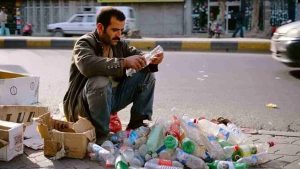
For years, the Iranian regime has attempted to portray the country’s worsening cost-of-living crisis as the result of sanctions, war, or external pressure. Yet the mounting evidence—including admissions from state-controlled media—points to a different reality. Iran’s economic collapse is not a sudden phenomenon, nor is it primarily the consequence of recent regional conflicts. It is the product of decades of political mismanagement, institutionalized corruption, and policies designed to preserve the ruling establishment rather than improve the lives of ordinary citizens. While official agencies routinely publish statistics on inflation, poverty, and unemployment, they rarely address the structural causes behind these crises. The focus remains on describing the symptoms while avoiding any serious examination of the political system that has produced them.
That pattern was again evident in a report published on July 29 by the regime-affiliated newspaper Tose’e Irani, which interviewed a welfare policy analyst about Iran’s latest poverty and inflation trends. Although the report stopped short of assigning responsibility to the regime’s leadership, its findings painted a grim picture of the country’s socioeconomic conditions.
How Iran’s Clerical Regime Divided, Conquered, and Kept Breathing
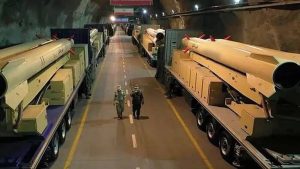
The clerical regime in Iran is politically, economically, and morally bankrupt. It commands no social capital. Its legitimacy, to the extent it ever had any, was liquidated long ago — in the torture chambers of Evin, in the mass graves of the 1988 massacre, in the blood of teenage protesters shot on rooftops during the 2019 uprising. What it has, instead of a mandate, is a rotating gallery of mirages designed to keep Iranians chasing shadows.
For two decades, the regime’s most profitable illusion was “reform.” Khatami, Rouhani, the promise that the theocracy could soften from within — millions of Iranians were told to wait, to vote, to trust the process. The 2017 uprising in Mashhad, Shiraz, and a hundred other cities incinerated that myth. “Reformist, hardliner — the game is over,” the crowds Enter the monarchy fantasy — the notion that a son of the deposed Shah, living comfortably in a Maryland suburb on wealth stolen under his father’s rule, might somehow constitute a credible alternative. For the regime, Reza Pahlavi has been a political gift: a figure who absorbs opposition energy, fragments it, and returns nothing. His record is not one of leadership but of serial contradiction.
Triple-Digit Inflation Pushes Iran’s Lower and Middle Classes to Breaking Point
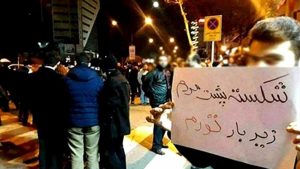
The state-run Economy24 website, citing the latest inflation data from the Statistical Center of Iran for July 2026, wrote: “The nearly 25% increase in the cost of the household livelihood basket during just the first four months of the Iranian year (beginning March 22), together with soaring inflation in essential food items, shows that economic pressure on the lower and middle-income groups has reached a critical breaking point.”
Economy24 added, citing analytical data: “Among 53 selected food items, 41 recorded price increases higher than the urban point-to-point inflation rate of 85.2%. A review of annual price trends shows that products such as solid and liquid cooking oil, mayonnaise, imported rice, chicken, and eggs have experienced record-breaking price surges.”
According to the report, the average prices of Iranian rice, lamb, beef, and various nuts have reached levels that have effectively turned them into luxury goods or unattainable items for a large segment of society.
The website said that the Iranian regime’s economy is burdened not only by monetary factors and structural imbalances in the banking system, but also by “the heavy shadow of geopolitical uncertainty and the country’s prolonged and exhausting state of neither war nor peace.”
Iran Sees 158 Separate Protest Actions in July as Labor Strikes Increasingly Adopt Anti-Death-Penalty Slogans
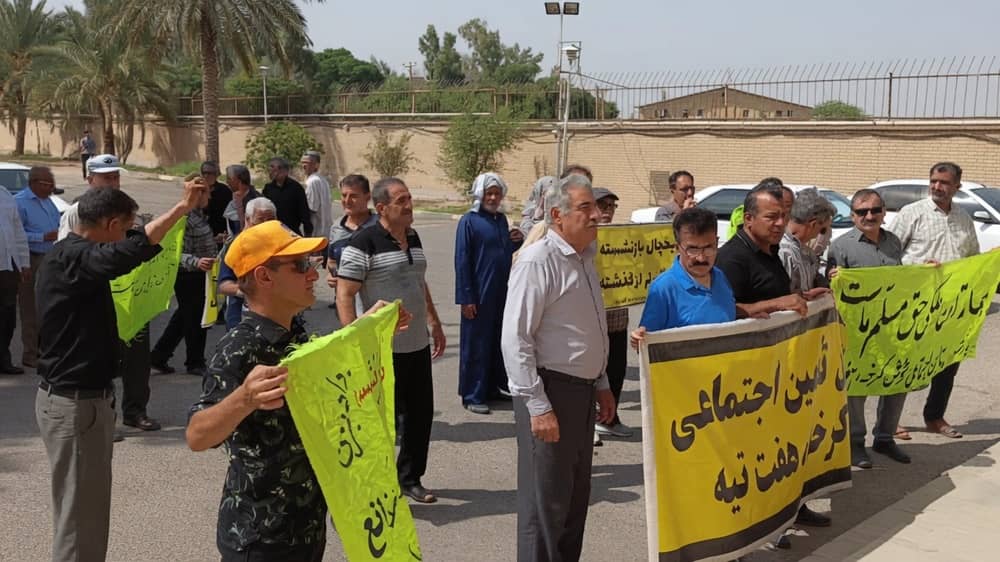
TEHRAN — Amid the scorching summer heat and intense economic inflationary pressure, the landscape of protests in Iran underwent a fundamental transformation during the month of July. Livelihood demands by the working class and nurses became uniquely intertwined with explicit political slogans against the death penalty and judicial crackdowns.
Based on field-gathered data and facts, at least 158 protest actions were recorded across various provinces and cities in Iran throughout July. These figures reflect the continuation of deep social fault lines and accumulated grievances that have drawn diverse segments of society into the streets—from daily-wage workers at southern oil terminals to nurses and families of political prisoners in the central and northern parts of the country.
With 60 recorded protests, the labor sector formed the main artery of last month’s unrest. The lifeline of Iran’s economy—stretching from Phase 2 of the Bidboland Refinery in Behbahan to offshore oil and gas platforms in South Pars and Asaluyeh—witnessed the steadfast resistance of workers protesting months of unpaid wages, job insecurity, the elimination of overtime, and an inefficient contracting structure. Alongside energy arteries, miners in Sirjan and Tazareh, steelworkers in Ahvaz and Abarkouh, and workforce personnel at textile and machinery plants in Rasht, Ilam, and Tabriz also used continuous strikes and rallies to turn production stoppages into an instrument to voice their stolen livelihoods.
Hundreds Protest Iran’s Wave of Executions in Cologne, Calling on Germany, EU, and UN to Act
Cologne, Germany – August 1, 2026: Supporters of the Iranian Resistance, including the National Council of Resistance of Iran (NCRI ) and the People’s Mojahedin Organization of Iran (PMOI/MEK), held a rally and photo exhibition in Cologne to protest the Iranian regime’s ongoing execution campaign and demand an immediate halt to death sentences.

Families of prisoners facing imminent execution joined the gathering, organized by the Iranian Resistance, and appealed to Germany, the European Union, and the United Nations to intervene without delay.
According to a report by the German Evangelical Press Service, the rally was part of a broader protest week taking place across dozens of major cities in Europe and the United States against the wave of executions in Iran.
Paris Exhibition Calls for an End to Executions in Iran and Honors Victims of the Regime’s Repression
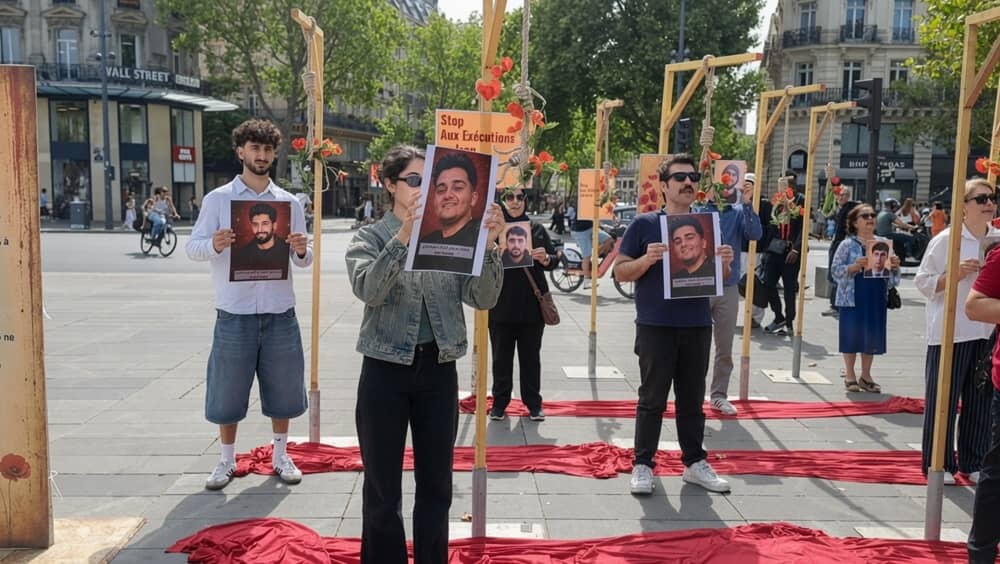
Paris, August 1, 2026 – An exhibition calling for the abolition of the death penalty in Iran was held on Saturday, August 1, at Place de la République in Paris. Organized by supporters of the People’s Mojahedin Organization of Iran (PMOI/MEK) and the National Council of Resistance of Iran (NCRI), the event honored the memory of recently executed PMOI members and protesters who lost their lives during Iran’s nationwide uprising in January 2026.

Held under the slogan #StopExecutionsInIran, the exhibition drew significant public attention. Many Parisians stopped to visit the displays, spoke with the organizers, and expressed their solidarity with the Iranian people. Participants also highlighted the alarming situation in Iran, noting that thousands of prisoners are currently under death sentences and calling for the abolition of capital punishment.