

THIS PAGE WILL BE UPDATED WITH THE LATEST NEWS
UPDATE: 9:00 AM CEST
The Legacy of Defiance Bridging The 1988 Massacre and Today’s Fallen Heroes
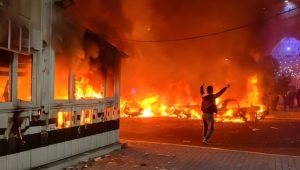
We are marking the 38th anniversary of the summer 1988 massacre, a dark chapter in Iran’s history where over 30,000 political prisoners were executed by the ruling regime. Yet, nearly four decades later, the fight for freedom in Iran is more alive than ever.
For 38 years, the battle between the 1988 martyrs and the regime’s executioners has not stopped for a single day. This historical confrontation has continuously echoed through the eight major uprisings that have rocked the nation since.
The latest was in December 2025 and January 2026, where Iran witnessed a massive round of nationwide uprisings that brought the regime to its knees. The regime only managed to maintain its hold on power by resorting to its usual playbook, the brutal massacre of thousands of protesters and a surge in executions of political prisoners. But again, it did not manage to stifle the spirit of resistance as rebellious youth across the country continue to fight against the regime.
The martyrs of 1988 are timeless sparks whose truth remains alive in the national collective memory, immune to the passage of time.
Iran’s Power Crisis Is No Accident—It Is the Cost of Decades of Regime Mismanagement

Iran’s nationwide electricity crisis has become far more than a seasonal inconvenience. Across the country, millions of people now organize their lives around scheduled blackouts that have evolved into a permanent feature of daily existence. During one of the hottest summers in recent years, the consequences extend well beyond the loss of electricity. In many areas, power outages also disable water pumps and distribution systems, leaving households without running water for hours at a time.
The Iranian regime has attempted to portray the crisis as an unavoidable consequence of recent regional conflict. Yet the evidence points to a much deeper problem—one rooted in decades of economic mismanagement, chronic underinvestment, and political choices that consistently prioritized the regime’s strategic ambitions over the basic needs of its citizens.
According to published electricity schedules for Tehran, the capital’s 22 districts have been divided into eight groups subject to rotating power cuts. While outages in Tehran generally last between two and four hours each day, reports from northern, western, eastern, and central provinces indicate that many cities experience four to six hours of daily blackouts.
Iran’s War on Women: Executions, Floggings, and the Politics of Fear
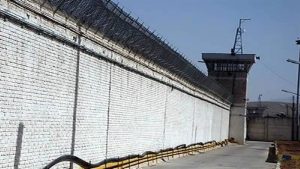
The Iranian regime has long viewed women as central to the country’s struggle for freedom—and therefore as central targets of repression.
The nationwide uprising of 2022 fundamentally altered the political landscape, demonstrating that Iranian women were no longer merely participants in protest movements but among their principal organizers and symbols. Since then, the authorities have steadily intensified their campaign against women, expanding the use of executions, imprisonment, corporal punishment, and judicial intimidation.
The July 2026 human rights record offers one of the clearest illustrations of this strategy.
Rather than representing isolated abuses, the month’s events reveal a systematic effort to use the judicial system as an instrument of political control, with women increasingly bearing the brunt of the regime’s campaign of fear.
Death Sentences as a Political Weapon
Among the most alarming developments in July was the continued expansion of death sentences against women accused of participating in anti-regime protests.
These are not ordinary criminal prosecutions.
When Loyalists Turn on Each Other: Iran’s Clerical Infighting Exposes Mojtaba Khamenei’s Fragile Grip on Power
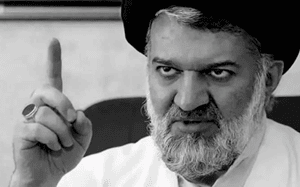
Authoritarian systems often appear strongest just before their internal fractures become impossible to conceal.
For decades, the Iranian regime cultivated an image of unity, discipline, and centralized control. Public disagreements among senior officials were carefully managed, while power was portrayed as flowing unquestioningly from the Supreme Leader through a loyal and disciplined political establishment.
That image has become increasingly difficult to sustain.
The latest example comes from cleric Bagher Kharazi, a longtime regime insider whose remarkable public comments have exposed not only bitter factional rivalries but also what appears to be a growing crisis of authority surrounding Iran’s new Supreme Leader, Mojtaba Khamenei.
Although Kharazi’s remarks were intended to defend Mojtaba Khamenei, they inadvertently revealed something far more significant: a leadership struggling to command loyalty within its own ranks.
Defending the Leader by Exposing His Weakness
Kharazi described himself as someone who has known Mojtaba Khamenei personally for more than four decades.
His objective was to portray the new Supreme Leader as ideologically committed and more uncompromising than his father.
Yet in attempting to defend him, Kharazi repeatedly acknowledged the very weakness he sought to deny.
From the Constitutional Revolution to Today: Iran’s Unfinished Struggle Against Dictatorship
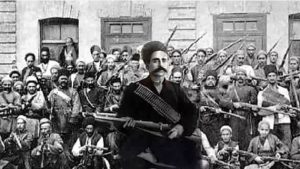
One hundred and twenty years after Iran’s Constitutional Revolution, its central demand remains unresolved: the rejection of absolute power.
The Constitutional Revolution of 1906 was not merely a political upheaval against the Qajar monarchy. It marked the birth of a modern national movement demanding that no ruler should stand above the law. Constitutionalists sought representative government, the rule of law, and limits on arbitrary authority—principles that have shaped every major democratic movement in Iran ever since.
The struggle that began in 1906 did not end with the fall of one dynasty or the rise of another. It continued through the Pahlavi monarchy, survived the establishment of the clerical regime after 1979, and remains alive in the aspirations of millions of Iranians today.
This continuity is particularly significant at a time when some seek to rehabilitate the image of the former monarchy by promoting Reza Pahlavi as Iran’s future leader. A closer reading of Iran’s modern history suggests that the country’s democratic movement has consistently opposed every form of hereditary or absolute rule—not merely one particular regime.
The Constitutional Revolution Was a Revolt Against Absolute Monarchy
The Constitutional Revolution emerged in response to decades of corruption, foreign interference, and unchecked royal authority under the Qajar dynasty.
When Empty Perfume Bottles Become Assets: Iran’s Second-Hand Economy Reveals a Nation in Survival Mode
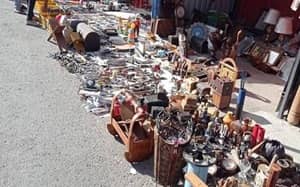
For years, the Iranian regime has insisted that economic hardships are temporary, externally imposed, or exaggerated by its critics. Yet one of the clearest indicators of the country’s worsening poverty does not come from official statistics.
It appears instead in the online marketplaces where ordinary Iranians increasingly attempt to survive. Ironically, even the state-run news website Eghtesad News recently acknowledged this reality, documenting the proliferation of advertisements for rented laptops, used goods, empty perfume bottles, natural hair, and even rented property deeds and salary certificates—an unintended snapshot of the country’s deepening economic distress.
What was once a platform for buying and selling used cars, furniture, or mobile phones has evolved into something far more revealing. Online classified advertisements now document an economy where almost anything—from worn-out shoes and empty perfume bottles to human hair, salary slips, and property deeds—has become a potential source of desperately needed cash.
These advertisements are more than isolated curiosities. Together, they paint a stark portrait of a society where financial survival increasingly depends on converting every personal possession, every credential, and even every fragment of social trust into money.
One of the most striking developments is the growing market for renting ordinary laptop computers.
Iran’s Regime Fabricates Cases Against Teachers and Their Resistance to Authoritarian Rule
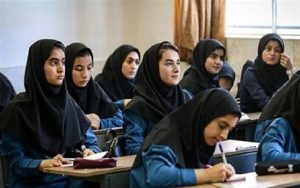
The Iranian regime’s campaign to suppress teachers has continued following the January 2026 protests. Through arrests, imprisonment, and harsh judicial sentences, the regime has targeted teacher union activists. According to recent reports, at least 60 teachers have so far faced judicial prosecution.
The January 2026 protests, which began over deteriorating living conditions and teachers’ labor demands, quickly expanded beyond economic grievances. Teachers and activists from teachers’ trade associations were among the groups that played an active role in the demonstrations. After the protests subsided, the Iranian regime’s security and judicial institutions began prosecuting these activists.
The Center for Human Rights in Iran (CHRI) said in a recent report that from the nationwide January 2026 protests through July 28, at least 60 teachers and teacher union activists were arrested, imprisoned, or subjected to judicial rulings. The human rights organization emphasized that this figure represents the total number of individuals arrested, prosecuted, or imprisoned, and should not be interpreted as the current prison population.
Iran’s Housing Crisis Pushes People Toward Informal Settlements and Homelessness
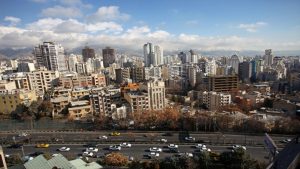
The state-run Rokna news website published remarks by Iraj Rahbar, head of the Tehran Association of Mass Home Builders, regarding Iran’s housing crisis. He reported an average 100% increase in construction material prices and said that some products linked to the petrochemical industry have more than doubled in price. In just 40 days, the price of rebar increased by about 230 million rials (approximately $123).
Under such conditions, no investor can plan for the future. The construction sector, which has long been a key driver of employment and investment in Iran’s economy, has itself become one of the main victims of instability.
The increase in workers’ wages must also be viewed in this context. The daily wage of an unskilled laborer has risen from about 12 million rials to about 25 million rials (approximately $14).
According to the report published by Rokna, the actual construction cost has now reached about 550 million to 700 million rials per square meter (approximately $293 to $373), while contracts under the National Housing Movement project were signed based on 2023 prices of 85 million rials per square meter (approximately $46). Even after price adjustments, the gap between actual construction costs and the contracted amounts remains substantial.
Iran’s Push for a New Strait of Hormuz Shipping Framework Sparks Debate at Home

Tehran — Negotiations between Iran and Oman over the Strait of Hormuz are no longer simply about when to reopen one of the world’s most vital energy trade routes. Statements by Iranian officials and reports published in Tehran indicate that the two countries are discussing changes to shipping routes, a greater role for the littoral states, and a framework that would differ from the arrangements in place for the past six decades. The process has yet to be finalized, but it has already sparked an open debate inside Iran over whether the Strait should become the subject of an agreement or remain closed as a lever of pressure against the United States.
Kazem Gharibabadi, Iran’s deputy foreign minister, described the distinction in explicit terms. “The new understanding with Oman is a new model for the Strait of Hormuz arrangements that differs from the model of the past 60 years. The countries of the region have also accepted that Iran and Oman should reach an understanding on the Strait of Hormuz,” he said. According to Gharibabadi, the Hormuz provisions contained in the previous understanding were merely “guiding principles,” and the final configuration of the shipping routes must be determined through negotiations between Iran and Oman.
30th Free Iran Telethon Now Live: Iranians Rallies to Keep Simay-e Azadi on Air

August 7, 2026 –The 30th Free Iran Telethon is now underway. Building on yesterday’s final call, Simay-e Azadi (INTV)—the independent 24-hour Persian-language satellite channel that has operated for over three decades solely on viewer support—launched its live broadcasts on Friday, August 7, continuing through Sunday, August 9, 2026.
As an independent broadcaster receiving no funding from any government or foreign power, Simay-e-Azadi relies entirely on public contributions to stay on air and deliver uncensored news amid intensifying regime censorship.
Early support is already strong. Videos circulating online show members of the Iranian diaspora urging maximum participation. Elham from Switzerland highlighted the channel’s vital role as a truly independent voice.
Rose from England called it “the most accurate TV” that faithfully echoes the demands of the Iranian people. In a particularly moving gesture, Ali from Baneh, a member of the PMOI Resistance Units, dedicated one million tomans—equivalent to his daily food expenses—to help keep alive the voice of the Iranian people, political prisoners, and the “No to Execution” campaign.
From Utøya, Norway, to Iran: Young Activists Spotlight Iran’s Executions and the 1988 Massacre
On Wednesday, August 5, 2026, members of UNID (the Iranian–Norwegian Youth Association), a youth organization committed to a free, democratic, and secular Iran, gathered on the island of Utøya.
The island witnessed the massacre of 69 young members of Norway’s Labour Party by the far-right terrorist Anders Behring Breivik on July 22, 2011. Against this backdrop, young supporters of the Iranian Resistance held an information booth, giving voice to the pursuit of justice for the victims of tyranny in Iran.

Meanwhile, they raised awareness about the 1988 massacre of political prisoners and the ongoing wave of daily executions in Iran while introducing Mrs. Maryam Rajavi‘s Ten-Point Plan as the President-elect of the National Council of Resistance of Iran (NCRI), drew significant interest from young members of various Norwegian political parties.