

Three-minute read
Trapped between domestic economic fury and regional isolation, Iran’s clerical regime faces an existential threat to its grip on power. To stave off mounting demoralization within its security forces and hardline base, leadership is embracing high-stakes rhetoric aimed purely at bolstering internal morale, regardless of the steep diplomatic fallout.
A striking example of this desperate posturing came on August 18, 2026, when the regime’s Parliament Speaker Mohammad Bagher Ghalibaf addressed an official session of the Majlis regarding the ongoing standoff over the Strait of Hormuz. Addressing domestic forces, Ghalibaf asserted that the strategic waterway would remain blocked until the United States fully executes its commitments under a bilateral memorandum, including unfreezing assets and lifting oil sanctions. Crucially, to assure internal loyalists that past diplomacy was not a concessions-driven defeat, Ghalibaf openly admitted to Tehran’s duplicity in diplomatic negotiations. He stated that “the opportunity gained from the memorandum in lifting the blockade and ceasefire provided a worthy contribution to increasing economic resilience and rebuilding Iran’s defense capabilities”.
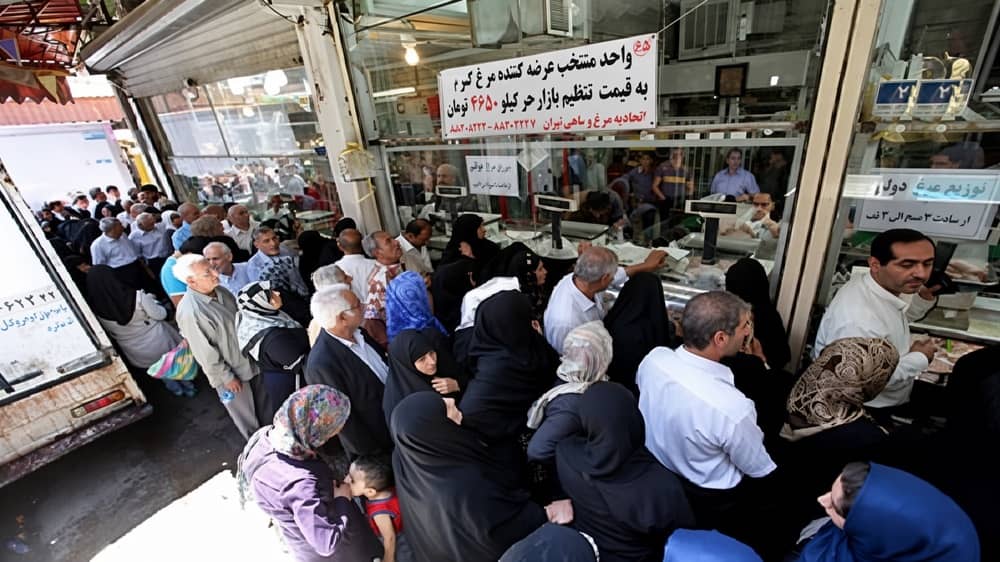
Ghalibaf’s candid admission lays bare a core principle of the regime’s survival strategy: diplomatic lulls and ceasefires are treated not as steps toward peace, but as tactical breathers to fortify its defense apparatus while managing internal decay. Yet, this attempt to reassure domestic hardliners comes at a moment when the domestic economy is in freefall. According to state-aligned labor news agency ILNA, a working-class family now requires 90 million tomans monthly to survive, yet an average worker’s monthly wage covers a mere 27.58% of basic living costs, effectively lasting just 8.27 days.
"The clerical regime in Iran is facing a compounding crisis as #economic mismanagement, hyperinflation, and public outrage converge, forcing senior officials into unprecedented admissions of failure," @MansoreGolestan writes.https://t.co/iakYpfvgi0
— NCRI-FAC (@iran_policy) August 17, 2026
This economic disintegration is magnified by severe, nationwide fuel shortages that have caused kilometer-long queues across provinces like Hormozgan, and South Khorasan, where citizens queue from midnight until dawn for minimal fuel allocations. Fearing an inevitable explosion, state-affiliated media outlet Jamaran warned on August 18 that impending public unrest will not simply mirror the November 2019 protests but rather evolve into “multi-layered and hybrid” uprisings connecting economic distress directly to political grievances. Warning against sudden price shocks, MP Mohammad-Javad Naqdali on August 16 cautioned against “stroke-like actions,” while MP Mohammad Rashidi noted on August 18 that raising fuel prices during wartime conditions would trigger severe social turbulence. Systemic mismanagement was further highlighted on August 17 when a massive fire in Gorgan’s Na’lbandan market destroyed over 20 shops as under-equipped emergency crews failed to respond effectively.
Institutionalized Paranoia and Social Crackdowns
To preempt social explosion, the regime is rapidly expanding its totalitarian apparatus. On August 16, parliament passed the generalities of a draconian bill titled “Countering the Influence of Foreign Intelligence Services” with 183 votes. Even state-controlled outlet Ruydad24 criticized the legislation on August 18, noting that Article 5 criminalizes foreign academic ties and research transfers, warning the law “can turn any citizen into a spy” and transform society into an environment of fear and suspicion.
Iran’s crisis is developing not as one dramatic rupture, but as a slow erosion of authority—made more dangerous each time the state postpones the price of governing," writes @MansoreGolestan.https://t.co/QtQWG9J69a
— NCRI-FAC (@iran_policy) August 15, 2026
The security apparatus is simultaneously weaponizing these anti-espionage tools against ordinary citizens and researchers. A 24-year-old biomedical researcher, previously detained during the 2019 and 2022 protests, was lured back to Iran under false promises on October 21, 2025. Held for seven months in undisclosed, informal detention centers in Tehran and Sanandaj, he endured beatings, mock executions, and whipping before Judge Hossein Saeedi sentenced him to 30 years in prison on fabricated espionage charges without a shred of evidence.
Simultaneously, Tehran Prosecutor Ali Salehi announced on August 17 the creation of a specialized “Moral Security Prosecutor’s Office” with 12 judges to target cafes and online influencers, while security forces deployed “terror tunnels” in Rasht to enforce mandatory hijab rules. Cruelly, on August 18, despite a crowd gathering overnight outside Sanandaj Prison chanting “No to Execution,” authorities executed Kaveh Rafoosheh. UN Special Rapporteur Mai Sato on August 5, 2026, demanded an immediate halt to executions, noting that over 444 individuals were executed in the first seven months of the year alone.
"As #IranProtests spread from main avenues to individual blocks, Tehran’s reliance on neighborhood militarization reveals an isolated dictatorship fighting for survival against its own populace," writes @HakamianMahmoud.https://t.co/3AFUQwTkPr
— NCRI-FAC (@iran_policy) August 16, 2026
An Unsustainable Crucible
In response to this mounting instability, senior leadership has acknowledged the fragile state of the country. Vice President Mohammad Reza Aref described Iran’s environment as a state of “neither war nor peace,” calling on state media to preserve social capital while acknowledging government plans to gradually deregulate fuel prices.
However, the regime’s strategy, exploiting diplomatic ceasefires to rearm while violently suppressing domestic dissent, is reaching its operational limit. By treating diplomacy in bad faith and turning its administrative tools against its own citizens, Tehran is failing to stabilize its rule.
As living standards collapse and systemic fear replaces public trust, the regime’s tactical maneuvers cannot stave off structural collapse. Tehran’s attempt to build military resilience behind a veil of ceasefires will ultimately be eclipsed by the hybrid internal crisis it continues to ignite.