

THIS PAGE WILL BE UPDATED WITH THE LATEST NEWS
UPDATE: 9:30 PM CEST
Iran’s Execution Machine Kills 21-Year-Old Protester as Regime Faces Crisis on Every Front

Iran’s regime has hanged a 21-year-old protester as its rulers face mounting pressure from a resurgent internal opposition, economic collapse and the increasingly dangerous confrontation with the United States.
Ghaem Hosseini was executed at Isfahan Prison on Thursday according to Iran’s judiciary and human-rights monitors, making him the fifth defendant in the so-called Alikhani Square case to be sent to the gallows.
Hosseini was arrested during January’s nationwide uprising and accused by the authorities of involvement in violence in Isfahan in which four members of the regime’s Special Units were killed.
The pro-democracy National Council of Resistance of Iran (NCRI) says Hosseini was condemned to death after a sham trial in which defendants were denied the right to choose their own lawyers and even state-appointed lawyers were denied access to case files.
Four other protesters – Erfan Esfandiari, Gol-Mohammad Mohammadi, Amir-Hossein Safari and Abolfazl Sepahi – have already been executed.
UPDATE: 9:00 AM CEST
Lebanese Foreign Minister Calls on Tehran to Stop Interference in Lebanon
Lebanese Foreign Minister Youssef Raggi called on Iranian officials to stop interfering in Lebanon’s internal affairs, pointing in particular to recent remarks by Iranian Parliament Speaker Mohammad Bagher Ghalibaf.
Raggi said that restoring normal relations with the Iranian diplomatic mission must begin with Tehran complying with the Lebanese state’s decision. He added that the continued presence of the Iranian ambassador contradicts a binding sovereign decision that allows for neither exceptions nor compromise.
Meanwhile, the United Nations Interim Force in Lebanon (UNIFIL) reaffirmed its commitment to its mandate and to maintaining a clear presence across southern Lebanon. It called on all parties to renew their commitment to UN Security Council Resolution 1701 and to stop violating it, stressing that continued instability serves no one’s interests.
UPDATE: 7:00 AM CEST
Iranian Officials Concede Staggering Budget Deficit as State Media Warns of Imminent Social Explosion
Alarm is reverberating through the highest echelons of the Iranian regime as catastrophic economic collapse and systemic financial paralysis trigger unprecedented admissions from state officials.
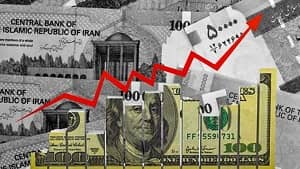
Amid mounting warnings that accumulated domestic outrage—rather than external military pressure—poses the single greatest existential threat to the theocracy, parliamentary debates in Tehran have laid bare a staggering 960 trillion toman budget deficit alongside an unhinged inflation rate exceeding 90%. Caught between sovereign insolvency and a destitute population pushed past the breaking point, the ruling theocracy is running out of economic maneuvers to stave off another nationwide uprising.
During an open session of the Iranian parliament, the head of the Plan and Budget Organization, Hamid Pourmohammadi, formally conceded an unprecedented funding gap of 960 trillion tomans in the first five months of the fiscal year alone. This includes a 700 trillion toman deficit in the general government budget and a 260 trillion toman shortfall in the targeted subsidy fund.
Another Young January Protester Executed in Iran on Thursday

Iran’s judiciary announced on August 20, 2026, that it has executed Ghaem Hosseini (also known as Arian), a 21-year-old Afghan national and one of the defendants in the Alikhani Square case in Isfahan. This brings the number of protesters executed in the same case to five. Others remain on death row.
On 20 August 2026, Iran’s judiciary announced that Ghaem Hosseini (21) had been hanged in Isfahan. It identified him as a “foreign national” and claimed he was executed on charges including brandishing a weapon to create fear and terror, creating widespread public insecurity, and acting against national security in a manner that severely disrupted public order.
Hosseini had been detained in connection with the January 2026 uprising. His death sentence was issued by a Revolutionary Court.
In the past month, four others in the same case, including Hosseini’s cousin Gol-Mohammad Mohammadi, had already been sent to the gallows. Erfan Esfandiari and Gol-Mohammad Mohammadi (also an Afghan citizen) were executed on 19 July. Abolfazl Sepahi and Amirhossein Safari were publicly hanged on 28 July in Alikhani Square itself.
Before the 28 July executions, in a rare instance, protesters gathered in Alikhani Square and clashed with security forces while chanting against the regime. The authorities nevertheless carried out the hangings under heavy security. In short scenes broadcast by state media, regime supporters chanted “Death to the seditionist” and “Death to the traitor who sold out the homeland.”
Mojgan Mahdavi: From U.S. Academia to the Frontlines of the Iranian Resistance
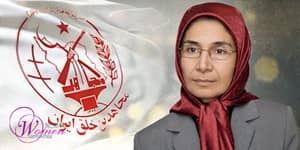
Mojgan Mahdavi, a member of the Central Council of the People’s Mojahedin Organization of Iran (PMOI/MEK) and a longtime member of the National Council of Resistance of Iran (NCRI), passed away in Albania on Thursday evening, August 20, 2026, following a year-long respiratory illness.
Her passing marks the end of four decades of continuous, professional, and steadfast struggle against the ruling religious fascism in Iran.
Born in Tehran in 1961, Mojgan Mahdavi earned a degree in Biochemistry in the United States. In 1979, while completing the final year of her master’s program in Oklahoma, she connected with the Muslim Iranian Students Society (MISS, supporters of the PMOI in the U.S.). In 1987, she set aside her academic career and personal prospects to dedicate herself full-time to the resistance.
In 1988, Mahdavi joined the National Liberation Army of Iran (NLA) at Camp Ashraf. Following her involvement in NLA operations, her leadership capabilities led to a rapid promotion to command a combat unit.
In 1999, she assumed command of a sector of forces at Habib Base, located 35 kilometers from the Iranian border.
South Khorasan Prosecutor Reports Sealing Businesses Over Mandatory Hijab

Ten cafes and restaurants, 28 motorcycles, and 70 cars have been targeted by judicial and police enforcement in South Khorasan Province since the beginning of the Persian calendar year (starting March 20) solely due to reasons related to sealing businesses over mandatory hijab and women driving.
According to the state-run Mehr News Agency on August 20, 2026, Ahmad Ghasemi, the prosecutor of South Khorasan’s provincial capital, announced these figures, acknowledging new dimensions of coercive pressure exerted on women and local businesses.
Ahmad Ghasemi confessed that since the beginning of the year, 28 motorcycles have been impounded in connection with compulsory veiling regulations. He specified that 9 motorcycles were impounded by the State Security Forces (SSF) and 19 others by the traffic police. According to him, these actions were taken in cases where women were driving the motorcycles or female passengers did not comply with the regime’s imposed dress code.
Iran’s Deepening Economic Crisis Is Becoming a Political Time Bomb
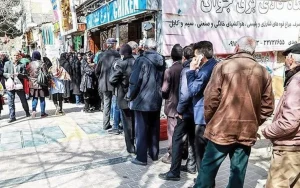
Iran’s economic crisis has entered a phase in which even the regime’s own officials and media can no longer conceal its magnitude. What was once presented as a matter of temporary hardship, sanctions, or external pressure is increasingly being described from within the regime as a systemic crisis with potentially explosive social and political consequences.
Recent remarks by officials close to the government offer a revealing picture.
Masoud Pezeshkian previously acknowledged that substantial oil resources and foreign currency had been placed at the disposal of the armed forces, including the IRGC’s aerospace division. Now, his deputy, Saghaf Esfahani, has reportedly acknowledged that state resources have effectively been exhausted, saying: “We spent the money and the pot has reached the bottom.”
Whatever the regime’s priorities were when spending those resources, the consequences are increasingly being felt by ordinary Iranians.
Sharif University Expands Disciplinary Crackdown as Student Expulsions Reach 10

Sharif University of Technology has once again become a focal point of disciplinary action against students, with three more students receiving preliminary expulsion orders. The latest decisions bring the number of Sharif University students who have received expulsion rulings to 10, while reports indicate that the number could increase further.
The latest cases involve Ariana Kuchaki, an industrial engineering student who entered the university in 2021; Ali Alirezaei, a mathematics student admitted in 2023; and Arash Hatami, a physics student who entered the university in 2023.
According to information published about the cases, Kuchaki and Hatami have each been sentenced to one year of exclusion from study at all universities across Iran. Alirezaei has received a five-year ban from studying at universities nationwide.
The rulings are currently preliminary and can therefore be appealed. Nevertheless, expulsion or lengthy suspension from higher education can have serious consequences for a student’s academic trajectory and future professional opportunities. Ensuring the right to defense and fair proceedings is therefore particularly important in cases carrying such severe penalties.
Reza Pahlavi’s Democratic Credentials Under Scrutiny: The Contradictions Behind His Claim to Unite Iran
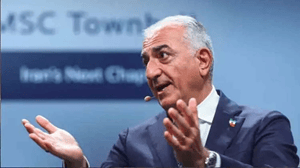
Reza Pahlavi has increasingly presented himself as a unifying figure capable of helping Iran move from the current regime toward a democratic future. His message emphasizes political pluralism, tolerance, a broad opposition coalition, and a transition in which Iranians ultimately determine their own form of government.
Yet beneath this carefully constructed image lies a series of unresolved contradictions. His political project remains deeply connected to the legacy of the Pahlavi monarchy, while his claims of representing a broad and inclusive opposition are challenged by persistent divisions among his supporters and opponents. His approach to the regime’s security apparatus also raises difficult questions about accountability and the future of those who have participated in repression.
The issue, therefore, is not simply whether Reza Pahlavi describes himself as a democrat. It is whether his political conduct, alliances, and proposed transition are consistent with the democratic principles he invokes.
Iranian Patients Face Soaring Medication Costs as Drug Prices Soar by 300%

While the Iranian regime’s Food and Drug Administration claims that the recent currency policy changes do not mean the complete elimination of subsidized exchange rates for medicines or the beginning of a new wave of price hikes, reports indicate a sharp increase in the prices of some medications in Iran.
According to a report published by Baamdadno, citing a notice from a pharmaceutical company, the prices of 82 of the company’s products have increased by an average of about 120%. The largest increases were for Donepezil tablets, at about 543%, and Clarithromycin, at about 308%.
The state-run website Asr Iran also wrote: “According to Tasnim News Agency, a pharmaceutical company announced in a notice that the prices of 82 of its pharmaceutical products have increased, raising the average price of the affected items from about 1.8 million rials (approximately one dollar) to 3.9 million rials.”
In response, Mohammad Hashemi, spokesperson for the Iranian regime’s Food and Drug Administration, claimed that the recent currency changes affect only certain pharmaceutical intermediates and precursor materials and should not be interpreted as the removal of subsidized exchange rates across the entire pharmaceutical supply chain.
Iran: Arghavan Fallahi, 25-Year-Old Political Prisoner, at Risk of Execution

Arghavan Fallahi, born in Iranian calendar year 1379 (March 2000–March 2001), had been arrested previously. In November 2022, she was arrested with her father, Nasrollah Fallahi, her brother, Ardavan Fallahi, and their family friend, Parvin Mirasan. Branch 26 of the Tehran Revolutionary Court, presided over by Judge Iman Afshari, sentenced Nasrollah Fallahi and Parvin Mirasan to four years’ imprisonment each, Arghavan to two years, and Ardavan to one year. Arghavan was released on bail in March 2024.
Arghavan Fallahi was arrested in Parand Township on 25 January 2025 and transferred to Ward 209 of Evin Prison. According to credible information, she was held for months in solitary confinement and subjected to intensive interrogations and physical and psychological torture. Contact with her family and effective access to legal counsel were also severely restricted during this period.
After the evacuation of Evin Prison, Arghavan was transferred to solitary confinement at Fashafouyeh Prison, also known as Greater Tehran Prison, and for a period her whereabouts were unknown to her family. She was later transferred to Qarchak Prison in Varamin. Bail of two billion tomans was set for her temporary release, but she was not released.
Berlin: Day 173 of Protest — Condemning Executions, Calling for Democratic Republic in Iran
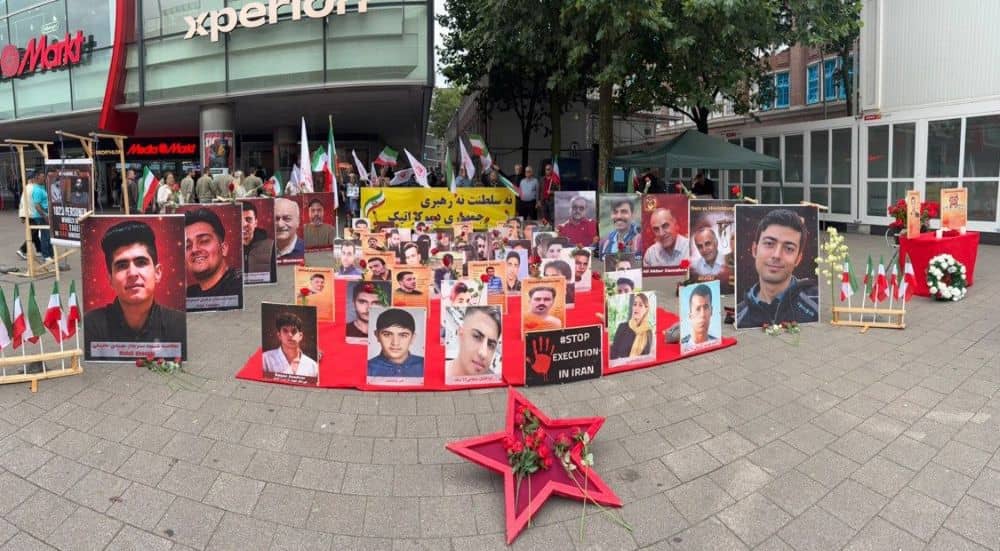
Berlin, Germany – August 20, 2026: For the 173rd consecutive day, supporters of the People’s Mojahedin Organization of Iran (PMOI/MEK) have continued their sit-in protest outside the Iranian regime’s embassy in Berlin, which protesters denounce as a hub of espionage and terrorism. The demonstrators are demanding an end to the executions of PMOI political prisoners and of protesters detained during the January 2026 uprising.

The protesters reaffirm their opposition to executions, war, and the policy of appeasement toward the clerical regime, emphasizing that the only viable solution is the establishment of a democratic republic based on Maryam Rajavi’s Ten-Point Plan.
Paris Exhibition Condemns Executions of Iranian Political Prisoners
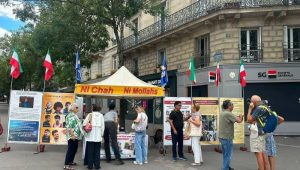
Paris, France – August 20, 2026 – Supporters of the People’s Mojahedin Organization of Iran (PMOI/MEK) held a book table and photo exhibition in Paris to condemn the execution of political prisoners and the continued detention of protesters arrested during Iran’s January 2026 uprising.
The event underscored the Iranian people’s demand for a democratic republic and presented the Iranian Resistance as a path toward peace, freedom, and justice. Organizers called on the French public and the international community to acknowledge the suffering of the Iranian people and their rejection of all forms of dictatorship, whether monarchical or theocratic.
Through photographs, personal testimonies, and other materials, the exhibition highlighted the courage and sacrifices of those who participated in the January 2026 uprising. It also focused attention on what organizers described as the Iranian regime’s ongoing human rights violations, including the execution of political prisoners.