

Two-minute read
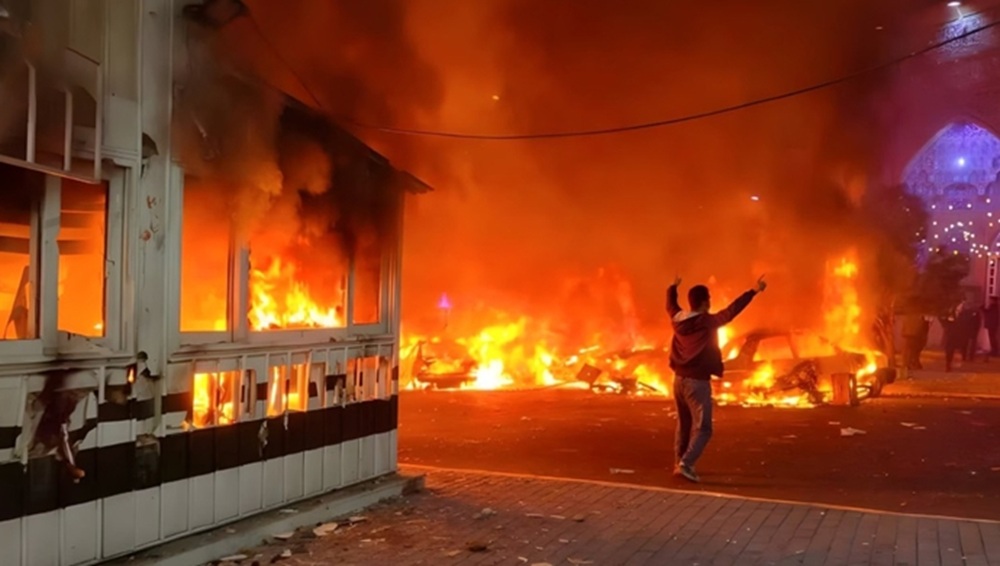
Beneath the quiet surface of Iran, a deep and volatile anxiety is brewing once again. Exhausted by recent military conflicts, crippling inflation, and a rapidly eroding standard of living, the Iranian public is bracing for a sudden spike in gasoline prices. It is a dangerous repetition for a regime that, in late 2025 and early 2026, went into full alert mode to prevent just such a crisis. Back then, the state frantically zig-zagged on price hike messaging, canceled announcements, staged wargames, and imposed night curfews in a desperate bid to mentally and physically absorb the blow. But the shock arrived anyway, igniting the fierce January 2026 uprising that sparked in the Tehran bazaar and rapidly spread throughout the nation.
In a remarkably candid report published on Saturday, August 22, 2026, the Iranian state-controlled economic daily Jahan-e Sanat issued a stark warning to the regime. The article, titled “From a Shock to Inflammation,” paints a grim picture of a society pushed to its absolute limits, capturing the voices of a public that feels it has nothing left to lose.
The impending price hike comes directly on the heels of a bleak admission from the regime’s president, who laid bare the nation’s dire financial and infrastructural realities following recent regional conflicts. According to the outlet, the president bluntly stated: “We have no money, we have no fuel, our storage facilities have been damaged in the war, and we have no choice but to do this.”
#IranProtests Day 10: Clashes Intensify in Tehran Bazaar; Security Forces Withdraw from Abdananhttps://t.co/Jw57Z7K98A
— NCRI-FAC (@iran_policy) January 6, 2026
But for ordinary Iranians already struggling to survive, the government’s macroeconomic justifications ring hollow. The Jahan-e Sanat report captures the raw, unfiltered desperation on the streets.
“Every time they come to fix the eyebrow, they end up blinding the eye,” said Abbas, a 67-year-old taxi driver, criticizing the government’s mishandling of the economy. Pointing to the nationwide unrest that followed the last major fuel price hike, he asked: “Have they forgotten November 2019?”
For younger generations, the threat of a price hike is not just an economic burden—it is a catalyst for direct action. Kian, a university student who is the sole breadwinner for his family, delivered a chilling warning through the state media outlet.
“What kind of logic is it that the president constantly says we have no money, we have no fuel?” Kian asked. “We are at our breaking point; no steps are being taken to improve the situation. If the people protest this time, I will join them too.”
NCRI Editorial: The Real Battle Is Inside Iranhttps://t.co/UneLPmeZZe
— NCRI-FAC (@iran_policy) August 15, 2026
The publication also featured striking analysis from a sociologist Alireza Sharifi-Yazdi, who argued that the government’s recent floating of an astronomical 87,000-toman per liter gasoline price in Kerman province was likely state propaganda designed to “break the mental barrier” of the public, making a smaller—but still devastating—price hike seem palatable.
Yet, Sharifi-Yazdi warned that the state’s calculus is severely underestimating the public’s exhaustion. Noting that Iran’s oil revenues have plummeted toward zero and the country is staring down the barrel of hyperinflation, he offered a dire prognosis for the government’s stability.
"You can terrorize an opinion. You cannot terrorize an appetite. You can shoot a demonstrator, and the regime has shot thousands. You cannot shoot #hunger, and hunger does not get tired, does not go home at night, and does not negotiate," writes @MansoreGolestan.…
— NCRI-FAC (@iran_policy) August 13, 2026
“Our society has become severely more fragile and hopeless, and social capital—especially between the people and the governing system—has sharply declined,” Sharifi-Yazdi told the outlet. Drawing a direct contrast to the environment of 2019, he concluded with an unprecedented warning: “I believe society is now in a more critical state, and the readiness for unrest in society—whether we call it a riot, revolution, or movement—has greatly increased.”
As Jahan-e Sanat notes, the current conditions in Iran require only a spark. Whether that spark is the price of fuel or another unforeseen grievance, the message from the streets of Tehran is unequivocal: the public’s patience has run dry, and the next shockwave could be imminent.