

The “No to Execution Tuesdays” campaign issued a statement on August 25, 2026, marking its 135th week of protest and reporting that its hunger strikes have expanded to 61 prisons across Iran.
The organizers linked the surge in capital punishment directly to the regime’s attempts to suppress public dissent amid deteriorating economic conditions.
“In the past week, two political prisoners from the December protests, Ghaem Hosseini in Isfahan Prison and Majid Adineh in Karaj Central Prison, were hanged. At the same time, death sentences for several other political prisoners have been issued or confirmed,” the statement reads.
The statement drew attention to non-transparent legal proceedings and highlighted several political prisoners facing immediate risk of execution: “The death sentences of Arghavan Fallahi in Evin Women’s Prison, Rasoul Rezaei in Vakilabad Prison in Mashhad, and Mohammad Reza Majidi Asl—who was transferred from Greater Tehran Prison to Ghezel Hesar—have been confirmed. This sudden transfer to Ghezel Hesar… has severely heightened his family’s anxiety. The judicial proceedings for these individuals… have been extremely unfair and opaque.”
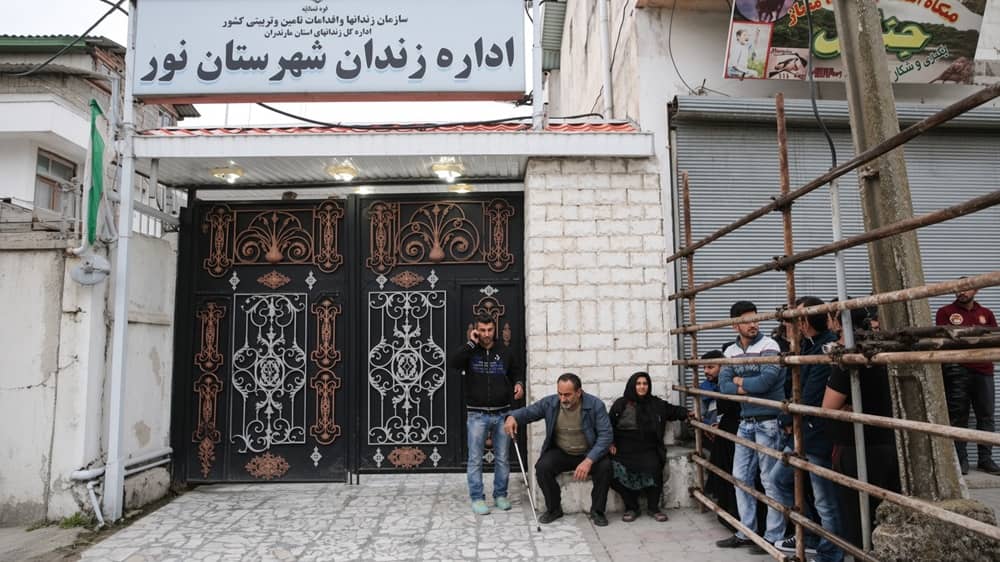
Prisoners in 61 prisons across Iran, including newly joined Noor Prison in Gilan, launched a coordinated hunger strike during the 135th week of the No To Execution Tuesdays campaign.
The protest comes amid a surge in executions, including the recent executions of political…— IRAN HRM (@IranHrm) August 25, 2026
The campaign emphasized the resolve of political prisoners inside the Iranian penal system, noting that new facilities continue to join the collective action: “The ‘No to Execution Tuesdays’ campaign and resilient prisoners continue their resistance and steadfastness. This week, a group of prisoners in Noor Prison in Mazandaran province also joined the ‘No to Execution Tuesdays’ campaign.”
The statement also recognized civil society involvement and labor movements supporting the abolitionist cause: “We express our sincere gratitude to retirees and everyone who makes the ‘No to Execution’ message heard in gatherings and public spaces… In every classroom, children should be taught that the primary principle is always the right to life and living, not death and execution.”
Iranian authorities are holding 68-year-old engineer Zahra Shahbaz Tabari at risk of execution.
Her case raises serious concerns over the death penalty, due process, and the treatment of political prisoners in Iran. #StopExecutionsInIranhttps://t.co/mhls562SCU— IRAN HRM (@IranHrm) August 20, 2026
-
Tehran & Alborz: Evin (Men’s & Women’s Wards), Ghezel Hesar (Units 2, 3 & 4), Karaj Central, Fardis Karaj, Greater Tehran, Qarchak, and Khorin Varamin.
-
Isfahan & Central: Asadabad Isfahan, Dastgerd Isfahan, Arak, and Choobindar Qazvin.
-
Fars, Kohgiluyeh & Boyer-Ahmad: Adelabad Shiraz (Men’s & Women’s Wards), Shiraz Military Prison, Firozabad Fars, Yasuj, Dehdasht, and Gachsaran.
-
Khuzestan, Bushehr & Lorestan: Sheiban Ahvaz, Sepidar Ahvaz (Men’s & Women’s Wards), Ramhormoz, Behbahan, Khorramabad, Borujerd, and Borazjan.
-
Sistan & Baluchestan, Kerman & Yazd: Zahedan (Men’s & Women’s Wards), Bam, Khenoj, Kerman, Yazd (Men’s & Women’s Wards), and Tabas.
Iran: 25-year-old political prisoner Arghavan Fallahi remains under a death sentence in Qarchak Prison after months in solitary confinement and reported physical and psychological torture.
Over 4,000 figures from 62 countries have called for her execution to be halted.…— IRAN HRM (@IranHrm) August 21, 2026
-
Gorgan & Khorasan Provinces: Mashhad, Sabzevar, Gonbad-e Kavus, Nishapur, Central Birjand, and Gorgan.
-
Caspian Coast (Gilan & Mazandaran): Rasht (Men’s & Women’s Wards), Rudsar, Haviq Talesh, Ezbaram Lahijan, Qaemshahr, and Noor.
-
Kermanshah, Ilam & Chaharmahal and Bakhtiari: Dizelabad Kermanshah, Ilam, and Borujen.
-
Northwest & Kurdish Regions (Azerbaijan & Kurdistan): Ardabil, Tabriz, Urmia, Salmas, Khoy, Naqadeh, Miandoab, Mahabad, Bukan, Saqqez, Baneh, Marivan, Sanandaj, Kamyaran, Ahar, and Langarud Qom.