

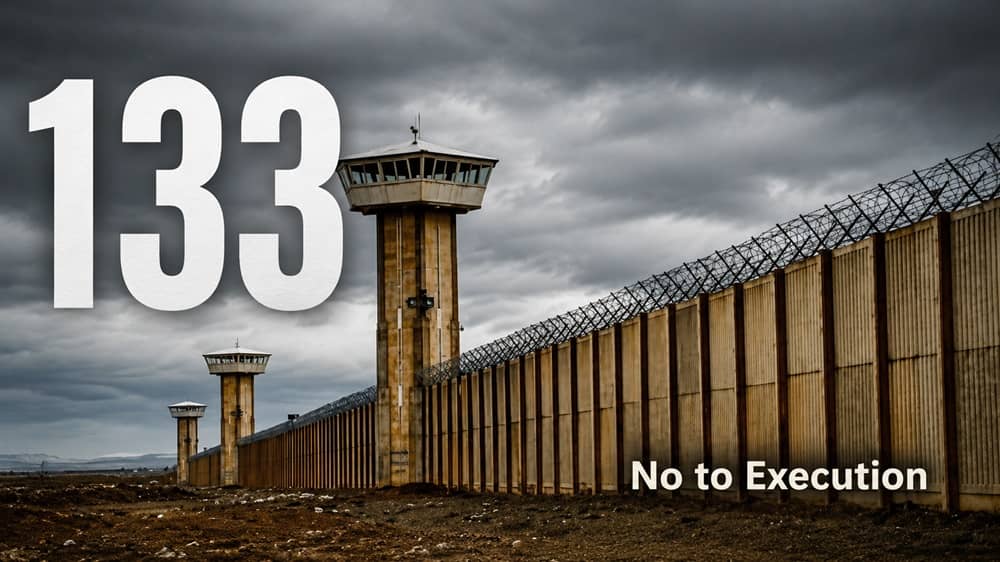
A protest movement that began behind prison walls has entered its 133rd consecutive week, with prisoners in 59 prisons across Iran joining hunger strikes on Tuesday, August 11, to oppose the country’s escalating use of the death penalty.
The “No to Execution Tuesdays” campaign has grown into a sustained nationwide initiative connecting prisoners across geographically distant facilities, from Evin and Qezel Hesar near Tehran to prisons in Shiraz, Ahvaz, Zahedan, Urmia, Sanandaj, Tabriz, Kerman, Mashhad and dozens of other cities.
In its latest statement, the campaign said at least 342 prisoners have been executed since March 21, 2026, including 10 women, two people who were minors at the time relevant to their sentences, and 37 political prisoners. These figures are those reported by the campaign amid severe restrictions on independent monitoring and access to information inside Iran.
New Death Sentences Add to Growing Alarm
The campaign also drew attention to the cases of Mojtaba Dehbandi and Kianoush Hamzei, two detainees connected to the January protests in Shiraz who, according to the statement, were sentenced to death during the past week.
Campaign members described the judicial proceedings in their cases as unfair and lacking transparency, placing them within a wider pattern of concern over capital cases involving protesters and political detainees.
Those concerns extend well beyond the prisoners participating in Tuesday’s action. On August 5, UN High Commissioner for Human Rights Volker Türk said that at least 56 people had been executed in Iran on national-security-related charges since March 19, including 27 people in cases connected with protests earlier this year. He also warned that more than 100 others faced possible execution on similar charges and expressed concern over failures to guarantee fair-trial and due-process standards.
The UN rights chief said he was alarmed by the increase in executions and death sentences and warned that capital punishment was being used to generate fear and suppress dissent. Iranian officials have defended the country’s judicial system and the use of the death penalty as consistent with domestic law and necessary for public security.
Iran: The “No to Execution Tuesdays” campaign enters its 133rd week, with prisoners in 59 prisons on hunger strike.
At least 342 people have been executed since March 21, including 37 political prisoners and 10 women.#StopExecutionsInIranhttps://t.co/m3iXr3S2J2— IRAN HRM (@IranHrm) August 11, 2026
Protest Inside the Prisons Has Also Brought Reprisals
The 133rd-week statement says the campaign is continuing despite pressure on prisoners who have spoken out against executions. According to the participants, some protesting inmates have been transferred to solitary confinement, while others have faced new juicial cases.
The prisoners also referred to collective prosecutions connected with cases in places including Alikhani Square and Shohada Square in Isfahan, Shandiz and Esfarayen. They argue that death sentences and lengthy prison terms emerging from such cases are intended to intimidate a society already shaken by executions and repression.
One of the notable themes of the latest statement is its emphasis on solidarity outside prison. Participants thanked artists and other sections of Iranian society who have supported the anti-execution movement or stood with families whose relatives have been executed or sentenced to death. They called on wider sections of society to make opposition to executions visible in public gatherings and pointed in particular to demonstrations by retirees as an example of how social protests can also become platforms for defending the right to life.
Aref Khoshkar was executed on July 15 after a deeply flawed trial in Iran.
The judgment left key questions unresolved: no murder weapon was recovered, no ballistic match was established, and multiple conflicting accounts identified different shooters.#StopExecutionsInIran…— IRAN HRM (@IranHrm) August 10, 2026
This connection between prisoners, families and civil society has increasingly become an important feature of the campaign. Earlier statements have appealed to teachers, workers, retirees, professional associations, independent media and families of death-row prisoners to amplify the cases of those facing execution.
The campaign has also expanded geographically over time. By August 11, prisoners participating in the 133rd weekly action were reported in 59 prisons, including both women’s and men’s wards in several facilities. Among them were Evin, Qezel Hesar, Karaj Central, Qarchak, Dastgerd in Isfahan, Sheiban and Sepidar in Ahvaz, Adelabad in Shiraz, Zahedan, Yazd, Rasht, Dizelabad in Kermanshah, Tabriz, Urmia, Mahabad, Saqqez, Sanandaj, Ilam, Kerman and Neyshabur prisons.
From 59 prisons across the country, Tuesday’s hunger strike once again carried the same message that has sustained the campaign week after week: opposition to the death penalty will continue despite executions, prison pressure and new death sentences.