

THIS PAGE WILL BE UPDATED WITH THE LATEST NEWS
UPDATE: 2:30 PM CEST
Probable Uranium Storage Facility Identified at the Natanz Nuclear Complex

The Institute has identified a separately enclosed, partially below-ground, bunkered building at the Natanz Nuclear Complex that was likely intended to serve as uranium hexafluoride (UF6) storage facility to support large-scale uranium enrichment at the Natanz Fuel Enrichment Plant. The bunkered structure was constructed between 2010 and 2017, with the bulk of construction occurring between 2015 and 2017.
The facility would have been permitted under the Joint Comprehensive Plan of Action (JCPOA), like other facilities, that Iran specifically aimed to use in a large-scale, rapid enrichment spring back as limitations on enrichment phased out between 2025 and 2030. At the time, it should have been recognized as yet another clear preparation for a large increase in enrichment pending the sunset of JCPOA limits, similar to the large, advanced centrifuge assembly facility Iran was also building at Natanz. The lesson for today is that any temporary enrichment ban must include a dismantlement and dissolution of remaining capabilities and must not allow for any type of preparatory activity for the end of a ban.
Given Iran’s focus on enriching its low enriched uranium to highly enriched uranium and decision to store large amounts of the HEU at locations other than Natanz, it is unclear how the building was used before the June 2025 war. It is also unclear what role it has had since.
UPDATE: 7:00 AM CEST
Iran Executes January Uprising Detainee Majid Adineh in Karaj
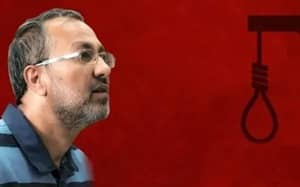
Iranian authorities executed Majid Adineh, a detainee from the January 2026 uprising, at Karaj Central Prison on August 23, 2026, amid a continuing surge in executions across the country, including those of prisoners arrested in connection with the uprising.
The judiciary accused Adineh of working for Israel, the United States and hostile groups and said a Revolutionary Court in Karaj had sentenced him to death and ordered the confiscation of all his property.
The judiciary, however, provided no publicly disclosed evidence substantiating the allegations cited in announcing his execution.
An account attributed to one of Adineh’s cellmates directly challenged the authorities’ portrayal of his case.
“He did not belong to any political group. The weapon and all the items they had seized from him belonged to him, but he had never used them, and it had even been established in court that he had not used them. Despite all this, they sentenced him to death.”
43-Year-Old Mother Executed in Rasht Prison, Northern Iran

The death sentence was carried out at dawn today, August 25, in Lakan Prison, in the northern city of Rasht.
The prisoner has been identified as Zahra Azizpour, approximately 43 years old, a mother of one from Ardabil residing in Rasht, who had previously been sentenced to death on murder charges. As of the time of this report, the case of this woman executed in Rasht has not been officially announced by prison authorities or responsible agencies. With the execution of Zahra Azizpour in Lakan Prison, Rasht, the number of women executed in Iranian prisons since the beginning of the current calendar year (2026) has reached at least 23.
According to data recorded by the Women’s Committee of the National Council of Resistance of Iran, at least 351 women have been executed in Iran since 2007.
Many of the women executed by the Iranian regime are themselves victims of domestic violence and discriminatory family laws. A significant number have acted in self-defense.
Missiles, Repression, and Military Posturing: Signs of Strength or a Dictatorship Fighting for Survival?

For decades, the Iranian regime has cultivated an image of military power. Missiles, drones, threats against foreign governments, regional interventions, and the relentless repression of its own population are presented by its propaganda apparatus as evidence that the ruling system remains strong and capable of confronting its enemies.
But military capability and political power are not the same thing. A regime may possess missiles capable of inflicting enormous damage while simultaneously suffering from deep political isolation, economic deterioration, internal divisions, and widespread popular rejection. It may retain powerful instruments of coercion while becoming increasingly dependent on those instruments to preserve its rule.
This distinction is essential to understanding the current condition of the Iranian regime.
The real question is therefore not simply why the regime has survived for nearly five decades. The more revealing question is: What has allowed it to survive, and what does its increasing reliance on war and repression reveal about the foundations of its rule?
From Evin and Gohardasht to Ghezel Hesar: Prisoners Recall Torture and Resistance in Iran’s Prisons
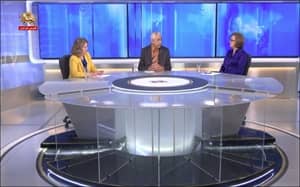
The testimonies of former political prisoners offer a firsthand account of the systematic repression that took place in Iran’s prisons during the 1980s. Speaking on Iran National Television (INTV), former prisoners Mina Entzari, Shila Ninavaei, and Amir Borjkhani recalled years spent in Evin, Qezel Hesar, and Gohardasht prisons, describing torture, executions, overcrowding, and the resistance of prisoners who refused to surrender.
Their accounts also show that the brutality inside the prisons was accompanied by a determination among political prisoners to preserve their dignity and beliefs.
Shila Ninavaei was only 15 when she was arrested in November 1981. She spent several years in prison, including periods in Evin, Qezel Hesar, and the Joint Committee detention center.
She recalled that arrests were exceptionally widespread when she first arrived at Evin.
“When we entered the courtyard of Evin, arrests were extremely widespread,” Ninavaei said. “The interrogators and executioners were congratulating each other, saying that we had all come back with our hands full.”
Why Is Iran’s Regime Increasingly Alarmed by the Younger Generation?
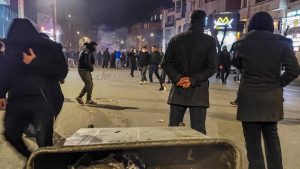
As Iran’s international isolation and deepening internal crises intensify, an increasingly familiar theme is emerging from the regime’s pulpits, media outlets, and official statements: growing concern over the younger generation’s attraction to the People’s Mojahedin Organization of Iran (PMOI/MEK) and the Resistance Units.
The repeated warnings are significant because they come at a time when economic hardship, political instability, repression, and widespread public anger have created increasingly volatile conditions across Iran.
Regime officials clearly understand that the danger is not simply the existence of an opposition organization. Their concern is the potential combination of a deeply dissatisfied society with an organized resistance capable of mobilizing that discontent.
The latest example came on August 21, when the director-general of a regime foundation in Khorasan Razavi called the need to counter the PMOI’s influence a pressing concern. He stated that “recognizing the true face” of the organization was a necessity for today’s society and generation.
Iran’s Regime Faces a Double Crisis: Exploding Prices and Intensifying Power Struggles
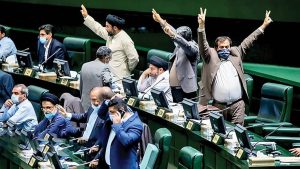
The Iranian regime is facing a growing convergence of economic and political crises. While regime officials publicly call for economic measures adapted to “wartime conditions,” their own statements reveal growing concern that further price increases could trigger a new wave of social unrest.
At the same time, factional warfare within the ruling establishment is becoming increasingly open, exposing divisions that were previously concealed behind calls for unity. On August 19, parliamentarian Hamidreza Haji-Babaei warned about the consequences of rising prices and shocks to the cost of essential services, including gas, electricity, water, and gasoline. Another parliamentarian, Mohammad Saeedi, issued an even more direct warning, describing the situation as an “explosion of high prices” and urging officials to pay attention to what he called the “bomb” of inflation.
These statements are significant because they come from within the regime itself. They demonstrate that officials are not merely confronting an economic problem; they are increasingly concerned about the political and security consequences of that problem.
Iran: Water, Electricity Bills Increase by Up to Five Times
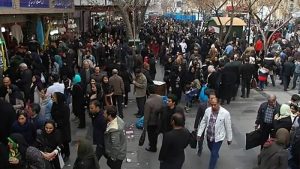
Water and electricity bills for millions of Iranian households suddenly increased by as much as four times in June and July 2026. The surge came as Iran’s regime faced a massive budget deficit, raising the question of whether the government is replenishing its treasury at the expense of ordinary people.
The sudden increase in water and electricity bills in June and July 2026 shocked many households. Some customers reported that their bills rose from about 3 million rials (about $2) in June to between 8 million and 10 million rials in July. The increase reached 300% and, in some cases, even more. Iranian regime officials attributed the rise to households exceeding the official consumption threshold. However, multiple reports indicate that the tiered pricing structure and pressure from the regime’s enormous budget deficit played a role in the increase.
In ordinary regions, the official consumption threshold for the warm months is set at 300 kilowatt-hours. This is a very low limit, and by setting it at this level, the regime effectively classifies even low-consumption households as high-consumption users. Exceeding this threshold moves customers into higher pricing tiers, where rates multiply.
Western Sanctions Against Iranian Regime and Its Proxies in the Region

On Thursday, August 20, the U.S. Department of the Treasury’s Office of Foreign Assets Control (OFAC) announced in an official statement the imposition of new sanctions against a broad and complex money-smuggling network operated by the Islamic Revolutionary Guard Corps (IRGC) and Lebanese Hezbollah. Meanwhile, U.S. Treasury Secretary Scott Bessent promised the most severe sanctions in history against the Iranian regime for the following Monday.
The U.S. Department of the Treasury said the sanctions target 10 individuals for facilitating and physically transferring hundreds of millions of dollars in cash for the “IRGC Quds Force” and “Lebanese Hezbollah.”
According to the U.S. Treasury Department statement, nine Turkish citizens and one Iranian citizen named Masoud Mosafer were added to the U.S. sanctions list on suspicion of links to Lebanese Hezbollah or the IRGC Quds Force.
According to the information released in the statement, the 10 individuals resided in Turkey or the United Arab Emirates.
Livelihood Protests Sweep Iran’s Streets Again
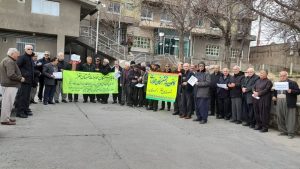
On Monday, August 24, groups of workers, retirees, drivers, car customers, and people demanding access to water staged protests and strikes in several Iranian cities over unpaid claims, livelihood problems, economic uncertainty, and their demands being left unanswered.
A group of telecommunications retirees in Tehran held a protest rally and march outside the Ministry of Communications and Information Technology.
The retirees protested what they called the “denial of their rights” by major shareholders of the Telecommunications Company, including the “Execution of Imam Khomeini’s Order” and the “IRGC Cooperative Foundation.” The failure to implement wage adjustments and the 2019 employment and welfare regulations were among their other main grievances.
The protesters also chanted slogans against the minister of communications, accusing him of supporting the major shareholders of the Telecommunications Company.
Among the retirees’ slogans was: “Retiree, shout out, cry out for your rights.”
Iran’s Rial Sinks Past 2 Million to the Dollar as Fuel Cuts and Blackouts Deepen Political Infighting

TEHRAN — In the first days of Shahrivar 1405, three warning signs appeared almost simultaneously. The dollar crossed 200,000 tomans for the first time and, according to Tose’e Irani, rose to 202,000 tomans the following day; the government confirmed that gasoline quotas would be reduced; and Donya-e Eqtesad reported that electricity shortages were constraining not only traditional industries but also the expansion of data centers and the digital economy.
The three crises have now become a battleground over responsibility. Government officials point to the war, restrictions on oil sales, limited resources and the need to reform consumption; critics within the political establishment cite poor market management, negative government messaging, infrastructure weaknesses, executive inefficiency and even parliament’s performance.
Hooman Omidi, a financial markets analyst, rejected a single-cause explanation for the dollar’s surge in an interview with Tose’e Irani. He said the rise in the exchange rate began with news of tougher sanctions, but warned: “If the government does not find a way to regulate the currency market, or if, at the broader level, the outlook for foreign currency entering the country is endangered, then the 200,000-toman range for the dollar will not be temporary either.”
Iranian Resistance Supporters in Oslo Condemn Executions, Endorse NCRI as Democratic Alternative
Oslo, Norway – August 22, 2026 – Supporters of the Iranian Resistance held a rally in Oslo to condemn the execution of political prisoners and the continued detention of protesters arrested during Iran’s January 2026 uprising.
Participants paid tribute to the victims by holding their photographs and reaffirmed their commitment to continuing the struggle until the overthrow of the regime and the establishment of peace, freedom, and justice in a democratic republic.

They called for regime change and urged the Norwegian government to adopt a firm stance against the regime’s ongoing human rights violations. They also demanded the closure of the Iranian regime’s embassy in Norway, describing it as a center for espionage and terrorism.
The protesters rejected all forms of dictatorship, whether monarchical or theocratic, emphasizing their opposition to both the rule of the Shah and the current mullah-led regime. They expressed support for the National Council of Resistance of Iran (NCRI) as a democratic alternative.
Vancouver Rally Condemns Executions in Iran, Calls for a Democratic Republic
Vancouver, Canada – August 22, 2026: Supporters of the People’s Mojahedin Organization of Iran (PMOI/MEK) held a rally in Vancouver to condemn the execution of political prisoners in Iran, including PMOI members and protesters detained during the January 2026 uprising.

Demonstrators denounced the executions as a grave violation of human rights and condemned what they described as the Iranian regime’s continued repression of political opponents and peaceful protesters. Participants paid tribute to the victims by holding their photographs and honoring their memory.
Amsterdam Rally Honors 1988 Massacre Victims, Calls for End to Executions in Iran
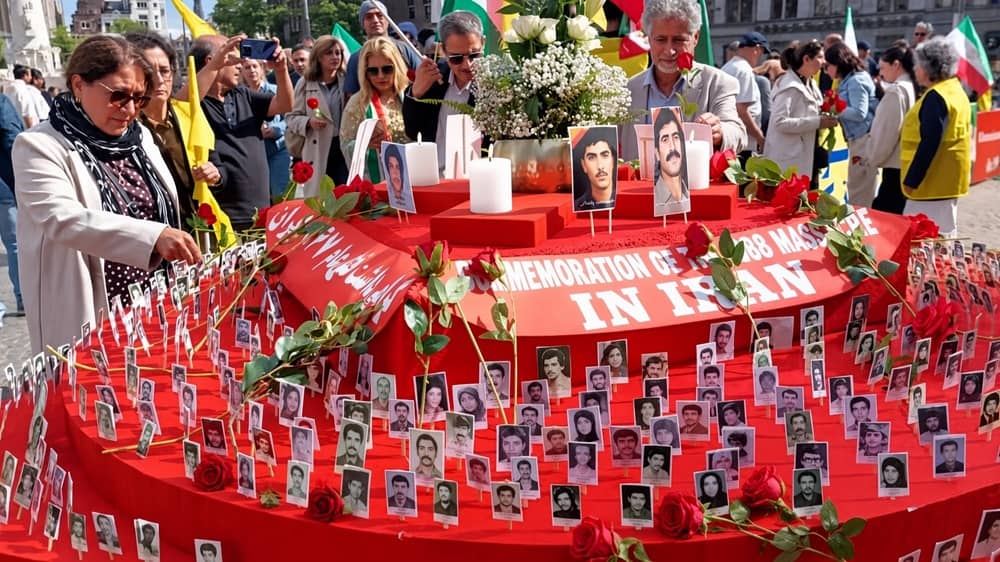
Amsterdam, Netherlands – August 22, 2025 — Supporters of the People’s Mojahedin Organization of Iran (PMOI/MEK) gathered at Dam Square in Amsterdam to commemorate the victims of the 1988 massacre, when more than 30,000 political prisoners were executed in the summer of 1988 following orders by Ruhollah Khomeini. Photographs of the victims were displayed alongside documentation of the killings of protesters in Iran’s uprisings, including executed protesters arrested during the January 2026 uprising and political prisoners, including MEK members executed this year.

Demonstrators condemned the Iranian regime’s use of executions as a tool of repression. They called for an end to state violence, regime change, and the establishment of a democratic republic in Iran. They also demanded the immediate abolition of the death penalty and the release of all political prisoners.