

THIS PAGE WILL BE UPDATED WITH THE LATEST NEWS
UPDATE: 9:00 PM CEST
US Treasury Suspends Licenses for Iran Sports and Education Activities

The US Treasury Department’s Office of Foreign Assets Control has indefinitely suspended five general licenses that previously allowed Americans to engage in sports, academic, and educational exchanges with Iran. The move, announced on August 24, eliminates some of the last remaining carve-outs for non-commercial engagement between the two countries. The suspended licenses include General License F, which covered sports exchanges, and General License G, which governed academic and educational services. Three additional regulatory sections under the Iranian Transactions and Sanctions Regulations were also frozen, covering non-commercial personal remittances and services related to conferences.
What exactly got shut down
The Iranian Transactions and Sanctions Regulations, codified at 31 CFR Part 560, broadly prohibit most transactions between US persons and Iran. Within that framework, OFAC has historically issued general licenses, blanket permissions that allow specific categories of activity without requiring individual approval. General License F let American athletes and sports organizations participate in exchanges with Iranian counterparts. General License G did the same for universities, researchers, and educational institutions.
Islamic Revolutionary Guard Corps (IRGC) Key Leaders

Rewards for Justice is offering a reward of up to $10 million for information on the key leaders of Iran’s Islamic Revolutionary Guard Corps (IRGC) and its component branches. These individuals command and direct various elements of the IRGC, which plans, organizes, and executes terrorism around the world.
The Islamic Revolutionary Guard Corps (IRGC), part of Iran’s official military, plays a central role in Iran’s use of terrorism as a key tool of Iranian statecraft.
In addition, the IRGC has created, supported, and directed other terrorist groups. The IRGC is responsible for numerous attacks targeting Americans and U.S. facilities, including those that have killed U.S. citizens. Since its founding in 1979, the IRGC has gained a substantial role in executing Iran’s foreign policy. The group now wields control over vast segments of Iran’s economy and is influential in Iranian domestic politics.
UPDATE: 7:00 PM CEST
Finding an Offramp for the War in Iran

The war between the U.S. and Iran has now passed the five-month mark, and there is still no end in sight. The White House and the media have repeatedly teased imminent ceasefire agreements, only for it to become clear within days that the cycle of negotiation and conflict is returning directly to its starting position. The Islamic Republic therefore continues to suffer severe and wide-ranging losses and will no doubt continue to do so until something significant changes to upend the fruitless process that we have all been watching unfold repeatedly.
The Iranian regime is the intransigent party in this process, and it has shown no interest in finding a peaceful solution. All mainstream recommendations have simply vacillated between proposals for stronger military action and appeals for more negotiations. Both have proven ineffective.
Thirty-eight years ago, the Middle East faced a similar predicament regarding the Islamic Republic. The Iran-Iraq War had continued unabated for eight years, and the Iranian regime’s founder, Ruhollah Khomeini, publicly presented an image of unparalleled intransigence. Khomeini vowed to continue the war for twenty years, even if it meant fighting from the last building left standing in Tehran.
UPDATE: 9:00 AM CEST
United States Sanctions Oil Trader Wellbred Over Iran Links
SINGAPORE, Aug 25 (Reuters) – The United States imposed sanctions on Singapore-based Wellbred Capital and its trading firms in the United Arab Emirates and Switzerland, citing links with Iran, as it steps up measures to target Tehran’s global financial links.
The company had ties to Iranian oil shipping magnate Mohammad Hossein Shamkhani, the U.S. Treasury’s Office of Foreign Assets Control said on its website on Monday.
“Shamkhani built Wellbred as a company outside the network’s Iranian business, though Shamkhani is ultimately responsible for Wellbred’s operations,” it added in a statement outlining the measures targeting nearly 60 companies, individuals and ships.
Wellbred did not immediately respond to a request for comment.
Also sanctioned were Dubai-based Wellbred Trading FZCO, Wellbred Trading SA in Geneva and its French biofuels refinery La Nivernaise de Raffinage SAS.
With headquarters in Singapore, Wellbred trades in oil, naphtha, petrochemicals and liquefied petroleum gas and has offices in the United Arab Emirates, Switzerland, Saudi Arabia and Nigeria, it says on its website.
U.S. Implements Operation Economic Outcast Sanctioning Iran’s Military Activities, Cyber Threats, and Illicit Oil Trade

Today, the United States took sweeping action against multiple entities, individuals, and vessels enabling the Iranian regime’s destabilizing activities. Such activities include attacks against U.S. forces and allies in the region, illicit weapons procurement, cyber intrusions into American infrastructure, and the movement of energy products whose sale funds terrorism globally
The measures target Iranian military officials responsible for procuring weapons and directing attacks against U.S. servicemembers and regional partners, Iran-based entities that gathered intelligence for targeting U.S. forces and allies, and a procurement ring supplying Iran’s military and missile programs. They also target a regime-directed cyber group responsible for extensive intrusions into U.S. critical infrastructure. Finally, we are targeting a sprawling group of shippers and brokers moving Iranian petroleum as well as petroleum and petrochemical products through the UAE, China, Singapore, and Europe to bankroll the U.S.-designated Islamic Revolutionary Guard Corps-Qods Force (IRGC-QF) and other regime elements.
The cyber component of today’s action was carried out in close coordination with the FBI, which announced last week indictments against eight Iranian nationals tied to a hacking campaign that compromised U.S. energy companies, defense contractors, healthcare institutions, and government offices at the local, state, and federal levels.
UPDATE: 7:00 AM CEST
Iran’s Economy in Freefall: A Powder Keg Awaiting the Spark of a New Uprising
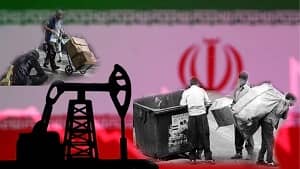
Iran’s economy has reached a historic breaking point, characterized by a collapsing currency, crippling fuel shortages, and a devastated population. The clerical regime is paralyzed by a fatal deadlock. While it attempts to use regional warmongering to distract from domestic crises, this very strategy is creating an explosive economic environment. State media and officials are openly expressing their terror of a looming, hybrid social eruption that could finally sweep the dictatorship from power.
The Iranian regime’s warmongering and systemic corruption have destroyed the national currency, erasing the purchasing power of ordinary Iranians and placing their livelihoods in a highly explosive state.
The US dollar has crossed the unprecedented 2,000,000-rial threshold, reaching 2,037,000 rials for selling and 2,036,000 rials for buying on the free market as of Monday morning. Other major foreign currencies are experiencing a similarly staggering surge, with the euro hitting 2,377,500 rials, the British pound soaring to 2,779,000 rials, and the UAE dirham reaching 556,000 rials.
Senior IRGC Official Urges Nuclear Weapons Development, Threatens Persian Gulf Oil Routes
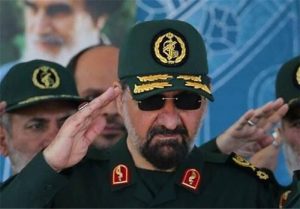
In a sharply escalatory address reflecting deepening strategic desperation in Tehran, Mohsen Rezaei, Secretary of the regime’s Supreme National Security Council and a veteran commander of the Islamic Revolutionary Guard Corps (IRGC), has openly called for Iran to construct nuclear weapons.
Declaring the atomic bomb “cheaper and far more effective” than conventional military assets, Rezaei also issued sweeping threats to sever all oil shipments across the Persian Gulf, target regional states cooperating with U.S. sanctions, and enforce strict, unconditional obedience behind the Supreme Leader across all branches of government. Dismissing international non-proliferation frameworks following strikes on Iranian nuclear infrastructure, Rezaei stated: “Why shouldn’t we go ahead and build a bomb so that no one can attack us?”
He asserted that recent developments have exposed the futility of the Non-Proliferation Treaty (NPT) and International Atomic Energy Agency (IAEA) mechanisms, claiming: “They have realized that having a nuclear bomb is far cheaper and more effective than hundreds of F-35 fighter jets and enormous military expenditures.”
Jailed Protester Mahboubeh Shabani Goes on Hunger Strike Over Prison Abuse

Mahboubeh Shabani, a detainee from the January 2026 protests held in Vakilabad Prison in Mashhad, has gone on a hunger strike to protest deteriorating prison conditions, unresolved judicial status, and denial of medical care. The hunger strike of Mahboubeh Shabani at Vakilabad Prison began on Thursday, August 20.
Social media reports indicate that on the third day of her hunger strike, prison authorities transferred Mahboubeh Shabani to Ward 6 under pressure and threats, severing her telephone access and family visitation rights.
An informed source close to her family confirmed the news regarding Mahboubeh Shabani, stating: “Ms. Shabani went on a hunger strike on Thursday, August 20, 2026, to protest her harsh detention conditions, indefinite judicial status, and the denial of medical treatment for her physical ailments. Currently transferred to Ward 6 of Vakilabad Prison, she has been shuffled at least six times between the ‘Aramesh’ (isolation) ward and quarantine units. Furthermore, she developed a severe skin disease on the back of her neck during detention and has received no proper medical attention.”
Iran Has Moved Beyond Reformism: The Myth of Change Within the Regime
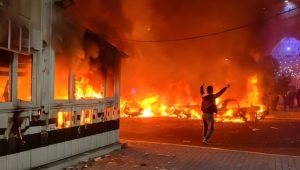
For 47 years, the Iranian people have lived under a system of clerical rule that has survived by moving from one crisis to another. Whenever political, economic, or social pressures have threatened its stability, the regime has relied on repression, emergency measures, legal manipulation, and promises of limited adjustment.
But after decades of experience—and six major nationwide uprisings—the relationship between Iranian society and the ruling establishment has fundamentally changed.
The question facing Iran is no longer whether the regime should be governed by “reformists” or “hardliners.” Increasingly, the question is whether a system that has produced decades of repression, executions, corruption, economic deprivation, and political exclusion can continue at all.
For years, the reformist-versus-hardliner dichotomy was presented as the central political choice available to Iranians. Reformists promised moderation, gradual change, dialogue, and greater openness, while hardliners defended a more uncompromising version of the same political structure.
Why Iran’s Regime Is Afraid to Give Up the Streets
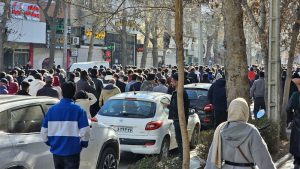
For months after the end of the 40-day war with the United States and Israel, the Iranian regime has continued organizing nightly rallies and gatherings in cities across the country. State media portray these events as demonstrations of “deterrence” against external enemies.
But the regime’s own statements suggest another explanation.
The persistent emphasis on keeping its supporters in the streets appears increasingly connected to a domestic concern: the fear that the streets could once again become the center of nationwide protests.
The regime is not simply trying to demonstrate strength to its external adversaries. It appears determined to keep control of public spaces that have repeatedly become the focal point of popular uprisings.
The roots of this fear can be traced to the nationwide uprising that began in Tehran on December 28, 2025, and rapidly spread to more than 400 cities and towns across all 31 provinces.
Iran’s Oil Trusty Scandal Exposes a Web of Security Ties, Insider Networks, and Missing Billions
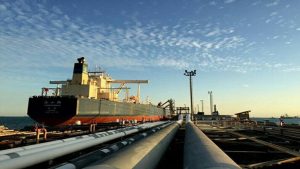
Every day, new details are emerging about Iran’s so-called “trusty” scandal—a sprawling case involving hundreds of billions of dollars in oil revenues and foreign currency allegedly not returned to the country’s economic cycle.
The allegations point to a network that allegedly includes former security officials, relatives of senior regime figures, and businessmen and intermediaries who have operated for years within Iran’s foreign trade and oil-export structures.
The central question is straightforward: How were individuals with such political, security, and commercial connections entrusted with oil transactions worth billions of dollars in the first place?
And perhaps more importantly, why did some of them allegedly remain active in oil transactions even after accumulating enormous debts?
At the heart of the allegations is a figure known as “Shayan,” whose real identity has not been publicly established.
Iran’s Dollar Crisis Pushes the Regime Toward Another Social Explosion

The Iranian currency has fallen to a historic new low, with the dollar breaking through the 200,000-toman threshold. The unprecedented plunge is intensifying an already severe cost-of-living crisis, pushing inflation and prices higher while further eroding household purchasing power.
For millions of Iranians already struggling with poverty, unemployment, and soaring living costs, the currency collapse represents more than an economic statistic. It is another layer of pressure on households whose ability to absorb additional shocks has been exhausted.
The regime’s policies have played a central role in creating this crisis. Resources that could have been directed toward the economy and public welfare have instead been consumed by military ambitions, regional intervention, and the entrenched networks of corruption surrounding the Islamic Revolutionary Guard Corps (IRGC).
The consequences are increasingly difficult for the regime itself to conceal.
U.S. Announces the Start of Economic D-Day Against the Iranian Regime
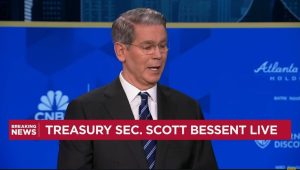
U.S. Treasury Secretary Scott Bessent announced that Washington would enter a new and unprecedented phase of economic pressure against the Iranian regime starting Monday, August 24, aimed at cutting off the regime’s financial and economic lifelines and intensifying Tehran’s isolation.
U.S. Treasury Secretary Scott Bessent announced Sunday evening, Washington time, that a wide-ranging operation to increase economic pressure on the Iranian regime would begin early Monday. Bessent described this phase by referring to the military term “D-Day” and said the United States had entered the “endgame.” He described the action as the “largest financial assault” against an adversary, targeting the Iranian regime’s economic capabilities.
The U.S. Treasury secretary said the main objective of the pressure was to cut off vital economic channels that, he said, have enabled the survival of the Iranian regime. Bessent emphasized that Washington intends to block these lifelines so that the Iranian government ultimately faces complete isolation.
Iran’s Regime Upholds Death Sentence of Political Prisoner Arghavan Fallahi

The death sentence of Arghavan Fallahi, a 24-year-old political prisoner held in the women’s ward of Evin Prison in Tehran, has been upheld by the Supreme Court, and the decision has been formally communicated to her lawyer. The development comes after months of detention, solitary confinement, and reports of psychological pressure and restrictions on her defense, increasing the risk that her death sentence could now be carried out.
According to published reports, Arghavan Fallahi was sentenced to death on July 1 by Branch 15 of the Tehran Revolutionary Court, presided over by Judge Abolghasem Salavati, on the charge of “baghi” (armed rebellion against the state). The sentence has now been upheld on appeal, and the Supreme Court’s decision has been conveyed to her lawyer.
The Supreme Court’s confirmation marks the end of the ordinary appeals process, although other legal avenues, including a request for judicial review, may still be pursued. However, as of the publication of this report, the Supreme Court branch number, the exact date of the ruling, the full text of the judgment, and the court’s legal reasoning have not been made public. It also remains unclear whether Fallahi’s lawyer has been granted access to the complete case file and the full ruling, limiting independent assessment of the judicial process.
Iran: Detention, Torture, Sexual Assault, Mock Execution
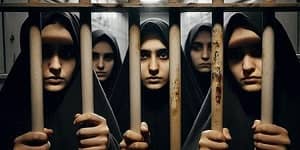
To protect the prisoner and their family, their identity, as well as the exact time and location of detention, are withheld. This report is compiled based on the direct testimony of this prisoner regarding the arrest, interrogation, transfers between detention facilities, and the physical and psychological aftermath following the temporary release.
The prisoner states that during an extended period of detention in facilities across Tehran and Sanandaj, he and other prisoners were subjected to prolonged solitary confinement, physical beatings, threats, denial of contact with family and legal counsel, deprivation of medical care, forced administration of unidentified pills, three instances of sexual assault, and a mock execution. According to the prisoner, a major portion of these pressures aimed to coerce them into confessing to charges and signing documents whose contents they rejected.
According to this prisoner, following their arrest, officers blindfolded them and transferred them to an unknown location without providing any reason for the arrest, charges, or destination, placing them directly into solitary confinement.
Iran’s President and Parliament Speaker Accused by Hardline Media of Signaling Weakness Over US Talks
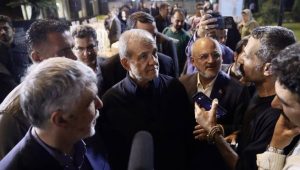
TEHRAN — Disagreement over how Iran should respond to war, sanctions and negotiations with the United States has openly spilled into the ruling establishment. President Masoud Pezeshkian is defending diplomacy and emphasizing the country’s economic pressures, while hardline politicians and media are accusing senior state officials of signaling weakness to Washington.
Pezeshkian has argued that the government cannot separate its foreign-policy decisions from the economic and security pressures facing the country. Responding to opponents of the understanding with the United States, he said those criticizing it were not directly bearing the burden of the crisis. “We are doing everything we can in the face of these difficulties, but we are ashamed that problems exist, because we are in an all-out economic, military and security war.”
The criticism has not been limited to Pezeshkian. Kayhan, a newspaper close to hardline factions, accused the president, Parliament Speaker Mohammad Bagher Ghalibaf and Iran’s negotiating team of sending signals of weakness to the enemy. The newspaper described them as “completing a puzzle” whose final outcome would be “to evoke an image of surrender and instill the necessity of retreat.”
MEK Supporters in Lugano Condemn Iran Executions and Call to Abolish the Death Penalty
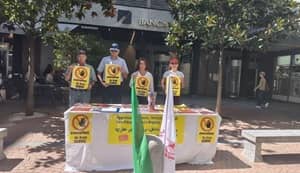
Lugano, Switzerland – August 2026: Supporters of the People’s Mojahedin Organization of Iran (PMOI/MEK) set up a book table and photo exhibition condemning the mullahs’ regime executions and demanding an end to the death penalty. They called for global action to stop executions in Iran and protested the execution of PMOI political prisoners, along with protesters arrested in January 2026. The event also expressed solidarity with the “No to Execution” campaign.
The exhibition backed the NCRI President-elect Maryam Rajavi’s “No to Executions” campaign, calling for its global expansion. It also reaffirmed the call for a secular, democratic republic—rejecting both theocracy and monarchy.
The event echoed the Iranian Resistance’s message: no to war, no to appeasement, and yes to peace and freedom through the overthrow of the regime by the Iranian people and their organized resistance, along with the establishment of a provisional democratic republic in Iran.
Swiss citizens visiting the exhibition showed solidarity by signing a petition supporting the Iranian nationwide uprising.
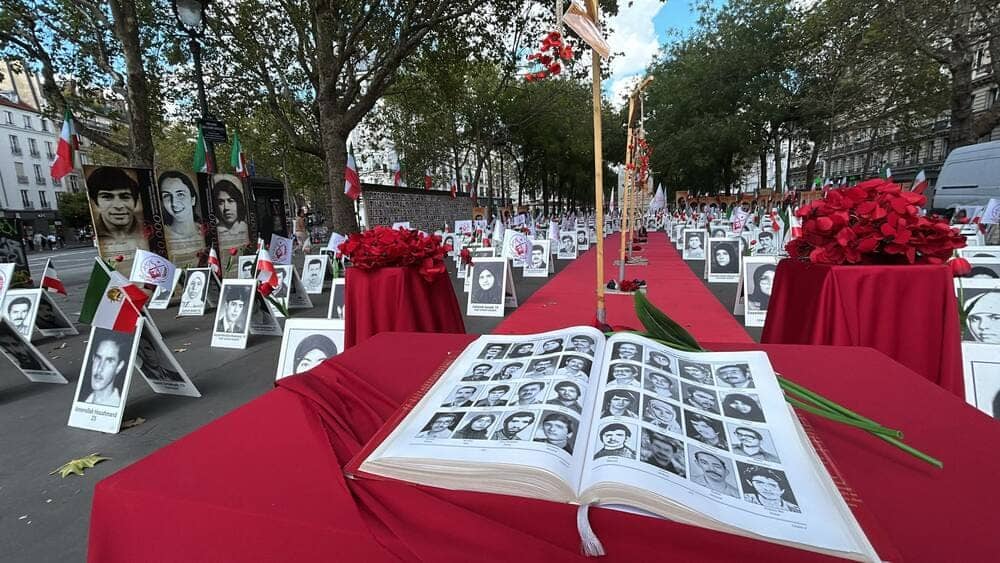
Paris Exhibition Honors 1988 Massacre Victims and Calls for an End to Executions in Iran
Paris, August 22, 2026 — For the fourth consecutive week, supporters of the People’s Mojahedin Organization of Iran (PMOI/MEK) held a photo exhibition accompanied by a rally and public action in Paris, drawing attention to Iran’s escalating executions and calling for an end to the death penalty. After being held at different locations across the French capital in previous weeks, this week’s exhibition and gathering took place at Place de la Bastille on Saturday, August 22.

Held under the slogan “Stop Executions in Iran,” the event was organized by supporters of the PMOI and the National Council of Resistance of Iran (NCRI). It honored recently executed PMOI members and protesters killed during Iran’s nationwide uprising in January 2026, while highlighting the growing number of executions in Iran since the beginning of the year.
Stockholm: PMOI Supporters Rally Outside Swedish Parliament to Condemn Executions in Iran
Stockholm, Sweden – August 22, 2026: Supporters of the People’s Mojahedin Organization of Iran (PMOI/MEK) gathered outside the Swedish Parliament in Stockholm to condemn the execution of Ghaem Hosseini and Shahram Sadeghi, two protesters detained during Iran’s January 2026 nationwide uprising. The demonstrators also called for an immediate end to the execution of PMOI political prisoners and other activists detained during the January 2026 uprising.

The protesters called on the Swedish government to take decisive action against the Iranian regime in response to what they described as its ongoing executions and terrorist activities. Their demands included the closure of the Iranian regime’s embassy in Stockholm, which they described as a center for espionage and terrorism. They also called for the immediate and unconditional release of all political prisoners and protesters detained in Iran.
PMOI Supporters in Gothenburg Commemorate Dr. Mohammad Mossadegh, Honor Victims of Iran’s Repression
Gothenburg, Sweden – August 22, 2026: Supporters of the People’s Mojahedin Organization of Iran (PMOI/MEK) gathered in Gothenburg to commemorate the legacy of Dr. Mohammad Mossadegh, the leader of Iran’s national movement, on the anniversary of the August 19, 1953, coup that overthrew his democratically elected government. Participants condemned the collaboration of the Shah, the clerics, and colonialism in carrying out the August 19 coup and reaffirmed their opposition to dictatorship in all its forms.

The gathering also honored the memory of Nasrin (Akram) Shahrabi and Mozhgan Mahdavi, members of the PMOI’s Central Council who recently passed away following illness. Participants also commemorated Shahram Sadeghi and Ghaem Hosseini, two political prisoners and protesters from Iran’s January 2026 nationwide uprising who, according to the organizers, were recently executed by the Iranian authorities.