

Three-minute read
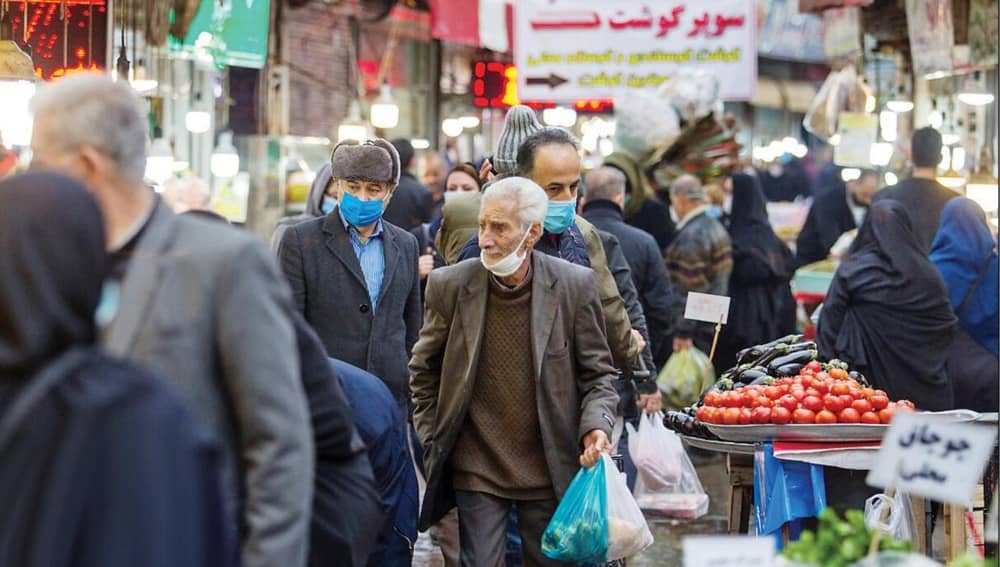
Iran’s economic structure is undergoing a severe systemic crisis, driven by runaway hyperinflation and extreme currency depreciation. On August 23, 2026, the US dollar breached the historic threshold of 200,000 tomans in Tehran’s free market, while the price of red meat recorded a 160 percent annual increase, effectively halving per capita monthly meat consumption to under 500 grams according to state-sanctioned distribution reports. Meanwhile, Iran’s Supreme Audit Court revealed that the Central Bank recorded 77 trillion tomans in net profit for the fiscal year ending 2026—a structural anomaly generated not by productivity, but by drastic currency devaluation, asset revaluation, and unbacked money printing that pushed point-to-point inflation to 88 percent.
This acute erosion of purchasing power has shattered the state’s domestic social contract, mobilizing once-quiescent demographics into open protest. On August 23, social security and industrial retirees staged coordinated demonstrations across Shush, Isfahan, Kermanshah, and Bandar Anzali. Crucially, the rhetoric on the street has evolved beyond standard labor grievances; protesters in Shush explicitly linked foreign policy to domestic deprivation, chanting: “Enough warmongering, our table is empty!” These demonstrations highlight how socio-economic exhaustion is fusing directly with broader political opposition.
In response, the security apparatus has intensified domestic control, treating civilian technology and political dissent as existential threats. On August 21, the police security command (FARAJA) reported confiscating 997 Starlink satellite terminals over four months—nearly ten times the total seized during nine months of the previous year—following a prolonged nationwide internet blackout. This digital crackdown coincided with heightened academic purges, as 36 faculty members at Sharif University of Technology issued an open letter on August 22 protesting the expulsion of student dissidents. Simultaneously, armed clashes in Kermanshah on August 20 resulted in the death of 29-year-old Yarsani youth Pouria Naderi, underscoring the militarized posture of state intelligence organs toward regional minorities. His funeral, held under heavy security watch, drew grieving relatives and members of the local community who turned the mourning ceremony into an impromptu expression of defiance against state repression.
Iran’s #economy is not merely poor — it is poverty administered with systemic insult. Blackouts, soaring food prices, empty reservoirs, and a regime that answers only with bullets. The old arithmetic of #terror is failing.
Hunger does not get tired. pic.twitter.com/OYs7vVX79a
— NCRI-FAC (@iran_policy) August 23, 2026
Ideological Schisms and Presidential Pushback
This compounding domestic crisis has severely fractured the ruling elite, triggering an open struggle over state survival strategies. On August 21, Iranian State Television broadcast an address by the regime’s president Masoud Pezeshkian, who walked a careful political tightrope to avoid alienating the regime’s demoralized loyal forces while simultaneously signaling a readiness for backchannel diplomacy with Washington. Pezeshkian insisted that Tehran had not conceded terms, structuring negotiations strictly around economic relief: “We said he must lift sanctions, lift the siege, give our money… and ultimately we will sit down and discuss the nuclear issue.”
Pezeshkian’s overtures drew immediate condemnation from the security establishment. On August 21, Fars News Agency, an outlet affiliated with the Islamic Revolutionary Guard Corps (IRGC), published a scathing editorial accusing Pezeshkian of adopting the “language of weakness.” Demanding to know how the government intended to end a conflict imposed by foreign adversaries, the IRGC mouthpiece asked: “Do we go and beg the aggressive enemy for a ceasefire?” The editorial warned that “populist statements” signal to adversaries that Iran is eager to leave the battlefield.
Amid this deadlock, figures within the leadership have voiced dire warnings regarding the state’s economic limits. On August 20, Parliament Speaker Mohammad-Bagher Ghalibaf addressed business leaders, stating explicitly: “No matter how much military power we have, if our people are hungry, if we have no financial turnover, no economic growth, and no national production, we cannot survive.” Acknowledging that Iran has endured half a century in a state of “neither war nor peace,” Ghalibaf warned that unchecked poverty destroys both social cohesion and national dignity.
"The clerical regime in Iran is facing a compounding crisis as #economic mismanagement, hyperinflation, and public outrage converge, forcing senior officials into unprecedented admissions of failure," @MansoreGolestan writes.https://t.co/iakYpfvgi0
— NCRI-FAC (@iran_policy) August 17, 2026
Escalating Ultimatums and Systemic Risk
The internal rift is further exacerbated by hardline clerical figures who reject political maneuvering in favor of strategic escalation. In Friday prayer sermons on August 21, Mashhad Friday prayer leader Ahmad Alamolhoda ridiculed proposed negotiations with Washington, asking why officials believed they could handle America differently than under the JCPOA. Simultaneously, in Sari, Mohammad-Baqer Laini asserted: “Negotiating with Oman means negotiating with America… Now that we have taken the Strait of Hormuz, we must speak to America in the language of force.”
At the same time, the state faces a precarious dilemma regarding domestic energy subsidies. State economists and parliamentary research directors have issued severe warnings against raising fuel prices to offset budget deficits. On August 21, officials from the Parliamentary Research Center cautioned that abrupt policy shifts risk repeating the violent mass unrest of November 2019, noting that the bitter memory of that period remains fresh in the public consciousness. Economists speaking to state media noted that floated psychological price shocks—ranging up to 87,000 tomans per liter—could trigger uncontrollable civil disruption.
Iran stands at a structural junction where economic insolvency, elite fragmentation, and grassroots resistance converge. The state’s traditional mechanisms of control—combining selective coercion with suppressive mobilization—are proving increasingly ineffective against a populace pushed to basic survival limits. As the ruling establishment splits over whether to pursue coercive escalation or economic concession, the compounding data indicates that Iran’s primary vulnerability is no longer merely external pressure, but an unsustainable internal fracture.