

Three-minute read
Iran’s currency crisis remained acute on September 4, with recent free-market quotations hovering around 223,000 tomans to the dollar after successive records during the week. Domestic outlet Didban Iran put the dollar at 223,250 tomans on September 3, while the rial’s renewed fall has increasingly exposed the distance between official assurances and market behavior.
Central Bank governor Abdolnaser Hemmati responded on September 4 by insisting that commercial demand does not face a serious foreign-exchange shortage. Yet he acknowledged that foreign currency supplied for imports has fallen 15 percent from a year earlier and attributed much of the remaining pressure to “precautionary,” “speculative” demand and, notably, capital flight. He promised that the bank would intervene “at the right time and with force” if exchange rates moved too far from what he called economic fundamentals.
The authorities are also increasingly treating the currency problem as a policing issue. On September 3, the Central Bank announced penalties against banks whose transaction infrastructure had allegedly been exploited by “disruptors” in the foreign-exchange, gold and precious-metals markets. The combination is revealing: officials deny a fundamental shortage while simultaneously acknowledging capital-flight demand, threatening intervention and tightening enforcement against market actors.
"A regime indicted so thoroughly by its own camps is irredeemably rotten to its core and cannot be saved. The Iranian people know the mirage of internal reform is dead; true salvation for the country lies not in fixing the clerical dictatorship, but in its absolute, unequivocal,…
— NCRI-FAC (@iran_policy) September 3, 2026
Internal rift deepens
The economic deterioration is intensifying factional warfare inside the ruling establishment despite Mojtaba Khamenei’s calls for cohesion. Former regime president Hassan Rouhani called for an “honorable” end to the war, urged support for negotiations and attacked state television for being dominated by “a limited group of a few dozen or a few hundred people.” His intervention adds to the increasingly public dispute over war, negotiations and management of the economic crisis.
Cleric and regime insider Rasoul Montajebnia went further, telling Setareh Sobh that the hardline current might number fewer than 500 people nationwide—his own estimate—and accusing IRIB of nightly “poisoning” against Pezeshkian’s administration. He directly attacked Kayhan editor Hossein Shariatmadari and even asked Mojtaba Khamenei to temporarily shut the broadcaster. The point is not that one faction is gaining ground, but that mutual attacks across the regime are becoming more open and more aggressive.
"The clerical dictatorship in Iran faces a convergence it cannot resolve through messaging. The rial is plunging despite official assurances, deficit financing is being acknowledged from inside the executive branch, and livelihood #IranProtests are spreading," writes…
— NCRI-FAC (@iran_policy) September 2, 2026
Hardliners, meanwhile, are escalating their own attacks. Hamid Rasaee launched a fresh broadside against the Iranian regime’s president, accusing Pezeshkian of projecting helplessness and portraying his willingness to revive negotiations as begging for an agreement. The exchange again demonstrates the failure of Mojtaba Khamenei’s effort to push factional warfare out of public view: each camp is increasingly invoking the country’s military and economic predicament to discredit the other.
China Dispute Exposes Another Fault Line
The argument has now spilled into Tehran’s relationship with China. Former parliamentary national-security committee chairman Heshmatollah Falahatpisheh described Xi Jinping’s treatment of Pezeshkian at the Shanghai Cooperation Organization summit as “cold,” declaring that what some officials had portrayed as a strategic friendship with Beijing was, in his words, little more than a “standing relationship.”
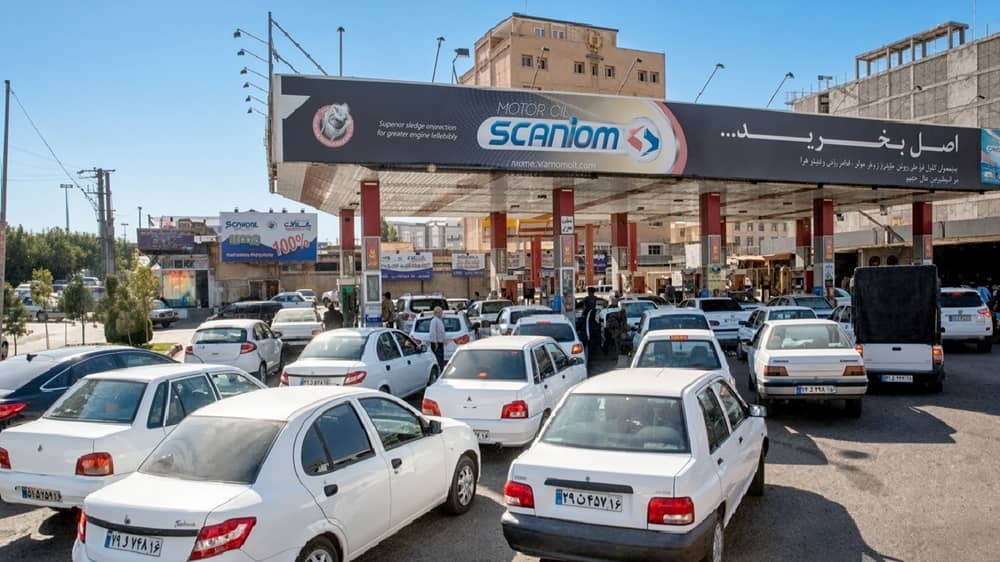
Tehran isn’t solving the #gasoline shortage. It’s sequencing the pain. @HakamianMahmoud shows how the regime tests an 87,200-toman price, retreats, then floats 10,000 as “moderate”—while stretching supply with weaker blends. The shock isn’t canceled. It’s postponed into queues,…
— NCRI-FAC (@iran_policy) September 2, 2026
An even sharper controversy followed when Hossein Marashi, secretary-general of the Executives of Construction Party, claimed that Beijing had attached conditions to parliament speaker Mohammad-Bagher Ghalibaf’s proposed China visit, including demands concerning the Strait of Hormuz and Tehran’s disputes with other governments. Ghalibaf’s office issued a rapid denial, saying attribution of such conditions to China was “without foundation.”
The latest phase of Iran’s crisis is therefore distinguished not only by economic deterioration but by the erosion of political discipline at the top. The Central Bank speaks openly of capital-flight demand while the rial remains near record lows; former presidents and clerics are attacking the hardline media apparatus; and senior establishment figures are publicly disputing whether Tehran’s proclaimed strategic relationships abroad are delivering what the leadership promised. Mojtaba Khamenei has demanded cohesion, but the pressures now bearing down on the clerical dictatorship are giving each faction stronger incentives to blame the others rather than remain silent.