
Three-minute read
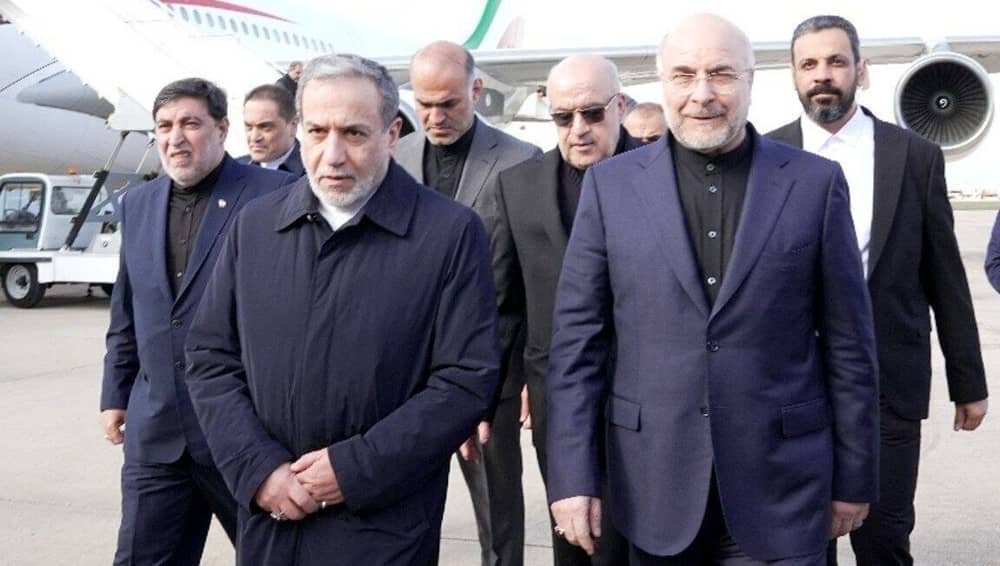
Iran’s ruling establishment is struggling to maintain a united front as negotiations with Washington proceed alongside threats of wider military confrontation. On November 3, Parliament Speaker Mohammad Bagher Ghalibaf explicitly linked the regime’s ability to deter adversaries to its internal cohesion, declaring that unity was its “strongest weapon” in another war.
Ghalibaf Warns of Divisions and Economic Disruption
In his November 3 parliamentary address, Ghalibaf dismissed reports of divisions among senior officials and insisted that the political, military and diplomatic leadership remained united. He said Tehran had delivered a “powerful and rational” response to Washington, but warned that another American attack would trigger retaliation without geographical limits. His repeated emphasis on cohesion reflects concern that factional disputes could weaken the regime’s ability to project strength at a particularly delicate moment.
Ghalibaf also acknowledged mounting economic pressures, warning that rising prices and inadequate market oversight were placing a heavy burden on households. He demanded urgent intervention and investigations into freight trucks stranded for days or weeks at border crossings. Against a backdrop of recurring protests and public discontent, his intervention also highlights the political risks posed by deteriorating living conditions, particularly as the ruling establishment struggles to maintain internal cohesion.
The clerical regime's own #economic reports reveal collapsing industrial output, mounting shortages and government decisions that threaten to accelerate the erosion of Iran's productive capacity.
By @MansoreGolestan https://t.co/faVhE9Gd2C— NCRI-FAC (@iran_policy) November 2, 2026
Intelligence Agencies Intensify Pressure on University Students
Beyond the November 3 sit-in at the University of Tehran, student sources reported an expanding security crackdown at other universities. At Zanjan University, intelligence officials and campus security reportedly threatened students associated with an independent student news channel after failing to identify its administrators. Students received threatening messages and warnings of prosecution unless they left the channel. The authorities allegedly labeled it an organization linked to opponents abroad.
In Sistan and Baluchestan, local reports described the interrogation of dozens of university students, with some allegedly pressured to make forced confessions and identify fellow activists. Several reportedly received two-semester suspensions. These accounts point to a broader effort to dismantle independent student networks through surveillance, intimidation and collective pressure. The reported tactics also help explain why the Tehran protesters demanded the abolition of disciplinary committees and the release of detained students.
Iran’s retirees protest #poverty, corruption and war as wheat prices jump 151% and hospitals report medicine shortages. Meanwhile, state-TV experts expose intelligence failures and regime newspapers warn that factional divisions are eroding public confidence. #Economic grievances…
— NCRI-FAC (@iran_policy) November 1, 2026
Medicine Shortages Expose Failures in Government Management
A November 3 investigation revealed a deepening crisis in access to essential medicines. Pharmaceutical representatives reported shortages of approximately 800 medicines, including 90 classified as vital. Patients with hemophilia, thalassemia and other chronic illnesses face interrupted treatment, while delayed foreign-currency allocations, unpaid insurance obligations and inconsistent quality control have compounded the shortages.
The financial burden is increasingly severe. One thalassemia medication reportedly rose from 70,000 to more than four million tomans per package, while another treatment could cost patients nearly 50 million tomans a month. Hemophilia association representatives said imported treatments remained unavailable even after shipments arrived because insurers had not settled payments. The findings expose a breakdown extending beyond medicine imports to government financing, distribution and oversight, leaving vulnerable patients to bear the consequences.
Iran’s regime faces mounting internal pressure: 392 illegal pension-fund directorships, depleted public finances, fuel #protests, and a worsening water crisis. Meanwhile, authorities seize a digital school’s assets, accelerate security prosecutions, and hardliners demand nuclear…
— NCRI-FAC (@iran_policy) October 31, 2026
Security Officer Killed; Student and Worker Protests Spread
In Saravan, Sistan and Baluchestan, authorities confirmed that an officer from the security forces was shot dead outside his home on November 3. Police subsequently promised to pursue the attackers. His killing follows the armed incidents in Kalgan and Bir village.
At the University of Tehran, social sciences students staged a sit-in demanding the release of detained students and political prisoners, an end to disciplinary punishments and accountability from university authorities. Protesters reportedly chanted, “Students are awake and reject despotism” and “We want neither war nor killing.”
Labor unrest was also reported on November 3. Tehran sanitation workers protested outside city hall over unfulfilled promises of direct employment, while workers at the Bonro automotive company in Saveh struck over months of unpaid wages. Another protest was reported by women in a village near Iranshahr over water shortages, unemployment and inadequate bread supplies.
November 3 exposed the mounting pressures on Iran’s ruling establishment as it struggles to contain socioeconomic crises, growing public discontent and factional infighting while simultaneously confronting international and regional challenges. Determined to project strength against its adversaries, the regime continues to prioritize military threats and confrontation even as domestic problems and internal divisions demand its attention. Its difficulty managing these pressures simultaneously reveals an increasingly strained system, whose efforts to demonstrate power abroad are undermined by its unresolved vulnerabilities at home.