

Three-minute read
Iran’s ruling factions are openly disputing how to restore military deterrence, with competing newspapers arguing over nuclear weapons, the failures of security institutions and the political costs of confrontation. The dispute coincides with fresh armed attacks in Sistan and Baluchestan, where continuing insecurity challenges the authorities’ claims of effective control.
Nuclear Escalation Divides the Establishment
The increasingly public dispute over nuclear doctrine exposes rival factions competing over how best to preserve the clerical dictatorship and protect it from further military setbacks. In a commentary titled Absolute Loss, the state-affiliated columnist challenged hardline demands to build nuclear weapons and withdraw from the Non-Proliferation Treaty (NPT), arguing that such rhetoric would not project strength but could invite further confrontation and jeopardize the regime’s security.
Meanwhile, Parliament Speaker Mohammad Bagher Ghalibaf reportedly declared, “Even if they hang me, I will never compromise with two currents”—religious traditionalists he accused of undermining clerical rule and secular liberals whom he accused of seeking the Islamic Republic’s dissolution through political normalization. According to MP Mojtaba Zarei’s account of their meeting, Ghalibaf also called for strengthening the new supreme leader’s authority during the leadership transition. His remarks expose the intensity of factional hostility and concern over maintaining the ruling establishment’s ideological cohesion.
The clerical regime's own #economic reports reveal collapsing industrial output, mounting shortages and government decisions that threaten to accelerate the erosion of Iran's productive capacity.
By @MansoreGolestan https://t.co/faVhE9Gd2C— NCRI-FAC (@iran_policy) November 2, 2026
A sharply contrasting editorial by the state-run Farhikhtegan argued that nuclear ambiguity should be expanded and that nuclear weapons could compensate for Iran’s conventional military disadvantages. It portrayed the existing confrontation as justification for advancing toward nuclear deterrence and suggested that the country’s political and military institutions were increasingly prepared for such a shift.
The dispute has extended beyond editorial commentary. Parliamentarians Ebrahim Rezaei and Mahmoud Nabavian have publicly advocated acquiring nuclear weapons, while Nasrollah Pejmanfar and Malek Shariati have called for withdrawal from the NPT. Deputy Speaker Ali Nikzad declared the nuclear-negotiation window closed.
Yet Secretary of the National Supreme Council of National Security Mohsen Rezaei acknowledged in a televised interview that no official decision to change nuclear doctrine had been taken.
Iran’s retirees protest #poverty, corruption and war as wheat prices jump 151% and hospitals report medicine shortages. Meanwhile, state-TV experts expose intelligence failures and regime newspapers warn that factional divisions are eroding public confidence. #Economic grievances…
— NCRI-FAC (@iran_policy) November 1, 2026
Rival Factions Attack One Another
The nuclear dispute is becoming an instrument of factional confrontation. In a hardline commentary, criticism of nuclear escalation by Reform Front spokesperson Javad Emam was attacked as inconsistent with national security. Emam had questioned the evidence behind claims of overwhelming public support for atomic weapons and warned about their consequences for Iran’s security, economy and future.
The commentary also attacked former foreign minister Mohammad Javad Zarif, illustrating how disagreement over nuclear weapons is being used to challenge the political legitimacy of advocates of accommodation.
Meanwhile, parliamentarian Mojtaba Zarei recounted a conversation with Speaker Mohammad Bagher Ghalibaf in which Ghalibaf reportedly vowed never to compromise with two currents: religious traditionalists he accused of undermining the Islamic Republic’s political foundations, and secular liberals whom he accused of seeking to dismantle the system through normalization.
The reported remarks demonstrate that factional conflict extends beyond foreign policy to competing visions of the state’s ideological identity and political survival.
Iran’s crisis deepens: Judiciary calls for #IRGC involvement in hijab enforcement, government gains sweeping fuel-pricing powers, medicines rise up to 500%, and 11 provinces face winter gas shortages. A Baluch fuel carrier reportedly dies after police gunfire. #Economic strain…
— NCRI-FAC (@iran_policy) October 30, 2026
Security Establishment Faces Public Criticism
The internal confrontation has also reached the intelligence and military institutions. In a televised debate, Hamzeh Rahim Safavi criticized serious intelligence breaches, military setbacks and the absence of accountability for resources spent in Syria. He argued that acquiring nuclear weapons would not resolve the failures of institutions responsible for protecting senior officials.
The criticism prompted a counterattack from an IRGC-run newspaper editor, who accused participants in the debate of judging past military decisions with hindsight and disregarding the information and constraints confronting decision-makers.
This exchange reveals growing anxiety within the ruling establishment that public admissions of military and intelligence failures could project weakness, undermine the regime’s claims of strength and further erode morale among its loyalist base. The fierce response to such criticism suggests that preserving an image of strength has become a pressing concern as the regime faces mounting internal and external pressures.
Iran’s domestic pressures deepen: Parliament quietly revisits sweeping #internet restrictions, food-voucher cuts threaten millions, intelligence officials announce new arrests, and transport, gas and #medicine shortages worsen. Even lawmakers warn that more controls could fuel…
— NCRI-FAC (@iran_policy) October 29, 2026
Armed Attacks and Protests Challenge State Authority
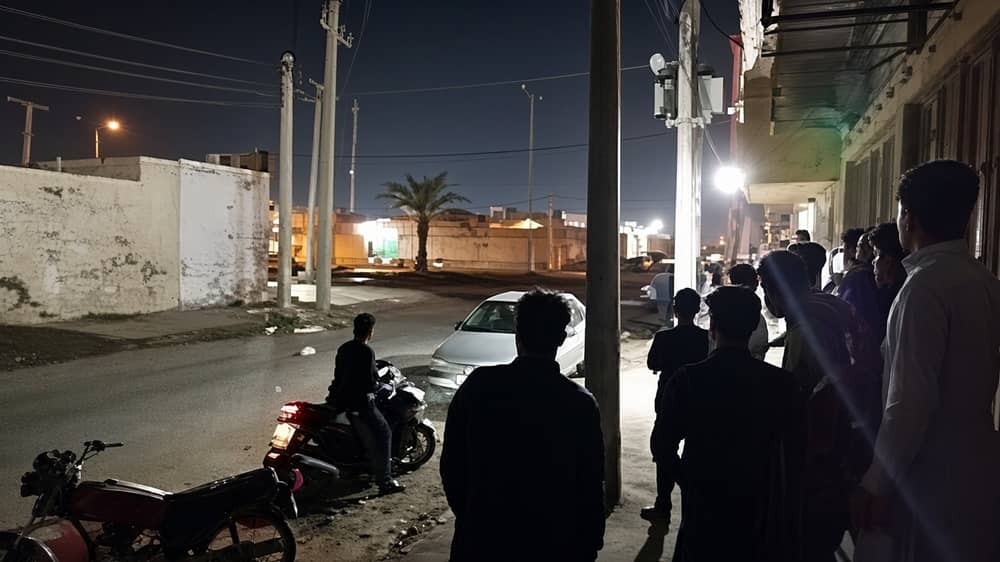
On November 2, armed assailants attacked a vehicle in the Kalgan area of Sistan and Baluchestan. Local accounts identified the occupants as IRGC personnel and reported two deaths, while authorities claimed the victims were civilians.
Another reported attack targeted a building in Bir village allegedly used by Fatemiyoun and Zainabiyoun militia personnel, resulting in reported casualties. Days earlier, an armed group claimed to have established checkpoints along the Khash–Zahedan highway. These incidents illustrate the persistence of armed challenges despite repeated security operations.
Meanwhile, telecommunications retirees demonstrated in several provinces over unpaid entitlements, accusing major shareholders associated with powerful state institutions of failing to meet their obligations. Farmers protested winter fuel shortages in Zahedan, while environmental activists challenged mining operations near Shahroud.
Iran’s regime faces mounting internal pressure: 392 illegal pension-fund directorships, depleted public finances, fuel #protests, and a worsening water crisis. Meanwhile, authorities seize a digital school’s assets, accelerate security prosecutions, and hardliners demand nuclear…
— NCRI-FAC (@iran_policy) October 31, 2026
The day’s developments expose a ruling establishment divided over how to project military strength, manage strategic setbacks and respond to growing domestic pressure. Calls for nuclear escalation are meeting warnings about their costs, while criticism of intelligence failures is prompting attacks from defenders of existing security policies. Continuing armed incidents and protests add pressure to these disputes. The central vulnerability lies in the widening gap between the establishment’s claims of strength, the security problems it faces and its competing prescriptions for addressing them.