

THIS PAGE WILL BE UPDATED WITH THE LATEST NEWS
UPDATE: 8:00 AM CET
The Real Voices of Iran: From Prison Cells to the Front Lines of Resistance
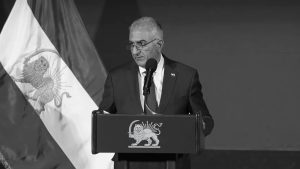
On November 7, 2026, Reza Pahlavi, the son of Iran’s deposed Shah, stood at a ceremony in Frankfurt as the designated trustee of a Freedom Prize presented to the Iranian people. Two days later, a very different Iranian was announced as the recipient of the prestigious Magnitsky Human Rights Award: Mohammad Javad Vafaei Sani, a political prisoner facing execution in Iran.
The contrast raises a fundamental question: Who truly embodies the Iranian people’s struggle for freedom?
The answer is not found in royal titles or international ceremonies. It is found in Iran’s prisons, where political prisoners representing different generations and walks of life continue to challenge dictatorship at enormous personal cost. It is also found in the streets, where organized Resistance Units confront the regime despite the threat of imprisonment and death.
A boxing champion and coach from Mashhad, Vafaei Sani has spent nearly seven years behind bars for his support of the People’s Mojahedin Organization of Iran (PMOI/MEK). Subjected to torture, solitary confinement, and repeated death sentences, he remains under the imminent threat of execution.
Iran’s Regime Faces Mounting International Isolation as Economic Pressure and Human Rights Scrutiny Intensify
Iran’s ruling regime is facing mounting international pressure across several fronts, from restrictions on oil exports and difficulties circumventing economic sanctions to growing scrutiny of its human rights violations. While Tehran continues to project an image of regional power through threats, interference, and intimidation, developments in its economic and diplomatic relations point to increasingly constrained options. The pressure extends beyond relations with the United States and European countries. Regional governments and international institutions are also taking positions on the regime’s conduct, including its regional activities, threats, and systematic violations of fundamental rights.
The contrast between the regime’s public posture and its actual international position is becoming increasingly apparent. Its attempts to demonstrate strength have not removed the economic and diplomatic constraints it faces.
The regime has repeatedly sought to portray itself as an actor capable of imposing its will on other countries and disrupting regional stability. Its methods have included threats, alleged terrorist operations, regional interference, missile attacks, and other forms of intimidation.
Some of its more recent activities have also extended beyond conventional political and security pressure. Reports of interference with supermarket freezer electricity systems in France, for example, illustrate the nature of the disruptive operations attributed to the regime and its networks abroad.
Manufacturing the Shah: The Opposition Iran Wants You to See
In April 2018, two intelligence officers visited Hashem Khastar at his garden. Khastar was a teacher, a trade-union activist and an outspoken opponent of the Iranian regime. He had no reason to expect encouragement from the security apparatus. Yet the men who came to see him offered precisely that.
“Why don’t you cooperate with Prince Reza Pahlavi?”
They offered to give him Pahlavi’s telephone number.
Months later, Khastar was approached again. This time, the request was different. Two security officers wanted him to issue a statement against the People’s Mojahedin Organization of Iran, or MEK, after the group had expressed support for him. Their real sensitivity, they explained, was the MEK itself.
The contrast was revealing. The Iranian regime’s security apparatus did not appear to treat all of its opponents in the same way. One opposition figure could be recommended. Another was a red line.
That distinction would become more visible over the following years. The first sign appeared in the streets.
Iran Records at Least 48 Protest Actions in October 2026 as Pensioners Lead Growing Wave of Discontent
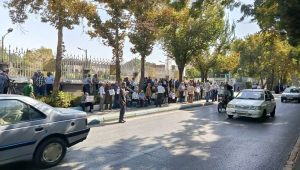
At least 48 protest actions involving different sectors of Iranian society were recorded across Iran in October 2026, according to a monthly assessment published by the Iran Freedom Association. The figures highlight the persistence of economic and social grievances under Iran’s regime, with pensioners accounting for the largest share of demonstrations.
The protests were driven by a range of unresolved problems, including deteriorating living conditions, unpaid wages and benefits, inadequate healthcare, job insecurity, restricted access to public services, and dissatisfaction with economic and administrative decisions.
Although pensioners were at the forefront, the protests extended well beyond this group, involving workers, university students, merchants, farmers, drivers, and citizens facing various economic and social difficulties.
The monthly assessment acknowledges that it was not possible to monitor every protest and demonstration across the country. Nevertheless, it provides a broad picture of the scale and composition of social protests during October.
Iran Ranks Among the World’s Worst Countries for Gender Equality as Regime Propaganda Contradicts Reality

The contrast is particularly striking as the regime seeks to exploit the country’s current crises and political tensions for its own propaganda purposes. The appearance of women in government-organized demonstrations, including women dressed in burial shrouds, is used to suggest widespread female support for the authorities. Such staged displays, however, reveal little about the actual social and economic conditions facing millions of Iranian women.
The 2026 Global Gender Gap Report published by the World Economic Forum provides a more measurable picture of this reality. Iran ranks 144th among 145 countries, placing it near the very bottom of the global gender equality index.
Patients in Tehran Caught Between Soaring Prices and Drug Shortages
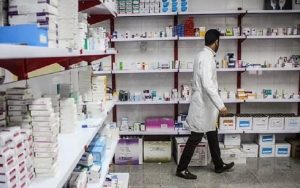
The medicine crisis has once again become a major concern in Tehran, Iran’s capital. Shahin Shadnia, head of Tehran’s Loghman Hospital, has warned that the costs of medical services, hospitalization, and particularly medicines have surged dramatically. According to him, a medicine that previously cost between 5 million and 6 million rials is now several times more expensive. Shadnia also reported shortages of certain critical medicines in the hospital pharmacy.
Shadnia says shortages of certain specialized medicines in the hospital pharmacy are clearly evident. According to him, medical staff are sometimes forced to refer patients and their families to the 13 Aban Pharmacy or pharmacies outside the hospital to obtain the medicines they need. He attributes the situation to mismanagement, incompetence, and damage to domestic pharmaceutical production lines. In his view, the lack of proper management of foreign currency allocation has prevented the direct import of some vital medicines. Shadnia emphasized that the resulting financial pressure falls most heavily on vulnerable segments of society.
In addition to this account, pharmaceutical industry representatives emphasize the financial dimension of the crisis. Hadi Ahmadi, spokesperson for the Iranian Pharmacists Association, says pharmacies’ outstanding claims against insurance companies and the Targeted Subsidies Organization have reached approximately 850 trillion rials (around $327 million). According to him, payment delays in some parts of the healthcare system have reached approximately 11 months. Reports indicate that more than 80 trillion rials (approximately $31 million) in bounced checks have been recorded so far.
Uncontrollable Inflation in Iran: Making the Poor Poorer and the Rich Richer

The former CEO of Bank Tejarat, a state-owned Iranian bank, emphasized that the main causes of inflation in Iran are the budget deficit and the continuous growth of liquidity. He said: “Over the past three decades, the country’s money supply has increased by 30% to 40% annually, and sometimes by more than 50%, without corresponding economic growth.”
Ahmad Hatami-Yazd, a regime-affiliated economist, discussed the reasons behind rising inflation and exchange rates, at a time when officials claim that the country has no shortage of foreign currency reserves. He stated: “There is no way to control inflation other than establishing fiscal discipline within the government. Fiscal discipline means that government revenues and expenditures must be aligned, and the government must not impose expenses on the budget without having clearly identified sources of revenue to cover them.”
Referring to the budget deficit and its consequences, he added: “When the government approves expenditures without having the revenue to finance them, it is forced to print money without backing. This process increases liquidity and ultimately manifests itself in the form of inflation.”
He stressed that when the money supply increases by 30%, 40%, or even more than 50% annually without corresponding economic growth, the inevitable result is inflation.
Iran’s Monetary Base Growth Reaches 90%, Sounding Alarm Bells for the Economy
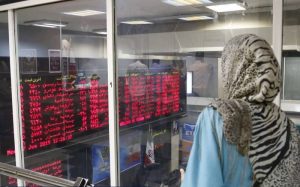
An examination of monetary statistics for September 2026 shows that year-on-year growth in the monetary base has reached 89.9%, while year-on-year growth in money has reached 63.3%—levels not seen since 2011.
These staggering figures have been released at a time when Iran’s Central Bank has refused to publish detailed, regular reports on monetary indicators since the beginning of the Persian calendar year (March 22, 2026), withholding official data.
Nearly 90% growth in the monetary base means that Iran’s economy is facing an enormous expansion in high-powered money compared with a year ago. This is happening against the backdrop of an ailing economy in which production, investment, and household purchasing power are severely constrained. According to research conducted by the International Monetary Fund (IMF) on Iran’s economy, a 1% increase in the monetary base can lead to a 0.5% increase in inflation.
Have banks turned to the Central Bank’s resources to compensate for their severe financial imbalances? Has the Central Bank’s foreign currency purchases, without neutralizing their impact on the rial supply, inflated the monetary base? Or has the government resorted, directly or indirectly, to the resources of the Central Bank and the banking network to cover its budget deficit?
Iran: Death-Row Boxing Champion Vafaei Sani Wins 2026 Magnitsky Human Rights Award

In a prominent human rights event, the Magnitsky Human Rights Award foundation announced Mohammad Javad Vafaei Sani, a 31-year-old Iranian boxing champion and martial arts coach, as the recipient of the 2026 award in the category of “Outstanding Human Rights Activist.” This international award, established in 2015 to honor courageous individuals standing against repression and tyranny, is scheduled to be presented on Thursday, November 12, 2026 (Aban 21, 1405), during an official ceremony in London by Bob Blackman, a Member of the British House of Commons and Chairman of the 1922 Committee.
In its X (formerly Twitter) post on November 9, the foundation stated: The conferral of this award upon Mohammad Javad Vafaei Sani carries profound significance, as he is not a professional human rights defender, but an athlete and boxing coach facing execution due to his case’s intersection with popular protests and political charges—proceedings persistently marred by grave fair-trial concerns. This selection demonstrates that his case has transformed in the eyes of the international community into a symbol of political repression, the employment of capital punishment against dissidents and critics, and the ongoing violation of due process standards in the Islamic Republic of Iran.
Mohammad Javad Vafaei Sani, a political prisoner incarcerated in Vakilabad Prison in Mashhad, receives this global accolade while facing a death sentence handed down by the judiciary of the Islamic Republic for the third time. Bestowing this international title upon him not only pays tribute to the resilience and steadfastness of a political prisoner against repression but also reflects the international community’s escalating alarm over the Islamic Republic’s deployment of capital punishment in political cases, reinforcing the surging demand for the immediate quashing of his death sentence.
Iran’s Overland Trade Lifelines Face New US Pressure as Rail Sanctions and Border Restrictions Mount
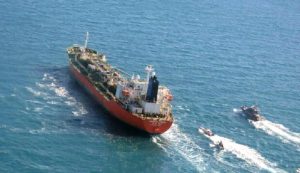
Iran’s efforts to keep international trade moving through railways and land borders face growing pressure from Washington, as new US sanctions and restrictions on border access threaten the alternative routes Tehran increasingly relies on to circumvent its maritime blockade.
The latest development came on November 8, when Iraqi Foreign Minister Fuad Hussein said the US Treasury had asked Baghdad to close all but two border crossings with Iran. Hussein said Iraq was discussing the request with Washington, warning that widespread closures would damage the Iraqi economy.
The request followed Washington’s October 1 decision to extend sanctions to Iran’s railway sector, targeting the state railway company, Raja Passenger Trains and a private freight operator.
The pressure has also acquired a military dimension. On November 7, Reuters reported that the US military had established Task Force Iron Gate to restrict the movement of advanced weapons, sanctioned goods and dual-use technology across Iran’s land borders and the Caspian Sea.
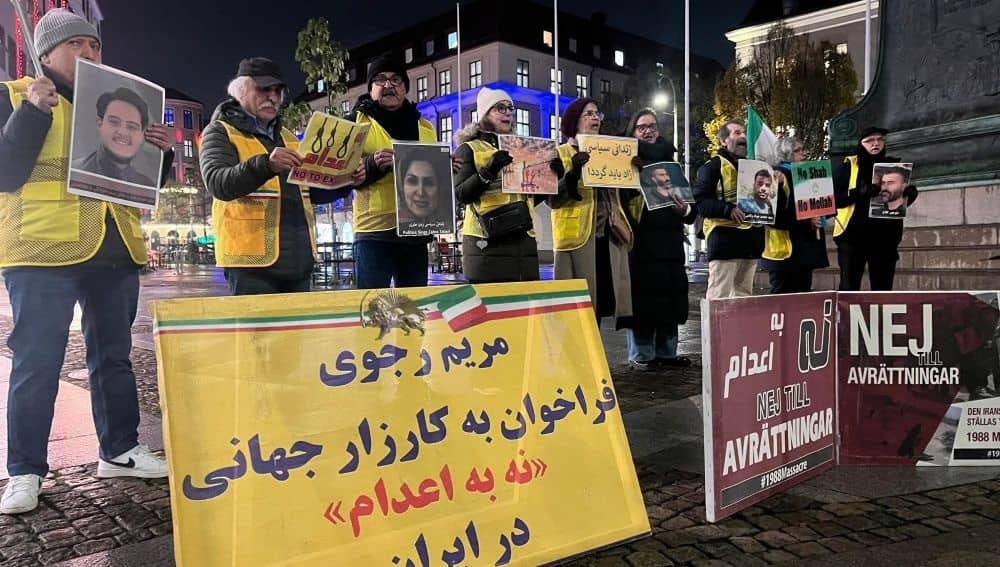
Gothenburg Rally Supports 146th Week of “No to Execution Tuesdays” in 66 Prisons Across Iran
Gothenburg, Sweden — November 10, 2026: Supporters of the People’s Mojahedin Organization of Iran (PMOI/MEK) held a rally in solidarity with the 146th consecutive week of the “No to Execution Tuesdays” campaign, a movement protesting the Iranian regime’s escalating executions and systematic repression.
Participants also highlighted the regime’s intensifying crackdown, the rising number of executions, and broader repressive measures. They chanted slogans such as “Down with the executioner regime” and called for the immediate release of all political prisoners.
Freedom-loving Iranians in Gothenburg expressed support for Mrs. Maryam Rajavi, President-elect of the National Council of Resistance of Iran (NCRI), and her call to expand the “No to Executions” campaign globally.

At the Gothenburg gathering held in solidarity with the “No to Execution Tuesdays” campaign, protesters warned that political prisoners in Iran face an increasingly grave risk of execution amid an escalating wave of repression. They expressed deep concern over the growing number of death sentences against political detainees and protesters, arguing that the Iranian authorities are using executions to silence dissent and spread fear across society. Calling for urgent international action, the demonstrators urged the global community to help prevent further executions and protect the lives of prisoners facing death sentences.
PMOI Supporters in Luxembourg Rally Against Executions, Honor Uprising Martyrs
Luxembourg – November 7, 2026: Supporters of the People’s Mojahedin Organization of Iran (PMOI/MEK) held a rally and photo exhibition in Luxembourg, featuring a book table, to honor the martyrs of Iran’s nationwide uprisings and political prisoners. Participants condemned the Iranian regime’s ongoing executions, backed the #NoToExecutions campaign, rejected all forms of dictatorship, and called for the establishment of a democratic republic.
Organizers strongly condemned the Iranian regime’s continued use of executions, describing them as flagrant violations of human rights. Participants displayed photographs of executed prisoners and victims of the nationwide uprisings, using the tribute to honor those who lost their lives and to highlight the plight of political prisoners and protesters facing the death penalty.

Participants demanded an immediate end to the death penalty in Iran. They also called for the release of all political prisoners and an end to the persecution of protesters and dissidents.