

THIS PAGE WILL BE UPDATED WITH THE LATEST NEWS
UPDATE: 7:00 AM CET
Iran: Women Political Prisoners in Birjand Prison Face Abuse Allegations and Inhumane Conditions
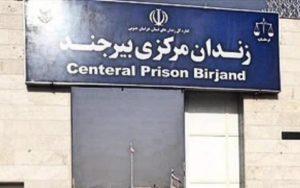
Women Political Prisoners in Iran are being held under harsh conditions in Birjand Prison, where severe overcrowding, poor sanitation, inadequate medical care, and allegations of systematic abuse have raised growing concerns about the treatment of female detainees under the clerical regime.
Birjand Prison is one of the prisons long criticized for overcrowding, inadequate healthcare, poor sanitation, and conditions that fall far below basic human standards. The prison houses ordinary inmates, drug-related offenders, and political prisoners. Several prison wards accommodate far more prisoners than their intended capacity. While some wards were designed for approximately 90 inmates, they reportedly hold more than 300 prisoners. In some sections, the prison population has reportedly reached as many as 600 inmates.
Prisoners face poor-quality food and water, a shortage of bathrooms and sanitary facilities, limited access to fresh air and outdoor time, and inadequate medical services.
Living conditions are further worsened by infestations of bedbugs and lice, as well as reports of scorpions inside prison wards. The lack of effective pest control measures and basic healthcare services continues to threaten prisoners’ physical and mental well-being.
Iran’s Workers Pay With Their Lives as Workplace Safety Fails Under the Regime

The contrast between workplace conditions in Iran and those in Nordic countries exposes a fundamental difference in how workers’ lives and rights are treated. While countries such as Norway, Sweden, and Denmark have established legal frameworks, independent trade unions, and strict employer accountability to protect workers, workplace accidents in Iran continue to claim lives amid inadequate safety measures and a lack of transparent reporting.
Under Iran’s ruling regime, the actual number of workers killed or injured in occupational accidents has never been disclosed transparently since the regime came to power. Comprehensive statistics would expose the consequences of decades of neglect, exploitation, and disregard for workers’ most basic rights. Instead, scattered figures published by state-affiliated media offer only a partial glimpse of the scale of the crisis.
According to figures published by the state-run Mehr News Agency’s counterpart, Khabar Online, citing the director general of the Legal Medicine Organization in Hamadan Province, 349 workers were injured and 21 died in workplace accidents during the first six months of the current Iranian year. In Mazandaran Province, 55 workers were reported injured in occupational accidents, representing a 31 percent increase compared with the previous year.
IAEA Has ‘No Information’ About Location of Isfahan Enrichment Facility or Fate of Iran’s Uranium

Ahead of the meeting of the International Atomic Energy Agency’s (IAEA) Board of Governors, the agency reported growing concerns about the Iranian regime’s nuclear activities. The underground facility in Isfahan remains inaccessible to inspectors, and the fate of approximately 440 kilograms of uranium enriched to 60% also remains unknown.
In its latest confidential report on Iran’s nuclear program, the IAEA expressed growing concern over the Iranian regime’s continued prevention of inspections at the Isfahan enrichment facility. It warned that, due to the lack of access and sufficient information, it is unable to verify that Iran’s declared nuclear material has not been diverted from peaceful activities.
On Friday, November 13, Reuters and Agence France-Presse (AFP), citing the report, stated that the IAEA does not even know the exact location of the new Isfahan fuel enrichment facility, its status under nuclear safeguards, or whether it contains any nuclear material.
The facility, known as the “Isfahan Fuel Enrichment Plant,” was declared to the IAEA by Tehran on June 12, 2025. Inspectors were scheduled to examine the facility’s design information the following day, but the start of Israel’s military strikes on Iran prevented the inspection from taking place. Since then, the Iranian regime has not allowed inspectors to visit the facility or examine its blueprints and technical information.
The UK House of Commons Presents Human Rights Award to Political Prisoner Mohammad Javad Vafaei Sani

The UK Parliament presented the Magnitsky Award to Mohammad Javad Vafaei Sani and condemned the wave of political executions in Iran, calling on the British government to take immediate action to prevent the execution of this political prisoner.
At a session of the UK Parliament, Bob Blackman, a Conservative Party member of Parliament, presented the Magnitsky Award for Outstanding Human Rights Activists to Mohammad Javad Vafaei Sani, a boxing champion and political prisoner sentenced to death. At the same time, members of both the House of Commons and the House of Lords condemned the wave of political executions in Iran and called on the British government to take immediate action to prevent this political prisoner’s execution.
At the UK Parliament session on Thursday, November 12, the human rights situation in Iran and the rising number of executions of political prisoners were at the center of lawmakers’ attention. During the session, Bob Blackman, a Conservative Party member of Parliament and chairman of the British Committee for Iran Freedom, announced that he would present the Magnitsky Award for Outstanding Human Rights Activists to Mohammad Javad Vafaei Sani, a boxing champion and political prisoner sentenced to death.
Referring to the fact that Vafaei Sani has been imprisoned for six years for participating in Iran’s 2019 protests, Bob Blackman said he faces the death penalty solely because of his political protest.
Iran: Arman Marefati, Sentenced to Death Following Supreme Court Confirmation, at Risk of Execution
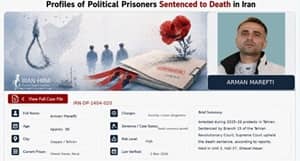
Arman Marefati was arrested in Tehran during the nationwide protests of 2025–2026. After a period of detention in Greater Tehran Prison, he was transferred to Qezel Hesar Prison in Karaj. The precise date of arrest, interrogation conditions and his access to legal counsel are not specified in the available information.
His case was heard by Branch 15 of the Tehran Revolutionary Court, presided over by Judge Abolghasem Salavati. According to the published report, the prosecution initially alleged “assembly and collusion to commit an offence against national security through participation in protests”. During the proceedings, however, the court invoked Article 280 of the Code of Criminal Procedure and changed the legal characterisation of the charges. The subsequent allegations concerned participation in operations against national security, entering religious premises with intent to cause damage, involvement in setting fire to a mosque and a religious seminary, and causing property damage. These are allegations attributed to the judicial authorities, not independently established facts.
Marefti was tried in the same case as Mehrdad Mohammadinia and Ashkan Maleki. According to the information provided, the death sentences of both co-defendants have already been carried out; the dates and circumstances of those executions are not specified. Marefti was sentenced to death by Branch 15 and, according to a report dated 2 November 2026, the Supreme Court upheld his sentence.
Iran: Femicide, Child Marriage, and Islamic Republic’s Failure to Protect Women’s Right to Life
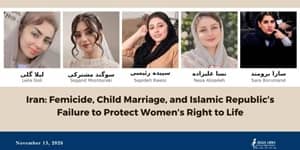
Femicide in Iran is no longer a collection of isolated murders or domestic disputes. An examination of documented cases recorded in 2026 reveals that women and girls are subjected to lethal violence within a backdrop of domestic abuse, child marriage, legal discrimination, and structural barriers that render escaping violent relationships difficult or impossible.
This report argues that femicide in Iran cannot be reduced merely to the individual actions of perpetrators. The Islamic Republic of Iran bears responsibility for creating and perpetuating conditions that facilitate femicide through the maintenance of discriminatory laws, the persistent allowance of child marriage, the absence of a comprehensive law to prevent violence against women, a shortage of protective mechanisms, and a failure to prevent recognized forms of violence against women.
An examination of documented instances shows that many victims faced violence, threats, coercion, or continuous control prior to their murder, yet no effective protective mechanisms existed for them. This situation raises serious concerns regarding the Islamic Republic of Iran’s adherence to its international human rights obligations. Under the International Covenant on Civil and Political Rights (ICCPR) and the International Covenant on Economic, Social and Cultural and Political Rights (ICESCR), the Islamic Republic of Iran is obligated to guarantee women’s right to life, protect them from foreseeable violence, and adopt effective legal, judicial, and administrative measures to prevent, protect against, and ensure accountability for gender-based violence.
The Right to Be Different in Iran

Human rights violations in Iran are not confined to protesters and political opponents. Citizens whose religious beliefs differ from those endorsed by the authorities also face arrest, prosecution, exclusion from education and employment, and interference with their private lives. The treatment of Bahá’í citizens provides a documented example of these practices.
Data compiled from March through October 2026 identify at least 118 Bahá’í citizens—60 women and 58 men—in 11 Iranian provinces who were subjected to various security and judicial measures. The aggregate figures have not yet been fully reconstructed through independent case-by-case verification and represent only part of the incidents documented in 2026.
These categories overlap, and the sum of prison sentences imposed does not necessarily equal the period of imprisonment legally enforceable.
The largest numbers of identified individuals were recorded in Fars and Yazd (25 each), Mazandaran (23), Isfahan (14) and Tehran (10). Other incidents were reported in Alborz, Kerman, Razavi Khorasan, South Khorasan, Semnan, and Sistan and Baluchestan.
Iran Weighs Intelligence Overhaul That Could Expand Supreme Leader’s Control
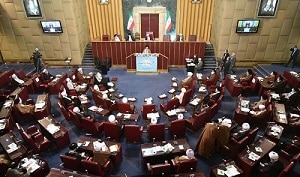
Iran’s parliament (Majlis) is preparing to consider a restructuring of the Ministry of Intelligence that would open its top position to non-clerics while giving Supreme Leader Mojtaba Khamenei direct appointment powers over two newly created bodies.
The proposal, announced on November 10 by parliamentary presidium spokesman Abbas Goudarzi, would remove the requirement that the intelligence minister possess advanced qualifications in Islamic jurisprudence.
In its place, lawmakers propose establishing an Intelligence Protection Organization and an Ideological-Political Organization within the ministry. Their heads would be appointed by the Supreme Leader, while the minister would continue to be nominated by the president and confirmed by parliament.
The initiative comes after more than eight months without a permanent intelligence minister and raises a broader question: whether reforming the ministry’s leadership requirements would also redistribute authority within Iran’s security establishment.
Amsterdam and Utrecht: PMOI Supporters Back “No to Execution Tuesdays” Campaign Against Executions in Iran
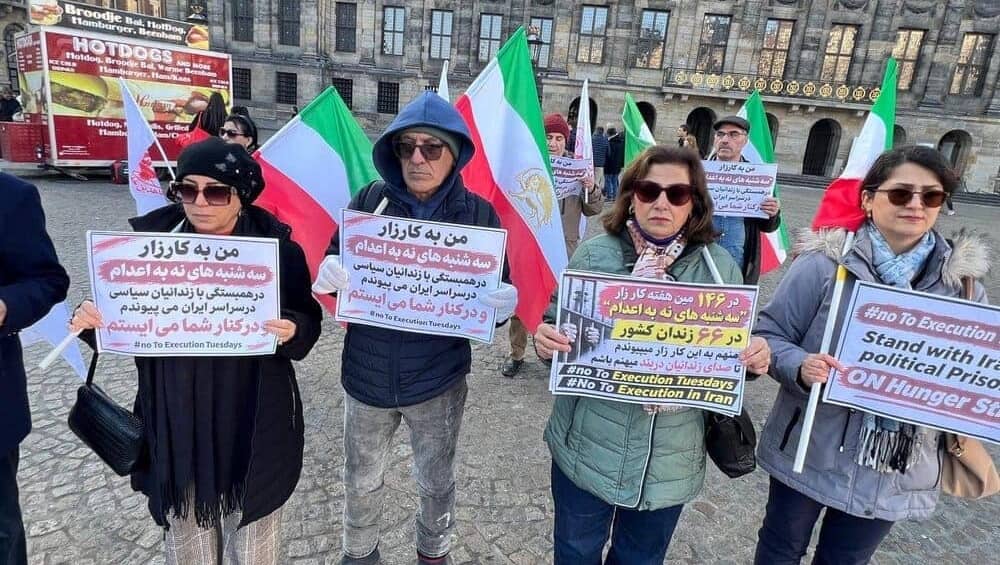
Amsterdam and Utrecht, Netherlands – November 10, 2025 — Supporters of the People’s Mojahedin Organization of Iran (PMOI/MEK) gathered at Dam Square in Amsterdam in support of the “No to Execution Tuesdays” campaign.

On the same day, PMOI/MEK supporters also held a rally in Utrecht, another Dutch city, in solidarity with the “No to Execution Tuesdays” campaign.
Demonstrators condemned the Iranian regime’s use of executions as a tool of repression and called for an end to state violence, regime change, and the establishment of a democratic republic in Iran. They demanded the immediate abolition of the death penalty and the release of all political prisoners.
Participants expressed solidarity with political prisoners and those facing execution, reaffirming their commitment to a democratic future for Iran. They rejected all forms of dictatorship, whether under the current theocratic regime or under monarchical rule.
Copenhagen: PMOI Supporters Back “No to Execution Tuesdays” Campaign Against Executions in Iran
Copenhagen, Denmark – November 10, 2026 — Supporters of the People’s Mojahedin Organization of Iran (PMOI/MEK) held a rally in Copenhagen in support of the “No to Execution Tuesdays” campaign.
They called for an end to executions in Iran, the release of political prisoners, and the establishment of a democratic republic.

The protesters called for regime change and urged the Danish government to take a firm stance against the Iranian regime’s ongoing human rights violations. They also called for the closure of the Iranian regime’s embassy in Denmark, which they described as a center for espionage and terrorism.