

The wind whispers through Iranian cemeteries, not a mournful sigh, but a chilling testament to a state’s war on memory itself. Here, families gather not for quiet remembrance, but to confront desecrated graves, shattered headstones, and the deliberate erasure of their loved ones’ existence—an assault made brutally concrete when authorities reportedly turned Section 41 of Tehran’s Behesht-e Zahra cemetery, long associated with executed MEK prisoners from the 1980s, into a parking lot. What does it mean when a government wages war not only on the living, but on the very remembrance of the dead, and what responsibility does the international community bear when such acts are committed in plain sight?
This chilling reality underscores that human rights are not merely abstract ideals enshrined in international declarations; they are a daily battleground for survival, dignity, and freedom against the relentless machinery of oppression. As the world recently marked Human Rights Day, intended to affirm the shared human demand for justice, Iran stands as a brutal counterexample. The Universal Declaration of Human Rights was drafted in the shadow of atrocities precisely to prevent the normalization of state violence, implicitly recognizing that when a government becomes the engine of tyranny, people may be driven to resist as a “last resort.” For Iranians, that “last resort” is not a theoretical debate for seminars or anniversaries; it is the grinding reality of daily life under a system that treats fear as governance and the law as a weapon.
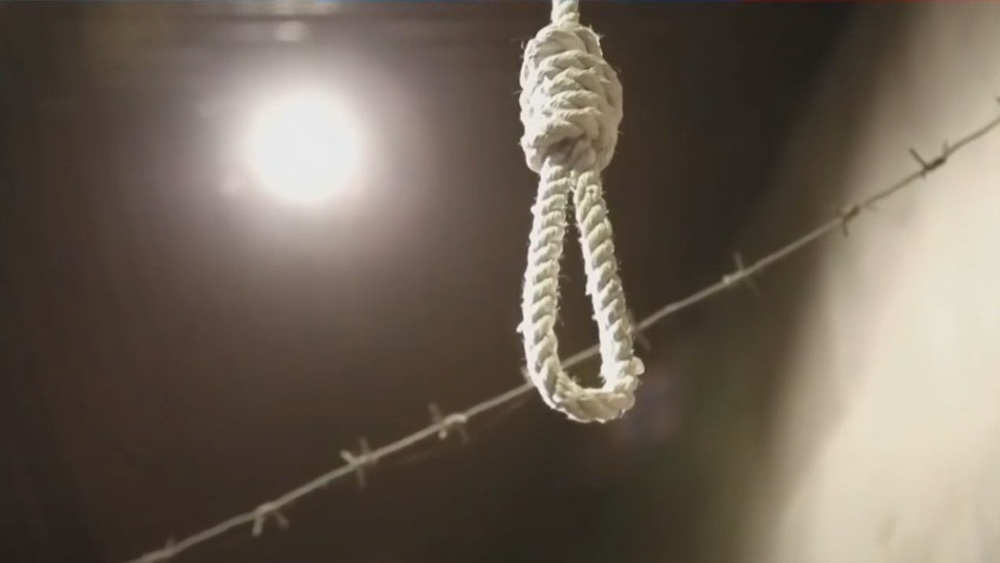
The regime’s reported execution toll this year—over 1,950 people—signals not merely a rising statistic, but a calculated political strategy. The sheer volume of these state-sanctioned killings points to a leadership deeply insecure, leveraging the ultimate penalty as a blunt instrument to quell dissent and enforce obedience. This is not justice; it is ritualized intimidation, staged in the language of courts and verdicts to disguise what it truly is: the conversion of punishment into public control. When a state executes at such historic rates, it is not proving stability; it is confessing anxiety.
NCRI Statement: #Iranian Political Prisoner Javad Vafaei Transferred to Solitary Confinement, Faces Imminent Executionhttps://t.co/1SKUPR3hFg
— NCRI-FAC (@iran_policy) December 7, 2025
For Iranians, repression is not an annual report; it is an hourly ordeal. Only in November, 335 people were executed. Arrests reach staggering levels, targeting anyone perceived as a threat to the regime’s fragile hold on power. Families are not only deprived of loved ones—they are deprived of mourning itself, as authorities bulldoze graves, destroy headstones, and wipe out burial sites not merely to silence grief, but to eliminate evidence and scrub the traces of past crimes from the public record. Even the dead, the regime seems to believe, can ignite defiance—so it targets the remnants, the names, and the places, fearing that documented truth and collective mourning can become a catalyst for future resistance.
This intensifying brutality is often misread as strength. It is not. It is the behavior of a regime that senses its weakness and answers that fear with the rope. Death sentences against political prisoners and supporters of the People’s Mojahedin Organization of Iran (PMOI/MEK) are not just punishments; they are warnings to anyone tempted to organize or speak out. Long-term prisoners endure escalating pressure precisely because they represent something the regime cannot tolerate: continuity of resistance. The persistence of the “No to Execution Tuesdays” campaign—sustained week after week—reveals a crucial truth: even inside the prisons built to break human beings, defiance survives, a testament to the unyielding spirit of the Iranian people.
NCRI Editorial:#Iran’s Surge in Executions: A Sign of a Regime on the Brinkhttps://t.co/VT9xbhvVL5
— NCRI-FAC (@iran_policy) November 11, 2025
So, what does responsibility look like for the international community? The central demand from Iranians is simple: stop enabling the machinery of terror. Condition relations on an immediate halt to executions. Shut down institutions and fronts used to coordinate intimidation beyond Iran’s borders. And treat the infrastructure of repression for what it is by listing the Islamic Revolutionary Guard Corps (IRGC) and the Ministry of Intelligence and Security (MOIS) as terrorist entities, cutting off the networks that make transnational operations possible.
Human Rights Day is not meant to be a moment of reflection alone. It is meant to be a measure of resolve. The question is no longer whether the world has enough information. It does. The question is whether it has the will to act before the next execution, the next grave desecration, becomes just another paragraph in next year’s report. The time for passive observation has long passed; the moment for decisive action to uphold human dignity in Iran is now.