

Three-minute read
Following the activation of the UN snapback mechanism by France, Germany, and the UK, Iran’s ruling establishment is confronting one of its most precarious moments in recent years. Officials are grappling simultaneously with severe economic threats, deepening factional rifts, and growing concerns over organized opposition activity inside and outside the country — particularly linked to the People’s Mojahedin Organization of Iran (PMOI/MEK).
Economic Fallout Driving Regime Anxiety
The reactivation of UN sanctions threatens to intensify Iran’s economic crisis, which officials themselves warn could spiral beyond control:
Hossein Salahvarzi, former head of the regime’s Chamber of Commerce, estimated on August 26 that snapback measures could cut petrochemical exports by 5–8 million ton, wipe out $3–5 billion in foreign currency revenue, and Impact banking, transport, agriculture, and foreign investment across the board.
A leaked Chamber of Commerce report warned that the return of sanctions could push inflation above 90% and drive the rial towards unprecedented lows.
The report caused such alarm that IRGC intelligence forces interrogated members of the Chamber’s International Affairs unit and pressured the organization to retract its findings. Analysts view this intervention as a sign the authorities are in damage-control mode, aiming to prevent public panic over the looming economic shock.
#Tehran in Damage-Control Mode After Snapback Sanctions Triggered, Economic Fears Soarhttps://t.co/tet1fJqorJ
— NCRI-FAC (@iran_policy) August 30, 2025
Internal Fractures and Public Infighting
The sanctions crisis has exposed sharp divisions within the clerical establishment and between rival power centers:
Lawmakers aligned with extremist factions are demanding aggressive retaliation, including a three-pronged parliamentary bill proposing, withdrawal from the Non-Proliferation Treaty (NPT) and halting cooperation with the IAEA, ending all negotiations with Western powers, and accelerating Iran’s nuclear program.
Inside the government, officials linked to the regime’s President Masoud Pezeshkian are quietly implementing security measures — including empowering provincial governors and reviving mosque-driven “neighborhood management” systems — to prepare for potential unrest. Meanwhile, hardliners in parliament warn that any public debate over negotiations or sanctions could “send signals of weakness” to Western powers.
Former intelligence officials, including Hesamoddin Ashna, admit that no faction wants responsibility for the sanctions crisis — while openly blaming each other for strategic miscalculations.
The growing “war of statements” reflects a breakdown of cohesion at the top, raising doubts about the regime’s ability to manage simultaneous diplomatic, economic, and domestic challenges.
Senior #Iranian Regime Insider Faces Prosecution After Comments Seen as Undermining Morale Amid Escalating Criseshttps://t.co/jVfljdqUSN
— NCRI-FAC (@iran_policy) August 29, 2025
The Shadow of the PMOI
Amid these pressures, Iranian officials continue to highlight the PMOI as a critical security concern, linking potential unrest to the group’s influence:
Mansour Haghighatpour, a former senior MP and member of the Supreme National Security Council, admitted that despite four decades of crackdowns, the PMOI’s underground network remains largely intact, saying: “The PMOI only lost three or four operatives; the rest stayed safe.”
Friday Prayer Leader Reza Nouri in Bojnourd warned critics and so-called reformists against “helping the enemy,” stating: “Do not fill the enemy’s magazine. Do not pour water into the PMOI’s mill.”
Alireza Salimi, a member of parliament’s presidium, made a rare acknowledgment that in the early years of the revolution, children of senior clerics joined the PMOI — and that prominent figures like Mohammad Ghilani and Ahmad Jannati even signed their own sons’ execution orders to demonstrate loyalty.
These statements indicate persistent concerns over the PMOI’s ideological reach and its potential to mobilize disaffected segments of society, particularly amid worsening economic conditions.
#Iran’s Regime Sophisticated Playbook to Circumvent Global Sanctionshttps://t.co/s3mKfqR3kj
— NCRI-FAC (@iran_policy) August 29, 2025
Tightening Security and Preemptive Crackdowns
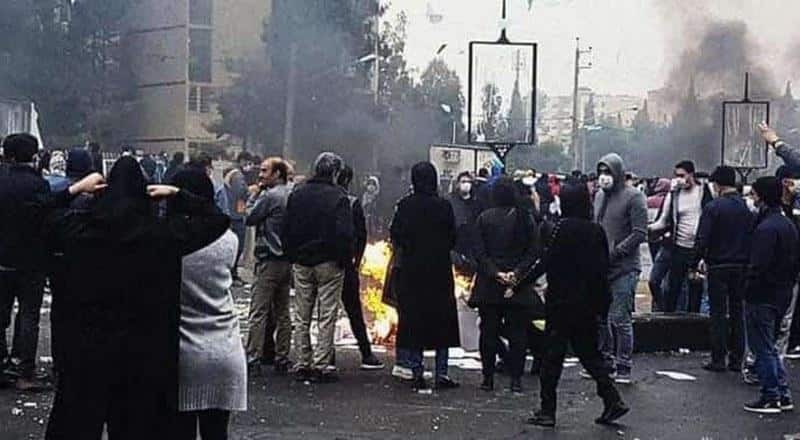
Authorities are responding with escalating security measures, reviving neighborhood-based surveillance programs and mosque-driven mobilization plans reminiscent of the tactics used during the 1980s uprisings.
A controversial ruling by the Supreme Court grants security forces legal immunity for “accidental” shootings, effectively shielding them from prosecution even if civilians are killed.
Provinces have been ordered to prepare for “significant unrest,” with expanded powers granted to local governors to manage crisis response.
These steps suggest that the regime expects heightened protests and is preparing for a scenario where economic hardship and political discontent converge.
Inside the government, officials linked to the regime’s President Masoud Pezeshkian are taking quiet but deliberate steps to prepare for potential unrest. Majid Ansari, Pezeshkian’s deputy for legal affairs, confirmed that provincial governors have been granted expanded powers and urged them to “prepare for a major uprising.” He revealed that this process began two months ago and that additional emergency measures would soon be implemented. The move signals growing concern within the administration that the economic shock of renewed UN sanctions could trigger widespread instability.
In the words of one senior adviser to the regime, “Iran is entering uncharted territory.”