

Three-minute read
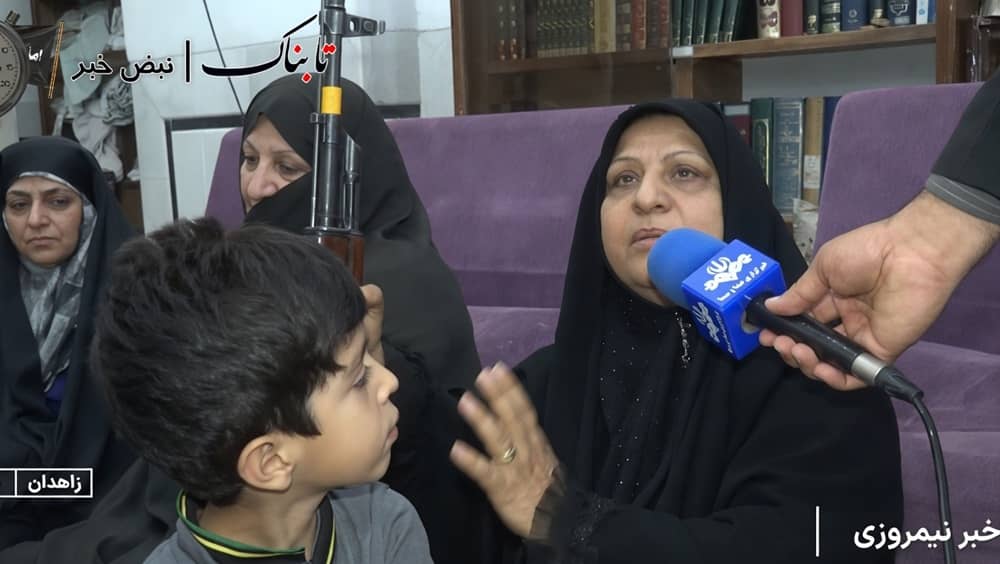
Iranian state television IRIB aired footage on May 18, 2026, of civilians — including women, teenagers and children — receiving hands-on training in assembling, loading and firing personal weapons during nightly pro-regime rallies in city squares. Khabar Online reported the same day that similar “defense preparedness” stalls have been erected in mosques and public spaces, teaching basic firearm handling to ordinary citizens. The broadcasts and events coincide with growing speculation about possible renewed ground operations inside Iran.
State media have also shown repeated images of armed civilians at rallies since the conflict with the United States and Israel began. Schools already include “defense preparedness” lessons from Grade 9 to 12, covering weapon safety, basic operation, civil defense and soft-war concepts. Earlier episodes on IRIB’s Ofogh network featured live firing and machine-gun assembly, including shots aimed at an Emirati flag.
Criticism Mounts Over Arming Minors
Social-media users and domestic critics have condemned the programs as “promoting militarism and violence in society.” State-affiliated newspaper Sazandegi and website Asr-e Iran accused state television of “turning the national broadcaster into a barracks.” Particular outrage has focused on arming children and minors, including reports of armed teenagers manning checkpoints.
"The harder the #terrorist regime fights to survive through spectacle, the faster it hastens the very disintegration it dreads. The cameras keep rolling, the queues keep growing, and the endgame has begun," writes @MehdiOghbai. https://t.co/i1Z5vl4zKw
— NCRI-FAC (@iran_policy) May 18, 2026
IRIB political deputy Hassan Abedini described the content as “symbolic” on May 18, while television deputy Mohsen Barmahani defended it as having “educational, cultural and training value” beyond combat. Regime supporters portrayed the sessions as evidence that “Iran and its people possess the highest level of military authority and readiness.” Some analysts called the coverage domestic and foreign propaganda.
War Economy Shows Strain in Markets and Oil
Tehran Stock Exchange reopened on Tuesday, May 19, 2026, after an 80-day suspension imposed as the regime sought to contain panic and manage the political fallout from deepening economic turmoil. State news agency IRNA had announced the reopening schedule, citing the need for calmer post-war conditions. Yet the first session showed overwhelming sell pressure, with buy orders at roughly 1,575 billion tomans against sell orders exceeding 10,300 billion tomans.
Forty-two major symbols — about 35 percent of market capitalization — remained closed due to war damage or ties to affected firms in petrochemicals, metals, energy and investment sectors. Financial Times reported on May 19 that US sanctions and naval blockade have forced Iran to store unsold crude on ageing tankers anchored in the Persian Gulf.
Data from United Against Nuclear Iran showed 39 Iranian oil and petrochemical tankers present — up from 29 before the blockade — while Kepler analytics recorded 42 million barrels of floating crude, a 65 percent increase since fighting started. Even 30-year-old super-tankers idle for years have resumed signaling near Kharg Island.
"History suggests that mass repression can suppress symptoms without resolving causes. None of the structural grievances that fueled the uprisings since 2017 have disappeared. Instead, they have accumulated," @MehdiOghbai writes on #IranRevolution2026.https://t.co/Fvoi43hUPl
— NCRI-FAC (@iran_policy) May 9, 2026
Internet Blackout and Inflation Crush Livelihoods
Nearly three months of near-total internet blackout have destroyed hundreds of thousands of home-based businesses, most run by women. Pre-cutoff estimates placed Instagram shops at one million stores with annual turnover of 100-120 trillion tomans; more than 60 percent were owned by women. Union officials say at least 600,000 women lost their primary income, while tens of thousands more in content creation, graphic design, tourism and platform jobs were idled.
Presidentian deputy for Women’s Affairs Zohreh Behzad Azar publicly acknowledged that women — who conduct most of their economic activity online — have suffered the heaviest blow. Shaparak card-payment data for April 2026 showed real transaction values and volumes falling year-on-year even after stripping out inflation.
The decline accelerated with war, blackouts and soaring prices; December 2025 already recorded a more than 20 percent real drop — an unusual collapse for the traditional pre-Nowruz surge month. Official statistics put point-to-point inflation at 73.5 percent and food inflation at 115 percent. The minimum wage stands at 16.6 million tomans monthly, while the official food basket exceeds 42 million and labor activists estimate real living costs near 71 million tomans.
Iran’s regime, militarily degraded after #IranWar and confronting economic collapse, drought and a nationwide internet blackout, is relying almost entirely on psychological warfare and #propaganda to project strength and buy time, @shahriarkia writes.https://t.co/ozRu1iOhnp
— NCRI-FAC (@iran_policy) May 15, 2026
Street Anger and Internal Divisions Surface
On Sunday, May 17, 2026, pensioners in Shush gathered outside the local Social Security office to protest “oppression and looting” by regime officials. In Jiroft the same week, residents formed days-long fuel queues and voiced fury at chronic petrol shortages. Videos showed citizens describing life as a “queue of supplication,” with families waiting from dawn until after dark for a single liter of fuel.
Hardline MPs and Ghalibaf-aligned outlets declared a “regional war inevitable and imminent,” naming UAE, Kuwait and Bahrain as potential targets and threatening to “set Gulf energy ablaze” if Iranian oil is hit. Yet Supreme Leader’s office issued direct orders to preachers: stop undermining the negotiating team or government.
The regime’s president Masoud Pezeshkian warned that internal divisions now pose the greatest threat after failed quick-collapse scenarios. Cabinet changes are frozen; Pezeshkian reportedly wants to replace key ministers but is blocked by “wartime unity” arguments. State media on May 18-19 stressed the need for cohesion, revealing deep anxiety that domestic fractures could prove more dangerous than foreign pressure.