

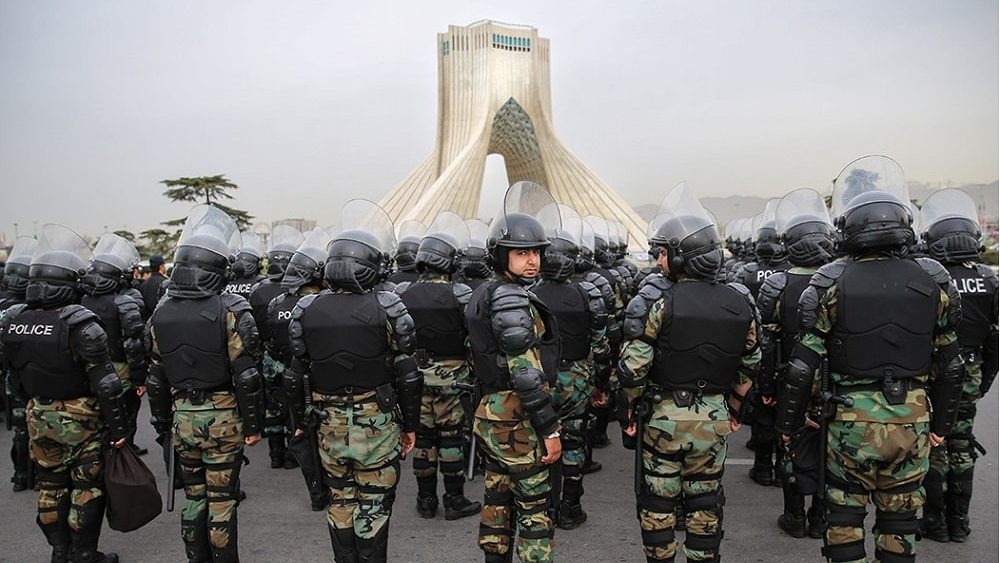
Behind Amnesty International’s conclusions about state policy, command structures and criminal responsibility lies an extensive record of what Iranian security forces actually did during the 2022 uprising: firing live ammunition and metal pellets at protesters, beating people to death, obstructing medical treatment, torturing detainees and committing rape and other sexual violence.
Amnesty’s Architects of Atrocities investigation gathered information on 377 protesters and bystanders who died in connection with the uprising. It classified 326 as killed during protest dispersals or in militarized areas, 18 as having died in state custody, 10 as having died after release in circumstances reportedly connected to detention, and 23 as suspicious deaths involving indicators of possible state involvement. Amnesty says the figure is not exhaustive.
Shooting to Disperse and Punish
Amnesty’s own description is unequivocal: “The organization’s investigations have revealed that the Iranian authorities extensively and unlawfully used assault rifles, machine guns, handguns and shotguns loaded with metal pellets to disperse, intimidate and punish protesters and deter others from exercising their right to freedom of peaceful assembly.”
The report also records punching, kicking, stamping on people, dragging them and throwing them to the ground.
I am also here for all those who were killed during the #WomanLifeFreedom uprising and other protest crackdowns in Iran. For me, justice means accountability. The person who fired the shot that killed my mother must be held accountable. But it cannot stop there. https://t.co/8rKG6jsOSN pic.twitter.com/4ud8x1CFmD
— Amnesty Iran (@AmnestyIran) September 16, 2026
The organization says security forces opened fire not only during confrontations but into peaceful or largely peaceful gatherings, at fleeing protesters and bystanders, around checkpoints and roadblocks, and at vehicles moving away from security forces. “Amnesty International’s investigations found that security forces opened fire in a broad array of situations, none of which involved an imminent threat of death or serious injury warranting the use of firearms under international law and standards,” the report states.
Hundreds Killed
Of the 326 people Amnesty recorded as killed by security forces during protest dispersals or in militarized areas, 302 were fatally shot. At least 45 were hit by metal pellets fired at close range. Others died from beatings, tear-gas canisters, a kinetic-impact projectile, tear-gas complications or being struck or deliberately run over by security-force vehicles.
The killing began almost immediately. Amnesty found that 178 of those 326 victims—55%—were killed between September 19 and September 30, 2022. The report concludes: “This highlights how, from the outset, the authorities swiftly responded with lethal force in an effort to crush the protests immediately.”
Zahedan was one of the deadliest examples. Amnesty documented 87 people—69 men, three women, 14 boys and one girl—unlawfully killed during largely peaceful protests following Friday prayers on September 30. Its investigation found security forces firing lethal ammunition, metal pellets and tear gas from a police-station rooftop while plainclothes forces fired from surrounding rooftops.
Amnesty International gathered evidence on the deaths of 377 protesters & bystanders during #WomanLifeFreedom uprising. Among them at least 56 children. Over half were killed during the first 2 weeks, highlighting how authorities swiftly responded with lethal force. pic.twitter.com/hBEptfXlUI
— Amnesty Iran (@AmnestyIran) September 16, 2026
Wounded, Then Denied Help
For many victims, the violence did not end when they were shot. Amnesty documented security forces preventing people from approaching wounded protesters, obstructing medical assistance and creating fear of arrest that discouraged injured people from seeking treatment in hospitals.
Some wounded protesters were instead taken to homes, shops or inadequately equipped clinics. Amnesty documented deaths associated with blood loss, infection and other complications that timely specialist treatment might have prevented. “Many protesters and bystanders died from their injuries, in some cases, because security forces obstructed access to medical treatment,” the report states.
Amnesty also concludes that some injuries inflicted during street repression reached the threshold of torture. It documents permanent vision loss, traumatic brain and spinal injuries, fractures, internal bleeding, organ damage, nerve injuries, chronic pain and permanent disability, and says the manner in which weapons were repeatedly used showed either an intention to cause severe suffering or knowledge that such suffering was a virtually certain consequence.
Amnesty International is calling for these officials & others allegedly responsible for crimes under international law to be criminally investigated w/a view to issuing arrest warrants, where sufficient evidence exists. https://t.co/ReZP5o0its
— Amnesty Iran (@AmnestyIran) September 16, 2026
Torture Behind Bars
Once detained, protesters faced another system of abuse. Amnesty says torture was used to intimidate, punish and humiliate detainees, discriminate against them and extract forced “confessions” that could later be used in indictments and convictions.
The physical methods documented are extensive: beatings with batons and chains, kicking and punching, flogging, electric shocks, prolonged solitary confinement, exposure to extreme temperatures, painful stress positions, deprivation of food and water, denial of medical care, submersion under water, needles inserted into sensitive body parts, forcible removal of nails, mock executions and suspension from the neck or wrists.
Psychological torture included threats to kill or further torture detainees, threats to rape, arrest, harm or forcibly disappear family members, degrading treatment and forcing detainees to hear the screams of others being tortured. Amnesty concludes: “Given the extreme physical and mental harm caused by these methods of torture, and their deliberate use by members of the security forces to intimidate and punish protesters and/or extract forced ‘confessions’, Amnesty International is of the view that the infliction of severe pain and suffering by members of the security forces was intentional, thereby satisfying the mental element required to establish the crime against humanity of torture.”
📢Amnesty International is holding a press conference right now about a new report we are publishing today, on the fourth anniversary of the #WomanLifeFreedom uprising. The report documents how Iran's authorities committed crimes against humanity pic.twitter.com/A5f16zvHf9
— Amnesty Iran (@AmnestyIran) September 16, 2026
Rape and Sexual Violence
Amnesty separately documented 45 cases of rape or other sexual violence connected to arbitrary detention during the uprising. Sixteen involved rape; another 29 involved other forms of sexual violence. The victims included women, men, girls and boys.
The report states: “Amnesty International has documented in detail the cases of 16 individuals who were subjected to rape while arbitrarily under arrest in connection with the Woman Life Freedom uprising. They comprised six women, seven men, a 14-year-old girl and two boys aged 16 and 17.”
Amnesty concludes that the documented conduct meets the material elements of the crimes against humanity of rape and sexual violence. Taken together with the killings, torture, arbitrary detention and enforced disappearance documented elsewhere in the investigation, these findings are why Amnesty does not characterize the 2022 crackdown merely as excessive policing or isolated brutality.
The report describes a much graver pattern: lethal force used to disperse and punish; people shot while posing no imminent threat; wounded victims denied assistance; detainees deliberately subjected to severe physical and psychological pain; and sexual violence inflicted on women, men and children. It is this accumulated evidence that underpins Amnesty’s conclusion that murder, torture, rape and sexual violence were committed as part of a widespread and systematic attack against a civilian population.