

Three-minute read
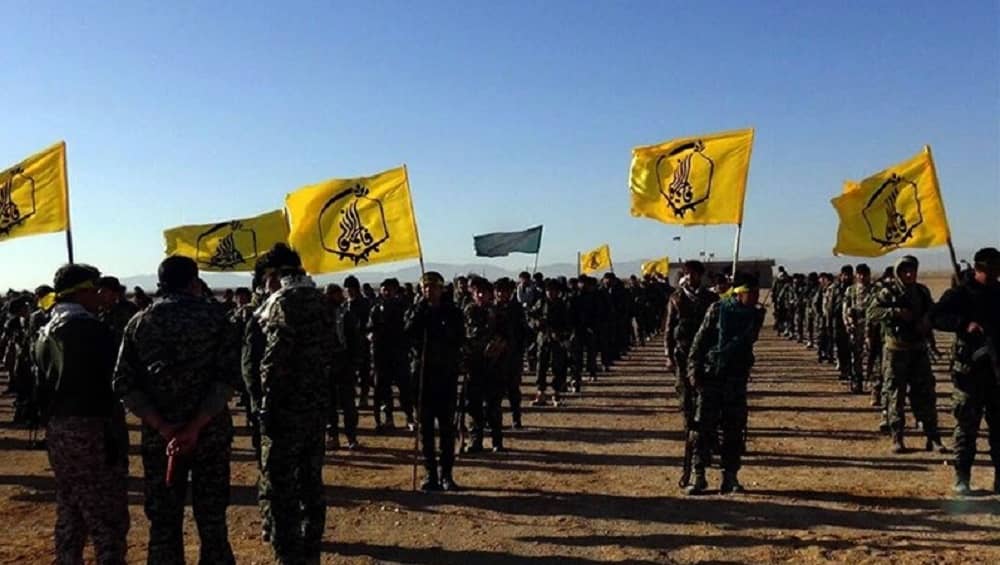
In a chilling escalation of domestic repression, the Iranian regime is deploying elements of its notorious Fatemiyoun Brigade militia to the restive Sistan and Baluchestan province. This move signals a dangerous transfer of tactics honed in the brutal Syrian civil war to Iranian soil, aimed squarely at crushing the legitimate grievances of the oppressed Baluch minority. The presence of this IRGC-controlled mercenary force, known for its ruthlessness and sectarian violence abroad, lays bare the regime’s increasing reliance on brute force and foreign fighters to quell internal dissent.
What is the Fatemiyoun Brigade?
The Fatemiyoun Brigade, a militia primarily composed of Afghan migrants and refugees residing in Iran, was established and operates under the command of the Islamic Revolutionary Guard Corps’ (IRGC) Quds Force. Iran’s regime dispatched Fatemiyoun units to Syria under the guise of defending holy shrines. They served as one of Tehran’s primary tools in the Syrian proxy war, instrumental in propping up the Assad dictatorship and advancing the regime’s geopolitical agenda.
Fatemiyoun units gained infamy for committing war crimes, engaging in sectarian cleansing, and perpetrating widespread human rights abuses against Syrian civilians, actions condemned by international bodies like Amnesty International. Their deployment was less about protecting holy sites and more about violently suppressing opposition and solidifying Iranian influence through bloodshed.
One of the headquarters of Fatemiyoun is located in Sheikh Najjar garrison.
Pakistani forces (Zeynabiyoun) are also present in #Aleppo. pic.twitter.com/sXykjHsAOf— NCRI-FAC (@iran_policy) December 21, 2016
Suppressing the Baluch Population
Having lost the war in Syria, the regime is now reallocating its resources inside its own borders to deal with the increasingly restive population. Part of these efforts is the deployment of Fatemiyoun units to Sistan and Baluchestan province.
Sistan and Baluchestan Province, holds strategic importance but has endured decades of systemic neglect, economic deprivation, and severe ethnic and religious discrimination under the clerical regime. The majority Sunni Baluch population has consistently faced structural inequalities and harsh state repression orchestrated by the policies of the clerical regime. This long-suffering region provides a fragile backdrop where the insertion of a battle-hardened, IRGC-directed militia is not a step towards security, but a calculated provocation designed to inflame tensions.
Credible reports now confirm the presence of these IRGC mercenary forces in Baluchestan, marking a significant and alarming development. This deployment represents the increasing militarization of the province and raises profound concerns among human rights activists, local leaders, and ordinary citizens.
#Iran News: Regime Expands Security Apparatus in Sistan and Baluchestan Amid Resistance and Repressionhttps://t.co/xRGwChwFD0
— NCRI-FAC (@iran_policy) April 22, 2025
The regime’s pretext for deploying the Fatemiyoun is to “provide security.” But in reality, this move strongly suggests an intention to replicate the Syrian model of proxy repression, using foreign fighters to violently suppress the legitimate demands of the Baluch people for an end to poverty, discrimination, and injustice, this time within Iran’s own borders. The arrival of Fatemiyoun sounds the alarm for the potential repeat of their brutal tactics against Iranian citizens.
Dangerous Implications
Deploying the Fatemiyoun in a region with a distinct demographic and religious composition, overwhelmingly Sunni Baluch, is particularly perilous. This strategy appears especially cynical given the current context in Baluchestan, which is already reeling from widespread state suppression, relentless executions, and ongoing popular protests against discrimination and deprivation.
Rather than addressing the root causes of unrest, the regime is pouring fuel on the fire by injecting a force notorious for its sectarian violence in Syria, potentially aiming to deepen the crisis as a method of control.
Amid Uprising Anniversary, Disasters and Government Neglect Fuel Anger in #Iran’s Sistan and Baluchestan Provincehttps://t.co/DbYFimKZ8J
— NCRI-FAC (@iran_policy) September 15, 2024
The regime’s decision to deploy foreign mercenaries against its own citizens underscores its deep-seated fear of the Iranian people’s demands for fundamental rights and its utter failure to address legitimate grievances through peaceful means. The cries of the Baluch people for justice, freedom, and improved livelihoods echo the demands heard across Iran and previously in Syrian cities like Aleppo and Daraa. Instead of listening, the regime under Khamenei has chosen the path of violence and suppression, dispatching mercenary groups like Fatemiyoun. This reveals a leadership bankrupt of solutions other than brute force.
All Eyes on Baluchestan
The regime’s deployment of the notorious Fatemiyoun Brigade into Sistan and Baluchestan is a desperate act of intimidation, but it is destined to backfire. The Baluch people, having endured more than four decades of systematic oppression, poverty, and state-sanctioned violence under the mullahs’ rule, are not easily cowed. They have consistently demonstrated resilience and courage, actively fighting back against the regime’s security forces and refusing to submit to tyranny.
Watch and judge how locals in Sistan and Baluchestan Province expose the #Iranian regime's inaction and #hypocrisy amid devastating floods in that region. pic.twitter.com/gEObkark1J
— NCRI-FAC (@iran_policy) March 5, 2024
Sending foreign mercenaries, stained with the blood of Syrian civilians, to suppress Iranians will only deepen the resolve of the Baluch community and further expose the regime’s illegitimacy and brutality. Like their compatriots across Iran, the people of Baluchestan are fed up with the clerical dictatorship and its reign of terror.
Their struggle is an integral part of the nationwide uprising aimed at overthrowing this corrupt regime and establishing a free, democratic Iran where the rights of all citizens, regardless of ethnicity or creed, are respected, and power is derived from the people, not maintained through fear and foreign militias. The regime’s reliance on such desperate measures only signals its terminal weakness and hastens its inevitable downfall.