

Three-minute read
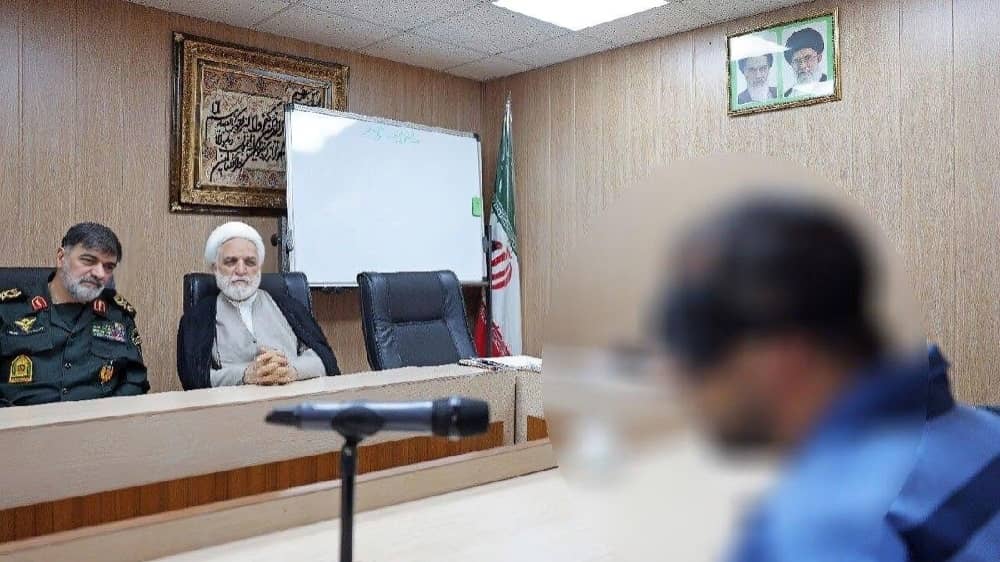
Gholam-Hossein Mohseni-Eje’i unleashed a furious tirade on April 30, 2026, before senior judiciary officials, broadcast live through the regime’s Mizan News Agency. “The political and propaganda apparatus of the aggressor enemy says that such-and-such criminal should not be punished and executed,” he thundered. “Who are you to make such statements?! You are wrong to say that a criminal whose hands are stained with the blood of our dear people… should not be executed.” He vowed the judiciary would “carry out any punishment permitted by law” with “no attention” to outside criticism and ordered the rapid identification, trial, and execution of anyone labeled “enemy foot soldiers,” both inside Iran and among the diaspora.
Eje’i explicitly demanded faster issuance and enforcement of death sentences, asset seizures, and full publicizing of every stage of proceedings. The timing was deliberate: it came one day after the United Nations issued urgent appeals to halt the killing spree.
Global Outrage Ignored as Executions Surge
On April 29, 2026, UN High Commissioner for Human Rights Volker Türk condemned the regime’s crackdown in the starkest terms. Since the start of joint Israeli-US operations in late February, Iranian authorities had executed at least 21 people and arrested more than 4,000 on national-security charges. Among the victims: nine linked to the January 2026 protests and ten PMOI-led Resistance Units members executed for being active in underground network that organizes defiance inside Iran. Türk declared himself “appalled” that, atop the suffering of war, the regime was stripping rights through unfair trials, torture, and coerced confessions. He demanded an immediate halt to all executions, a moratorium on the death penalty, full due-process guarantees, and the release of arbitrarily detained prisoners.
UN Special Rapporteur on Iran Mai Sato echoed these concerns, highlighting asset seizures of hundreds of citizens (including diaspora Iranians) and the prolonged internet blackout.
Eje’i dismissed the entire international outcry with open contempt. Framing it as “rhetoric of the arrogant ones and their propaganda loudspeakers,” he insisted the judiciary would show “no leniency” and would not be dictated to by foreign pressure or domestic critics. Sentences, he repeated, must be issued and carried out “sooner.”
Who Is Gholamhossein Mohseni Ejei, Iran’s New Judiciary Chief?#Iran #NewsUpdate #NewsAlerthttps://t.co/o2Rb3r7Ebf pic.twitter.com/PPo9YB0BKG
— NCRI-FAC (@iran_policy) July 1, 2021
The Man Who Embodies the Regime’s Killing Machine
Mohseni-Eje’i has built a career as the clerical regime’s chief architect of judicial terror. From his 1980s role in the Ministry of Intelligence—coordinating the machinery that enabled the 1988 massacre of approximately 30,000 political prisoners, the vast majority PMOI/MEK members and sympathizers—to his current post as Chief Justice since 2021, he has weaponized Revolutionary Courts for rapid death sentences on charges of moharebeh (“waging war against God”) and collusion with enemies. Under his direct oversight as First Deputy Chief Justice (2014–2021), over 1,100 drug-related executions were fast-tracked; as Chief Justice he has repeatedly instructed judges to accelerate cases against “enemy agents,” producing Iran’s highest execution rate in 35 years and a documented spike in political hangings throughout 2025–2026.
His personal brutality surfaced publicly in 2004 when, during a press conference, he bit journalist Isa Saharkhiz on the shoulder in a fit of rage—an incident the journalist documented and that regime media tried to spin as self-defense. Under Eje’i’s leadership the judiciary has also orchestrated a long-running sham trial in absentia against 104 NCRI and PMOI members, revived in February 2026 as the 53rd session of a show proceeding designed to criminalize the entire Iranian Resistance as a “legal entity” on fabricated terrorism charges. These kangaroo proceedings serve one purpose: to legitimize the slaughter of organized opposition.
Who Is Gholamhossein Mohseni Ejei, Iran’s New Judiciary Chief?#Iran #NewsUpdate #NewsAlert https://t.co/o2Rb3r7Ebf
— NCRI-FAC (@iran_policy) July 1, 2021
Desperate Atrocities of a Cornered Dictatorship
Eje’i is no rogue actor. He is the living embodiment of a regime that is cornered, dangerously weakened, and lashing out in panic. The January 2026 nationwide uprising—fueled by economic collapse, war fallout, and decades of rage—exposed the regime’s fragility. Regional conflict has drained its resources and shattered its morale. Internal rivalries among political factions, the IRGC, and clerical seminaries threaten to fracture the system from within.
In this vacuum, Mohseni-Eje’i’s judiciary has become the regime’s primary survival tool: a conveyor-belt killing machine calibrated to terrorize an explosive society into silence, rally a shrinking loyalist base with spectacles of strength, and keep rival power centers in check. The latest wave of executions, Eje’i’s sneering rejection of the world are not signs of confidence. They are the death throes of a dictatorship that senses its grip is slipping.
History has already delivered the verdict: each hanging only pours fuel on the fire of popular revolt. The Iranian people have shown, time and again, that fear will not hold them forever.