

Three-minute read
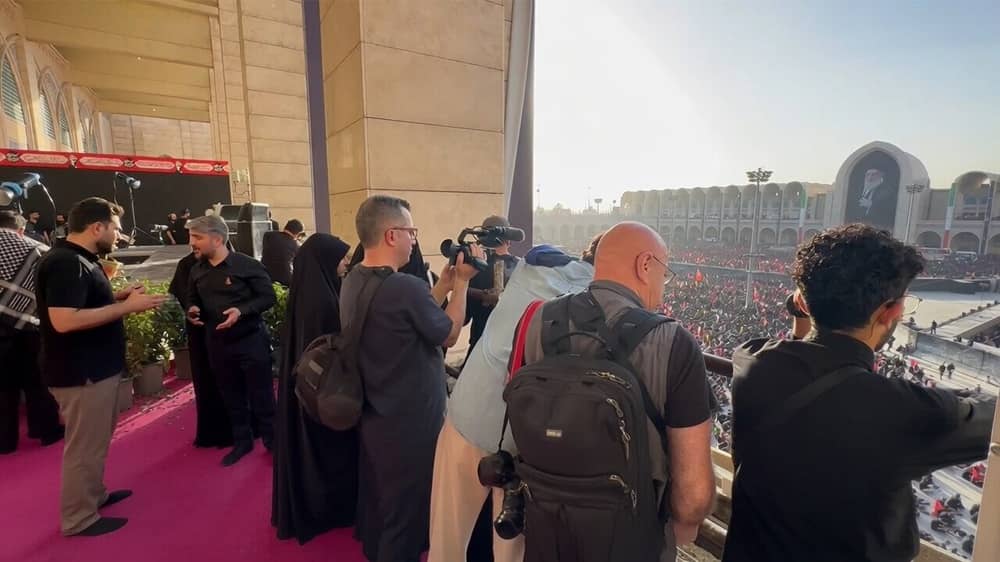
The multi-city funeral pageant for the assassinated Ali Khamenei was meticulously engineered to project unshakeable defiance. Following the devastating February airstrikes that claimed the leader, the regime sought a grand display of institutional continuity: millions in the streets, regional loyalty on display, and a seamless transition to his son, Mojtaba Khamenei. Instead, the theatrics cracked open the fault lines the regime had labored for over 120 days to plaster over — offering the world a rare, unscripted look at a dictatorship devouring itself from within.
Start with the diplomatic isolation. Tehran had more than four months to prepare — an eternity compared to the mere days required for global state funerals. Yet when the curtain rose at Tehran’s Khomeini Mosalla, the international gallery was embarrassingly thin. Only a handful of heads of state stood in the frame. The regime’s claim of hosting “delegations from roughly 100 countries” collapsed: the guest list was padded with mid-level clerics, cultural activists, and regional militia proxies — not sovereign decision-makers.
The blow from Iraq
The regime did manage to export its morbid theater across borders, extending the cortège into the Iraqi holy cities of Najaf and Karbala. Tehran desperately sought to turn these Iraqi processions into a grand exhibition of regional hegemony, signaling that Baghdad remains firmly within its geopolitical orbit.
"Four months post-#Khamenei, the clerical system lacks a central arbiter to patch over these existential vulnerabilities. This structural vacuum is rapidly turning localized economic grievances and political defiance into a volatile, nationwide undercurrent, moving the country…
— NCRI-FAC (@iran_policy) July 8, 2026
Yet, the cross-border spectacle could not mask a sharp institutional pushback from Baghdad, which chose this moment of transition to aggressively assert its sovereignty. In an unprecedented move verified by credible Arabic diplomatic reporting, the Iraqi government enacted strict structural limits on Iranian operations: it formally declared IRGC Quds Force commander Esmail Qaani persona non grata, instituted a blanket ban on any unilateral meetings between Iranian envoys and Hashd al-Shaabi leaders without explicit governmental consent, and enforced sweeping new security restrictions at local airports—including a major administrative purge at Najaf International Airport—specifically designed to choke off the IRGC’s clandestine logistics networks. Instead of a grand exhibition of regional hegemony, the parade exposed a severely compromised “Axis of Resistance” facing active defiance from the very state institutions Tehran once claimed to dominate.
The absentees
Inside the Mosalla compound, the stage-managed unanimity frayed. Even more glaring than the thin foreign turnout was the total public absence of Mojtaba Khamenei himself.
His physical erasure fueled an immediate political vacuum. Former presidents Mohammad Khatami and Hassan Rouhani were conspicuously missing, as was Ali-Asghar Hejazi, the gray eminence who managed Khamenei’s inner office for decades. Analyst Ahmad Zeidabadi noted the obvious: those who hurled obscenities at President Pezeshkian and Foreign Minister Araghchi during the procession would have done far worse to Khatami or Rouhani. The absences were not personal choices; they were enforced exclusions — a stark signal from the hardline nucleus around the hidden leader that the old multi-factional system has been compressed into a single binary: loyalists and liabilities.
That binary tracks a deeper, more consequential split. For months, two competing currents have been grinding against each other inside the security establishment. One, aligned with a portion within the IRGC and figures such as Speaker Ghalibaf and Pezeshkian, has quietly pushed for tactical de-escalation with Washington — sign fragile memorandums, concede the minimum, extract the maximum, and buy time. Their strategy is to outwait Trump’s leverage ahead of the upcoming November U.S. midterms. To them, diplomacy is a survival mechanism, not capitulation.
"Since claiming leadership, #MojtabaKhamenei has remained entirely out of public view throughout the ceremonies. While the reasons for his conspicuous absence remain the subject of intense speculation, the regime’s inability to present him at such a pivotal moment—despite having…
— NCRI-FAC (@iran_policy) July 7, 2026
They got the war they rooted for
The ultra-hardline faction — centered around the Paydari Front and amplified by the Kayhan newspaper — views any diplomatic overture as existential treason. They have weaponized Mojtaba’s forced absence to paralyze statecraft. Kayhan editor Hossein Shariatmadari laid their position bare, demanding that Tehran post a state bounty for Trump’s assassination and refuse negotiations. Threatening leaflets appeared at the homes of rival MPs — a message aimed squarely at anyone enabling diplomacy. Radical elements inside the Supreme National Security Council itself reportedly colluded with the chants against Araghchi and Ghalibaf, calling their silence “a greater sedition” than any foreign plot.
The radicals have gone so far as to accuse the pragmatic camp of engineering a “soft coup” against the hidden Supreme Leader — the ultimate charge in a system where loyalty to the supreme leader is the only currency that counts. By framing basic diplomacy as a betrayal of the slain leader, they are effectively paralyzing the regime’s statecraft at the precise moment it faces an existential military conflict.
What was conceived as a historic transition to consecrate a hereditary dynasty has instead exposed a dysfunctional elite. The regime cannot agree on whether to talk or to fight, cannot fill its diplomatic gallery, cannot safely bring its new leader into the light, and cannot prevent its own mourning rituals from devolving into factional brawling. Tehran intended the funeral to be a monumental projection of strength. Instead, the world witnessed an unstable power structure at war with itself — unraveling from within while the flames of a broader regional war close in around it.