

Three-minute read
As the snapback mechanism initiated by France, Germany, and the UK advances into critical stages, top clerics aligned with the regime’s Supreme Leader Ali Khamenei used this week’s Friday prayers to downplay the severity of the sanctions and dismiss growing domestic fears. However, the regime’s messaging campaign reveals deep internal anxiety, driven by fears of collapsing morale within its own ranks and a widening credibility gap with the public.
Clerics Lead Campaign to Downplay the Threat
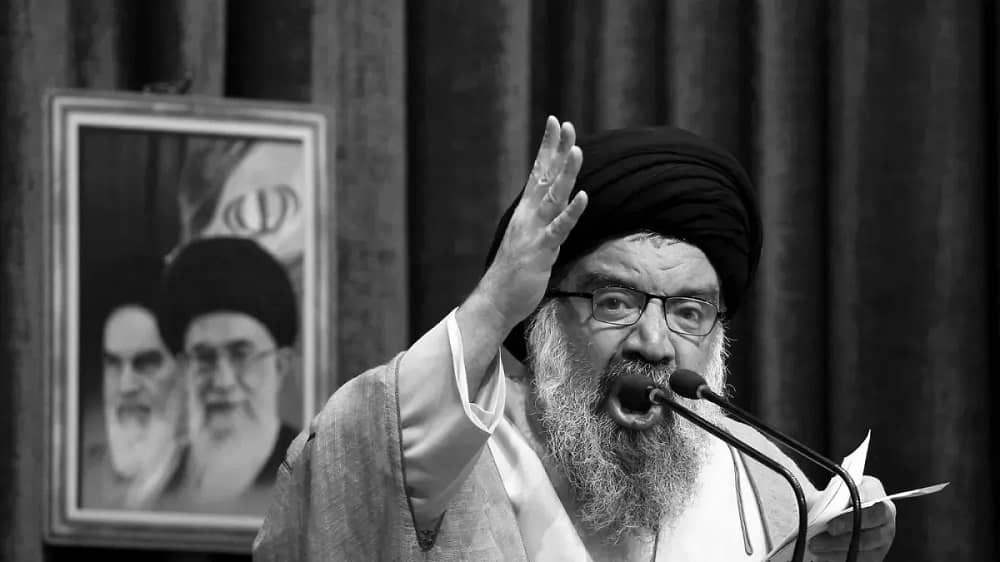
In Mashhad, Khamenei’s appointee Ahmad Alamolhoda described the snapback sanctions as “nothing new” and labeled the entire process “psychological warfare.”
“This so-called snapback mechanism adds nothing new to the sanctions we already face,” Alamolhoda told his audience. “Europe and America want to create panic, weaken our economy, and sow distrust among the youth. We must not fall for their manipulation.”
Alamolhoda accused internal critics and rival factions of “helping the enemy” by doubting Khamenei’s leadership and spreading fear about the sanctions’ impact.
In Qom, Mohammad Hosseini-Bushehri, head of the Society of Seminary Teachers and a senior Friday prayer leader, echoed the dismissive tone but hinted at the regime’s heightened state of alert: “We are in a wartime posture. I am not saying there is a war right now, but we are on full alert,” Bushehri said, insisting that Europe had “sided with the U.S.” while suggesting that “diplomatic engagement” might still neutralize the sanctions.
Both clerics framed the snapback as an enemy-driven psychological operation designed to undermine trust in state institutions and weaken loyalty to Khamenei.
#Tehran in Damage-Control Mode After Snapback Sanctions Triggered, Economic Fears Soarhttps://t.co/tet1fJqorJ
— NCRI-FAC (@iran_policy) August 30, 2025
On August 29, the daily Kayhan, close to Khamenei’s office, called the snapback activation “a continuation of the 12-day war” and urged immediate withdrawal from the NPT as a “counterattack.” Editor-in-chief Hossein Shariatmadari warned that any delay “hands the initiative to the enemy.” Similar threats from MPs like Alireza Salimi signal that Tehran may end International Atomic Energy Agency (IAEA) oversight entirely — a sign of growing strategic desperation, not confidence.
At the UN, envoy Amir Saeid Iravani condemned the snapback as “illegal” and warned Tehran might scale back IAEA cooperation. But former foreign minister Ali Akbar Salehi cautioned that leaving the NPT without Khamenei’s explicit approval would weaken Iran’s position. These mixed signals highlight deep divisions inside the regime over how to respond to mounting international pressure.
Khamenei Pulls Strings in Coordinated Crackdown as #Iran’s Revisionist Faction Refuses to Yieldhttps://t.co/KPbDxjMj8L
— NCRI-FAC (@iran_policy) August 27, 2025
Propaganda vs. Economic Reality
Despite the clerics’ insistence that “nothing has changed,” Iran’s markets are signaling a severe crisis:
- The rial has fallen past 105,000 per U.S. dollar, setting an all-time low.
- Gold prices hit record highs, reflecting panic buying.
- Analysts predict sharp declines in oil and petrochemical exports — losses estimated at $3–5 billion annually — and renewed pressure on banking, shipping, and investment flows.
Independent reports warn that renewed UN sanctions will intensify Iran’s financial isolation, restrict access to foreign reserves, and exacerbate inflation and unemployment.
These indicators stand in stark contrast to the regime’s official narrative, deepening public distrust and undermining confidence in state-controlled messaging.
Senior #Iranian Regime Insider Faces Prosecution After Comments Seen as Undermining Morale Amid Escalating Criseshttps://t.co/jVfljdqUSN
— NCRI-FAC (@iran_policy) August 29, 2025
Internal Divisions and Rising Security Concerns
Behind the scenes, the clerical dictatorship is bracing for unrest. According to statements by Majid Ansari, deputy for legal affairs under President Masoud Pezeshkian, provincial governors have been granted expanded emergency powers and ordered to “prepare for a major uprising.”
Additional measures include:
- Expanding mosque-based “neighborhood management” networks for surveillance and mobilization.
- Empowering security forces through new judicial rulings granting them immunity for shootings during protests.
- Tightening control over domestic media to prevent coverage of economic panic or anti-regime sentiment.
While some factions push for extreme retaliation — including withdrawal from the NPT and ending all cooperation with the IAEA — others privately advocate for damage control and limited diplomacy. The result is a growing fracture within the leadership over how to respond.
#Iran’s Leadership Faces Growing Fears of Unrest Amid Snapback Sanctions and Internal Divisionshttps://t.co/vHMBfE7JON
— NCRI-FAC (@iran_policy) August 30, 2025
Fear of Collapsing Morale Among Regime Forces
The aggressive denial of the sanctions’ impact is not aimed solely at the public — it is designed to shore up collapsing morale among security forces, paramilitary units, and regime loyalists.
With mounting economic strain, worsening living conditions, and rising doubts even among insiders, officials fear a decline in cohesion at a time when the government relies heavily on these forces to contain potential unrest.
Repeated Friday prayer appeals for “absolute obedience to the Leader” and framing the crisis as an “enemy plot” signal that maintaining loyalty within the regime’s core apparatus has become a top priority.
As sanctions return, markets collapse, and security fears escalate, the clerical leadership faces a dangerous convergence of pressures: economic decline, internal fractures, social unrest, and eroding confidence among its own supporters.
The louder the denials, the clearer the underlying panic.