

THIS PAGE WILL BE UPDATED WITH THE LATEST NEWS
UPDATE: 07:30 AM CEST
Defying The Noose: Iran’s Youth Turn State Executions into Fuel for Revolution
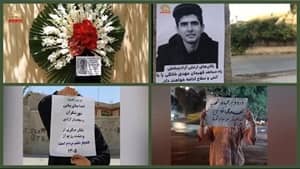
In tandem with the “No to Executions Tuesdays” campaign, which is now in its 133rd week and supported by inmates across 59 prisons in Iran, rebellious youth and PMOI Resistance Units have launched widespread activities across the country to echo the prisoners’ demands.
From Tehran and Mashhad to Sanandaj and Tabriz, anti-regime activists are organizing acts of defiance against the Iranian regime’s systematic execution of political prisoners. Through protests, installing placards, taking photocalls, and writing graffiti, the Resistance Units are publicly demanding an end to the death penalty, proving that the brutal wave of state-sanctioned killings has failed to intimidate the Iranian public.
The regime has recently carried out a brutal wave of executions to quell dissent. Among those hanged were PMOI members Vahid Bani Amerian and Mehdi Khanaki, as well as rebellious youth arrested during the massive January uprisings, including Arvin Kheirkhahan, Abolfazl Sepahi, and Amirhossein Safari.
However, instead of erasing their legacy, these executions have immortalized them. In Arak, Resistance Units placed a wreath featuring a color photograph of Vahid Bani Amerian, bearing the message: “Dear Vahid, your memory will live forever in the hearts of the Iranian people.”
Iran’s Regime Drifts Deeper into Confusion as Power Struggle Intensifies
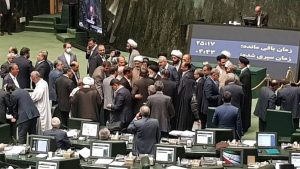
The Iranian regime is increasingly revealing a fundamental problem: it cannot agree on what direction to take.
In recent days, contradictory statements, unusual public denials, disputed appointments, and increasingly visible rivalries at the highest levels have exposed a leadership structure struggling to establish authority and make coherent decisions.What may appear on the surface to be a series of isolated political disputes is, in reality, part of a deeper crisis of power. The regime is attempting to reorganize itself after the dramatic transition at the top, but instead of consolidating authority, it is showing signs of fragmentation, uncertainty, and internal competition.
The latest episode began with widespread reports that President Masoud Pezeshkian was considering resignation.
The rumors became serious enough that Pezeshkian himself was forced to address them publicly. In a televised interview, he denied any intention of stepping down, saying that if he ever made such a decision, he would announce it officially.
Iran’s Cost-of-Living Crisis: When the Family Table Becomes a Luxury
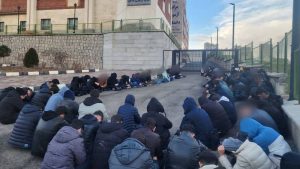
For millions of Iranian families, meat has long since disappeared from the shopping list. Now, milk, dairy products, fruit, and even inexpensive sources of protein are becoming unaffordable. After paying rent, many households are left with little more than a monthly exercise in deciding what they can no longer buy.
This is no longer simply a story about rising prices. It is a story about the systematic erosion of living standards under the Iranian regime, where wages have fallen dramatically behind the real cost of survival.
A woman describing her household’s situation captures the reality facing many families: when meat became expensive, they switched to chicken. When fruit became expensive, they bought less of it. Now, she says, everything has become expensive at once—from bread, milk, and yogurt to medicine and rent.
“We are practically hungry, and we no longer have the strength to continue,” she says.
Advisor to IRGC Commander: Our Doctrine Has Changed from Defensive to Offensive
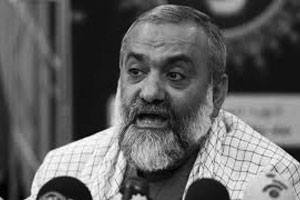
Mohammad-Reza Naqdi, adviser to the commander-in-chief of the Islamic Revolutionary Guard Corps (IRGC), announced that Iran’s regime has decided to change its military doctrine from a defensive posture to an offensive approach and that the conditions for implementing this approach are also in place.
In an interview with the Iranian regime’s state television, Naqdi, responding to the appointments issued for senior military commanders, said the decision to change the military doctrine had been made and that the new appointments had also been issued as part of preparing the armed forces to implement this policy.
He emphasized that the new approach would not be limited to military capabilities and would be based on “hybrid warfare.” According to him, military and weapons capabilities must be combined with diplomacy, propaganda, economic affairs, social capacities, and other components of power, with all these elements coordinated to achieve a common goal.
The adviser to the IRGC commander-in-chief also discussed the timing of the new appointments, saying that, procedurally, they differed from those in previous periods. According to him, in the past, commanders were appointed on the first day after their predecessors were killed, but this time the appointments were made after a delay.
Food Prices and Wage–Cost-of-Living Gap Surge for Iranian Workers
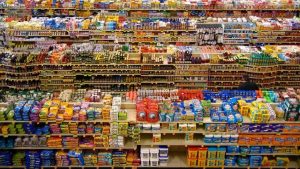
The latest statistics from the Iranian regime’s Statistical Center indicate that inflation continues to put pressure on households. This pressure is more severe in the food sector. Rising prices of essential goods have made the cost of living heavier for low-income households.
According to a report by the state-run ILNA news agency, year-on-year inflation across the country reached 87.9% in July. This means that households spent, on average, nearly 88% more to purchase a similar basket of goods and services than they did in July last year.
Meanwhile, food products have been hit by the greatest inflationary pressure. Year-on-year inflation for food and beverages was reported at 128.1% in July.
The published statistics present a troubling picture of rising food prices. The prices of oils and fats increased by 261.5% in July. Dairy products, milk, and eggs also experienced a 147.1% increase in prices. Red and white meat rose by 145.2%. The prices of bread and cereals increased by 116.7%. Fruit and dried fruit also recorded an increase of 115.4%.
Iranian Lawmaker Says Strait of Hormuz Is “More Valuable Than a Nuclear Bomb”

TEHRAN — The Strait of Hormuz, which became an Iranian instrument of pressure against the United States during the war, now lies at the center of the most difficult stage after the conflict: turning battlefield power into political and maritime arrangements that allow shipping to resume without Tehran surrendering what it calls a “wartime gain.” Negotiations with Oman are focused on transit routes, but Iranian officials insist that an agreement on those routes alone would not mean a return to the prewar status of Hormuz.
Esmaeil Baghaei, spokesman for Iran’s Foreign Ministry, has drawn that distinction explicitly. “The reopening of the Strait of Hormuz is conditional on the fulfillment of conditions that have been imposed on the Islamic Republic of Iran… We are still in a state of war. As long as the U.S. naval blockade continues… the conditions necessary for us to say that the Strait of Hormuz has become a safe waterway will not exist.”
Foreign Minister Abbas Araghchi has also linked the resumption of talks with Washington to the implementation of previous commitments. According to Arman Melli, Araghchi said: “Until the breaches of the memorandum of understanding end and the United States remedies what it has violated, there can be no resumption of negotiations.”
Paris Exhibition Condemns Executions and Highlights Iranian People’s Call for a Democratic Republic
Paris, France – August 11, 2026 – Supporters of the People’s Mojahedin Organization of Iran (PMOI/MEK) organized a book table and photo exhibition in Paris to condemn the execution of political prisoners and the continued detention of protesters arrested during Iran’s January 2026 uprising.
The event highlighted the Iranian people’s demand for a democratic republic and presented the Iranian Resistance as a path toward peace, freedom, and justice.

Organizers called on the French public and the international community to recognize the suffering of the Iranian people and their rejection of all forms of dictatorship, whether monarchical or theocratic.
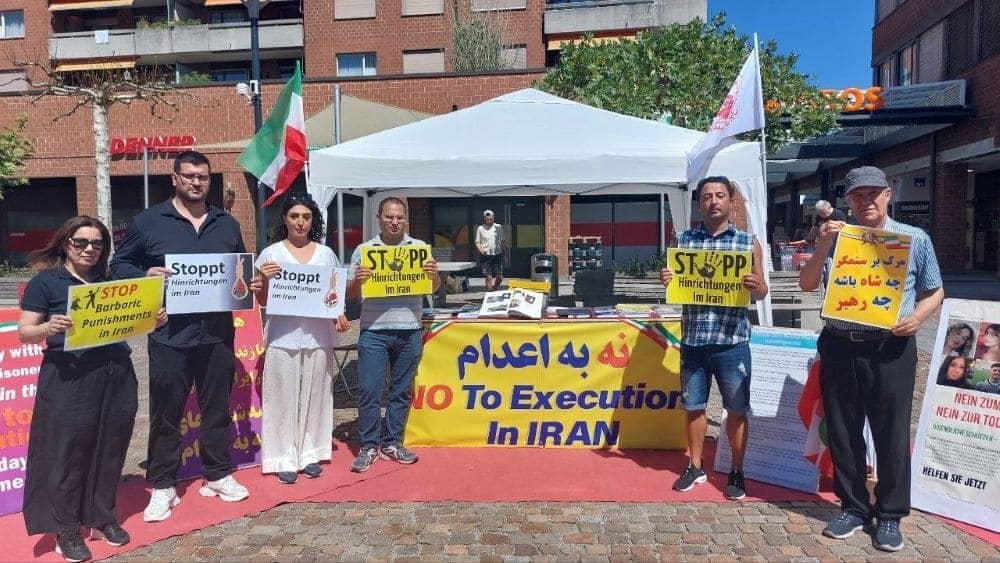
Exhibition in Effretikon, Switzerland Condemns Executions in Iran and Demands Release of Political Prisoners
Effretikon, Switzerland – August 8, 2026 – Supporters of the People’s Mojahedin Organization of Iran (PMOI/MEK) held a photo exhibition and book table in protest against the Iranian regime’s increasing use of the death penalty, particularly against political prisoners. The event also expressed solidarity with the “No to Execution” campaign.

The event called for the complete abolition of the death penalty in Iran and the unconditional release of all political prisoners, particularly those at imminent risk of execution. Organizers also called for senior Iranian regime officials to be held accountable before an international tribunal for alleged crimes against humanity.